As an Amazon Associate, we earn from qualifying purchases. Some links on this site are affiliate links at no extra cost to you. Our recommendations are based on thorough research and editorial judgment.

Common Terms in Motion Lighting Explained for Beginners

1. Motion lighting: sensors detect occupancy, PIR coverage about 120°, range 6–12 m, time delays 5 s–30 min. 2. Components: pan/tilt motors, gears, high-resolution encoders for repeatable aiming, Fresnel lenses produce 8°–60° beams. 3. Control: DMX512 transmits 512 channels per universe, RDM provides two-way device status. 4. Power and safety: use 12 AWG for 20 A circuits, IP65 outdoors, inspect rigging every 90 days. Continue for setup specifics and examples, more technical guidance follows next.
Key Takeaways
- Occupancy sensors (often PIR) detect people using infrared, typically covering 120° and about 6–12 meters.
- Motion settings include sensitivity, time delay (5 seconds–30 minutes), and light threshold (lux) to control activation.
- Beam angle defines light spread: narrow (10–30°), medium (30–60°), and wide (60–120°), affecting intensity and coverage.
- DMX512 is the common control protocol, sending 512 channels per universe for fixture intensity, color, and movement.
- Outdoor durability and safety: choose IP65 weatherproofing, proper circuit protection (breakers sized to 80% continuous load), and secondary safety cables.
What Is Motion Lighting and How It Works
- Motion lighting is a lighting system that uses sensors to detect presence, activate or dim fixtures automatically for brief periods.
- Principle of operation: Occupancy sensors, commonly passive infrared devices with 120° coverage and 6–12 meter range, detect body heat or movement and send signals to controllers.
- Timing and sensitivity: Systems allow adjustment of sensitivity, time delays from 5 seconds to 30 minutes, and ambient light thresholds measured in lux to prevent unnecessary activation.
- Applications and benefits: Typical deployments include outdoor security with 180° flood coverage, corridor illumination at 15–30 lux, and commercial spaces controlled by centralized building management systems, improving energy efficiency through targeted illumination only when occupants are present.
- Solar motion detection lights are an excellent choice for outdoor security due to their wide motion sensing capabilities and energy efficiency, as they utilize solar power to recharge their batteries and offer weatherproof construction for durability.
Installation follows manufacturer guidelines, ensuring proper coverage and reliable operation.
Key Components of Moving Fixtures

Components such as pan and tilt motors, gear trains, and bearing assemblies provide the mechanical foundation for precise positioning, typically offering 540° of pan and 240–270° of tilt with resolution down to 0.1° when combined with high-resolution encoders, allowing repeatable aiming for concert moving heads or architectural spot fixtures. 1. Mechanical systems: motors, gears, bearings translate rotary motion into controlled pan and tilt, determine speed, torque, accuracy, a 10 Nm motor gearbox yields 0.1° steps. 2. Optical and output systems: lenses, shutters, color wheels, and beam shaping deliver intensity and distribution, they integrate dimming and strobe mechanisms for effects. 3. Control systems: DMX512 or networked protocols carry the control signal to moving fixtures, lighting technology combines encoders, firmware for calibration and precise response. Motion flood security lights offer energy-efficient LED technology, typically consuming 18W while providing 2000 lumens of daylight-balanced illumination, ideal for outdoor safety.
Understanding Gobos and Pattern Effects

Overview: Gobos function as physical templates placed between the light source and fixture optics, fashioned from materials such as stamped steel (commonly 0.5–1.0 mm thickness) or precision-cut glass, and they translate beam geometry into projected shapes with resolution determined by aperture size, material edge quality, and the fixture’s lens focal length. 1. Purpose and materials: Gobos are stencils used in lighting fixtures to project patterns, ranging from simple shapes to intricate foliage or architectural outlines, and they add depth to stage designs. 2. Placement and optics: Correct placement, beam angle selection, and distance control pattern size and sharpness, rotate or move gobos to create dynamic effects without repositioning fixtures. 3. Implementation: Use measured distances, match beam angle to gobo aperture, verify focus for projection. Motion sensor lights often include dimming features that provide enhanced brightness control and energy efficiency.
Colour Mixing and Colour Wheels Explained

1. Color mixing in motion lighting uses additive primaries red, green, blue, typically emitted at peak wavelengths around 630 nm, 530 nm, and 470 nm, combining intensity values to produce target chromaticities, measured in CIE coordinates. 2. A color wheel provides continuous interpolation between hues, allowing smooth modifications by rotating discrete filter positions or by varying LED channel ratios, rotation speeds expressed in degrees per second for automated fades. 3. Each resulting hue can be adjusted for brightness (0–100% luminous output), saturation (mix of white or desaturation channels), and hue angle, enabling precise scene calibration. 4. Practical application: fixtures with indexed color wheels and programmable RGB matrices enable lighting designers to reproduce a named color within ±5 nm tolerance, ensuring consistent ambiance and reliability. 5. Ceiling-mount motion sensors, like the ECOELER Ceiling Occupancy Motion Sensor, offer 360-degree detection and adjustable settings for sensitivity and time delay, making them ideal for automating lighting in both residential and commercial spaces.
Recommended Products
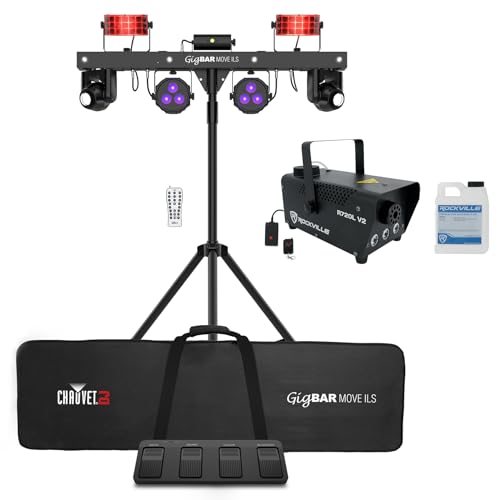
PACKAGE INCLUDES & EASY SETUP: (1) Chauvet DJ GIGBAR MOVE ILS Kit with moving heads, derbies, washes, laser, strobe, tripod, footswitch, RF remote, carry bag, and (1) Rockville R720L V2 Fog Machine with RGB LEDs, wireless timer remote, and 0.6L fluid. Quick setup with tripod and compact fogger.

Compact 7kg Moving Head with 2.5x Motorized Zoom — Weighing only 7 kg (15.4 lbs), this BSW200 moving spotlight is built with a 2.5× motorized zoom system. It enables smooth shifts between sharp, concentrated beams and broad, full-scene lighting coverage, easily matching various stage dimensions and event layout demands

【1】ULTRA-BRIGHT RGB ADDRESSABLE LEDS - 8 rolls of double-sided quad-row strips deliver vivid, high-purity colors with 16 million customizable hues. Features dynamic chasing modes, DIY effects, and over 100 pre-programmed light shows for eye-catching vehicle customization
Pan, Tilt and Movement Controls

Pan and tilt movement constitute the primary mechanical axes of automated fixtures, defining horizontal sweep and vertical aim, and they are specified in degrees, maximum ranges, and dynamic response parameters for precise aiming.
- Pan: The horizontal axis typically ranges from 180° to 540° on common fixtures, with some offering full 360° continuous rotation for complex effects, allowing wide sweeps and location tracking.
- Tilt: The vertical axis commonly provides 180° to 270° travel, enabling upward and downward aiming for front, back and overhead lighting positions, with degree markings for repeatable presets.
- Movement controls: Operators adjust speed, acceleration and smoothness parameters to synchronize shifts and define movement profiles, using presets for consistent, repeatable positioning.
Technical calibration guarantees accurate position feedback and reliable operation. Wireless motion sensor lights offer energy-efficient operation by utilizing motion detection to reduce overall electricity costs, making them a sustainable option for various applications.
DMX, Protocols and Control Basics
Section 1 — DMX Fundamentals: DMX512 is the foundational digital multiplex protocol for stage lighting control, operating as a unidirectional 250 kbaud data stream that carries up to 512 discrete channel values per universe, each channel representing an 8-bit intensity or control value, with frames typically refreshed at roughly 44 Hz to provide smooth control; the physical layer uses balanced differential signaling over twisted-pair cable, nominally terminated with a 120 Ω resistor to prevent signal reflections, and when properly configured can support cable runs up to 1,200 meters with repeaters. A 180-degree dual-PIR sensor is essential for broad motion coverage, significantly reducing blind spots in outdoor lighting setups. 1) Addressing and control: each electrical device receives an address, console sends values, dmx enables intensity and color, use twisted pair. 2) Protocol extensions: RDM adds two-way control, lighting control benefits from monitoring and configuration.
Recommended Products

High-quality light source: Feet led dance floor uses 64 pieces 5050 RGB 3 in 1 high-brightness SMD lights beads. Its life span is above 80,000 hours, which has long service life.

Premium: This WZYBUTA 280W beam moving head light adopts high-precision cemented optical lens, large-diameter light output, higher brightness, thicker beam. The high-precision crystal lens can minimize the light loss, make the pattern clear, the light effect is strong, and the color is vivid.

Professional-Grade 280W Moving head light:This moving head light features high-precision cemented optical lenses. This design enhances light transmittance and focusing capability, resulting in more concentrated beams and improved clarity. Illuminance: 200000Lux@10m
Beam Angle, Focus and Optics
When specifying or positioning fixtures, the lighting designer must evaluate beam angle, focus, and optical components together, because these factors determine coverage, intensity distribution, and edge quality at the target surface. 1. Beam angle and selection: The beam angle defines spread where intensity falls to 50%, typical ranges are narrow 10–30° for spots, medium 30–60° for general, and wide 60–120° for floods, choose narrow for accents, wide for ambient coverage. 2. Focus adjustment: Focus alters sharpness or softness, adjust lenses or lens groups to concentrate light on a small object or soften edges for background illumination. 3. Optics and components: Lenses such as Fresnel or plano-convex, and reflectors, shape output, improve efficiency, and control spill. Measure beam spread at working distance for accurate placement. Weatherproof outdoor lights, available in various styles, are an excellent choice for durable and customizable year-round illumination in extreme weather conditions.
Safety, Rigging and Power Considerations
- Rigging: When suspending fixtures, follow safety standards, secure loads with rated hardware such as 0.5 inch M10 shackles, C-clamps, and secondary safety cables capable of 200 kg, inspect torque and attachment points every 90 days. Use certified trusses, and calculate load with a 10:1 safety factor.
- Power distribution: Provide circuit protection via breakers sized to run 80% continuous load, use 15 A, 20 A, or 30 A circuits as appropriate, verify connectors and cable gauges (12 AWG for 20 A, 10 AWG for 30 A), avoid daisy-chaining high-wattage fixtures.
- Inspection and maintenance: Implement scheduled inspections, document findings, replace worn fittings, and train personnel in lockout/tagout procedures. Verify electrical connections are secure, appropriate for the load, and tested before each event regularly. Adjustable sensitivity settings in motion lighting enhance energy efficiency by reducing unnecessary power consumption.
Common Fixture Types and Lamp Technologies
A. 1) Fixture types: Fresnel offers adjustable beam angles typically 8°–60°, soft-edged beam, used as key or fill, recommended mount at 2–10 m. 2) Par lights: Parabolic aluminized reflector light fixture, sizes like PAR64 or PAR56, provide narrow to wide beams for concerts, wash applications. 3) Lamp technologies: LED fixtures provide energy efficiency, life, low heat, variable color temperature from 2700K to 6500K, modular arrays rated in lumens and watts. HMI delivers daylight-balanced output ~5600K, high lumen density for film, requires ballast. 4) Comparative notes: CFLs outperform incandescent bulbs in efficiency, incandescent bulbs remain useful for color rendering and dimming simplicity. Selection depends on throw distance, beam angle, color temperature, power availability, and dimming method, designers should specify CRI, lumens, and fixture lens type. Outdoor lighting solutions with IP65 waterproof ratings are ideal for exposed locations, ensuring durability and reduced maintenance needs.
Recommended Products

Bi-Color Light adjustable from 2700K-5600K

Intense Output: As one of the most powerful fixtures in the Aputure lineup, the LS 600c Pro combines all the innovative and groundbreaking features of the Nova and Light Storm series into one
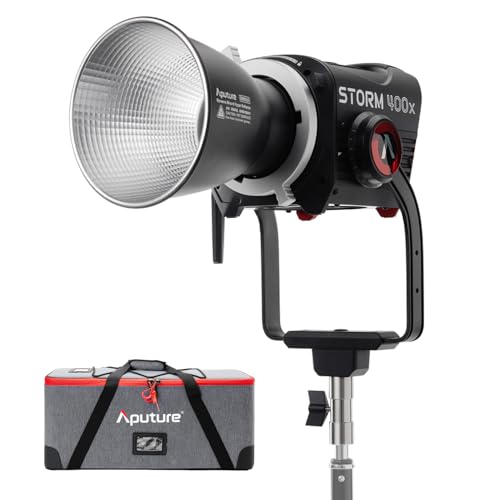
NOTE: To ensure reliable performance, this STORM 400x must be updated to firmware version 1.4 or higher before use.
Frequently Asked Questions
What Is the 3 Lighting Rule?
The 3 lighting rule is a Three point setup using key, fill and backlight to model subjects, applying lighting ratios for contrast and deliberate shadow control to create depth, separation, and balanced, visually engaging imagery.
What Are the Various Terms Used in Illumination?
Although some claim terms are interchangeable, the various terms include ambient, accent, backlight, beam angle, illumination techniques, light measurement, and color temperature, plus CRI, lumen output, lux, kelvin, and diffusion for precise scene control purposes.
What Are the 4 Types of Lighting?
The four types of lighting are ambient lighting, task lighting, accent lighting, and natural lighting. One observes each serving overall illumination, focused work needs, object emphasis, and sunlight-based enhancement respectively in residential and commercial spaces.
What Are the Five Major Aspects of Lighting?
Like dawn revealing a stage, the five major aspects of lighting are intensity, color temperature, beam angle, direction, and quality of light, informing choices between ambient light, task lighting, and accent lighting for design decisions.


