As an Amazon Associate, we earn from qualifying purchases. Some links on this site are affiliate links at no extra cost to you. Our recommendations are based on thorough research and editorial judgment.

Motion Path Lights Vs Always‑On Bollard Lights in Residential Yards

1. Function: Motion path lights use PIR sensors with 3–10 m detection range, dwell time 5–120 s, mounted 1–1.2 m, emitting 100–800 lm; bollard lights are 0.6–1.2 m high, provide 360° distribution, and deliver 300–1200 lm. 2. Benefits: Motion units reduce energy up to 90% and limit light spill; bollards deliver constant perimeter security. 3. Implementation: mix both for layered safety, pilot test spacing at 2–4 m. Continue for installation and cost details, operational comparisons.
Key Takeaways
- Motion path lights save energy by activating on motion, cutting runtime and consumption by roughly 70–90% compared with always-on bollards.
- Always-on bollards provide consistent 360-degree illumination, improving perimeter visibility and deterrence for wider residential yards.
- Install motion path lights at 1–1.2 m height and 2–4 m spacing; bollards typically 0.6–1.2 m for broad coverage.
- LEDs in bollards last up to 50,000 hours; motion sensors may need more frequent replacement, raising maintenance considerations.
- Combining both types offers layered safety, reduces light pollution, and balances aesthetic wayfinding with continuous security lighting.
How Motion Path Lights Work
You may be interested
1. Section 1: Overview, motion path lights employ passive infrared sensors to detect body heat within ranges typically between 3 and 10 meters, triggering automatic illumination along walkways and perimeters. 2. Sensor mechanics and settings, sensitivity is adjustable in many units, distance and dwell time often range from 5 to 120 seconds, and activation angle may span 90 to 180 degrees. 3. Light source and efficiency, fixtures generally use energy-efficient LED modules rated 3000–5000 K with lumen outputs from 100 to 800 lm, reducing draw to 1–10 watts. 4. Installation guidance. Place lights at 1–1.2 meter height, spacing 2–4 meters for uniform coverage. 5. Operational notes. Regular testing guarantees reliable activation. Consider IP65 weatherproofing to ensure durability and performance in various outdoor climates. Applications focus on residential yards for safety, convenience, and efficient targeted illumination performance.
Advantages of Motion Path Lighting for Homes

Motion-activated path lighting delivers targeted illumination on demand, minimizing continuous electrical use while providing measurable functional benefits for residential walkways and perimeters. 1. Energy and operation: motion path lights activate only when movement exceeds preset thresholds, typically 5–10 meters, reducing duty cycle by up to 90%, which improves energy efficiency and lowers utility costs. 2. Security function: sensors provide immediate visual alerts that deter intruders, combined with adjustable sensitivity and 120–240° detection arcs to avoid nuisance triggers. 3. Safety and accessibility: lights illuminate walking surfaces, preventing trips on steps and uneven surfaces, recommended 10–30 lux on walking surfaces, 0.5–1.0 meter mounting height for bollard-style fixtures. 4. User experience: programmable durations, dusk-to-dawn controls, and straightforward wiring enhance maintenance and guest wayfinding. Verify sensor alignment and perform calibration. Additionally, incorporating adjustable heads in solar motion lights allows for a 120-270° sweep, effectively eliminating blind spots in residential yards.
Recommended Products

【400 Lumens Motion-Activated Security Pathway lights】ELECLINK solar pathway lights outdoor feature a sleek snake-like design with 3000K warm light and 26 bright LEDs. Motion sensing pathway light delivering up to 400 lumens of motion-activated brightness, these solar lights outdoor provide brighter illumination than ordinary solar pathway lights. The wide light coverage improves visibility for walkways, driveways, gardens, lawns, patios, and yards, creating a safer and more inviting outdoor environment

【20-400 Lumens Motion-Activated Security Path Light】ELECLINK modern solar pathway lights a sleek snake-like design that casts a warm 3000K glow without harsh glare. 26 Bright LEDs deliver 20-400 lumens of focused light, covering more ground than ordinary solar pathway lights. Perfect for outdoor pathway lights, this set turns dark walkways into safe, inviting paths. Whether you need a single solar pathway light for your porch or a full set for your backyard, you get brighter illumination, zero electric bills, and effortless installation

Solar Powered & Energy Saving: Solar spot lights use solar energy to charge, which can automatically sense light, automatically turn on at night, and automatically charge during the day, saving electricity and reducing energy consumption. No wires are required, which not only saves energy, but also saves you a lot of money on your electricity bill
Advantages of Always‑On Bollard Lighting

Several features distinguish always-on bollard lighting, providing continuous, 360-degree illumination that defines boundaries, guides guests, and supports nighttime activities. 1. Coverage and placement: always-on bollard lights typically range from 0.6 to 1.2 meters in height, producing 360-degree illumination for wider areas, allowing spacing at 3 to 6 meter intervals to create overlapping light envelopes for safe circulation. 2. Design and durability: as an outdoor lighting solution, bollards offer robust housings, IP65 ratings, corrosion-resistant finishes, and minimal maintenance, suitable for gravel, concrete, or lawn mounting. 3. Performance and options: energy-efficient LED options deliver 300 to 1200 lumens, selectable 2700K–4000K color temperatures, and simple photocell or dimming control to enhance aesthetic appeal. Installation follows standardized trenching and conduit practices for reliable grounding and service access requirements. Many outdoor lights, like those with high waterproof ratings, ensure performance in adverse weather, making them suitable for year-round use in various conditions.
Recommended Products

[Commercial-Grade Aluminum Construction]: Crafted with heavy-duty die-cast aluminum housing, our low voltage landscape lights withstand harsh weather conditions. The rust-proof design ensures longevity, with integrated LEDs rated for 15,000+ hours of continuous use
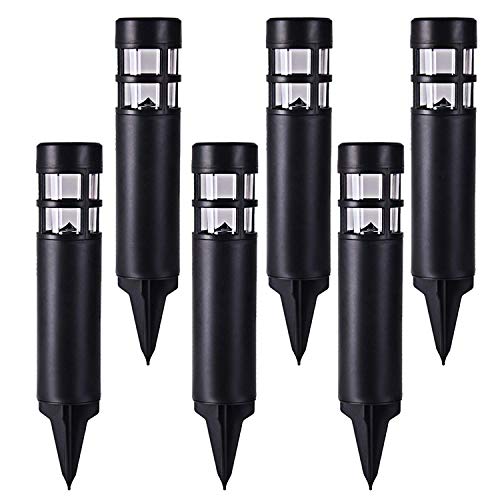
ELEGANT DESIGN: The solar bollard landscape lights are made by durable plastic, which give off a lighting effect with cross patern. These would be a perfect decoration in your garden!

3 Color Temperature Selectable: Our LED bollard light is 3000K/4000K/5000K selectable, don't worry about the color temperature of the lamp you buy back is not the same as you want. You can adjust and choose the color temperature you like quickly meeting different demands in areas
Energy Use and Cost Comparison

Overview: Energy consumption and lifecycle cost considerations form the primary comparison between motion path lights and always-on bollards, encompassing fixture wattage, daily runtime, power source, and long-term operating expenses when applied to typical residential and commercial pathways.
- Energy consumption: Motion path lights activate only on detection, reducing runtime and lowering kilowatt-hours by roughly 70% versus continuous always-on bollard lights, which often draw 10–25 watts, increasing cumulative load.
- Energy costs and operating costs: Calculations show payback within 1–2 years for motion systems despite higher installation, due to reduced utility bills, lower maintenance intervals, and measurable lifecycle savings.
- Solar-powered lights: Solar motion fixtures eliminate electricity costs, provide zero grid load, and require battery maintenance, assuring predictable lifecycle expenses. IP65 waterproof rating ensures durability of solar-powered motion sensor lights against weather elements, making them a reliable choice for outdoor settings.
Example: a 6W motion LED can replace a 15W bollard nightly efficiently.
Aesthetic Impact and Design Considerations

- Overview: The aesthetic impact of lighting options in residential yards hinges on fixture scale, placement, lumen output, color temperature, and architectural context, influencing pathway lighting, landscape lighting, and perceived depth.
- Motion path lights: These compact fixtures typically measure 4–8 inches tall, emit 50–150 lumens at 2700–3000K, blend into planting beds when off, and create subdued pools of light on demand, guiding circulation with minimal visual clutter.
- Bollard lights: Bollard lights range from 18–42 inches in height, provide 200–1000 lumens, can incorporate decorative housings and cutoff optics, and function as vertical markers that shape sightlines and boundaries across larger outdoor spaces.
- Implementation: Coordinate spacing, mounting height, beam angle, and material finish for cohesive results. Balance scale and lumen output to match.
- For enhanced outdoor security and convenience, consider integrating motion sensor light switches that offer features like adjustable LUX and sensitivity settings, ensuring your lighting responds dynamically to movement in your yard.
Safety, Security, and Light Pollution
- Section 1 — Safety and Visibility: Motion path lights improve safety by illuminating walkways only upon detection, typically activating within 2–3 seconds at 5–10 lux for 5–10 meters, reducing trip hazards on steps and edges. Low voltage lights can also offer energy efficiency and durability, making them a practical choice for outdoor lighting solutions.
- Section 2 — Security Considerations: Always-on bollard lights provide continuous visibility, maintaining 20–50 lux along perimeters, deterring intruders and supporting camera performance; they establish consistent sightlines for 10–30 meters.
- Section 3 — Light Pollution: Motion path lights minimize light pollution by limiting lumen-hours and directing 100–300 lumens downward, preserving nocturnal environments; bollards can limit spillage when shielded and aimed, using cutoff optics and 3000K or lower CCT.
- Implementation Notes: Combine both types for layered defense, assure proper mounting heights of 300–900 mm. This preserves safety, aesthetics.
Recommended Products

3 LIGHTING MODES FOR ALL-NIGHT ILLUMINATION: Solar motion lights outdoor have 3 lighting modes to choose from, constant light mode (40 Lumens); Motion sensing mode (30 to 300 Lumens/25 to 200 Lumens), when someone passes by, intelligent infrared detection can sense wide-angle distances of 26ft and 160°.

Wireless Path Lights – Perfect for hallways, entryways, stairs, pathways, patios, decks, basements, sheds, garages and more

Three Optional Modes 1.Motion Sensor Light Mode (The lights will go off at night when no motion is detected; when it detecteds motion the step lights stay on at high brightness for 15 seconds and then go off) 2. Permanent On Mode (the lights turn on automatically night and stay on at 10% brightness for 8 hours). 3. Smart Brightness Control Mode (when no motion is detected, the light stays slightly bright all night; when motion is detected, the motion sensor adjusts the light to stay on high for 15 seconds, then back to stay slightly bright)
How to Choose the Right Option for Your Yard
When choosing between motion path and always-on bollard lights, prioritize site dimensions, target lux levels, and operational goals such as energy use or continuous visibility. 1. Site assessment: measure pathway width and outdoor depth in meters, specify one to two lux for ambient zones and five to ten lux for walking surfaces, map mounting points. 2. Power and wiring: note that motion path lights reduce wiring needs, while always-on bollard lighting often requires low-voltage or line-voltage circuits and conduit. 3. Durability and lifecycle: LED bollard fixtures offer up to 50,000 hours, motion path sensors may need replacement with frequent actuation. 4. Aesthetics and purpose: choose bollard height, beam angle, color temperature to balance wayfinding and visual impact. 5. Implementation: pilot a zone, monitor, scale. Consider using solar-powered lights such as the JACKYLED Solar Lights with Motion Sensor for energy-efficient illumination and easy installation in outdoor spaces.
Frequently Asked Questions
What Is the Difference Between a Bollard Light and a Pathway Light?
A bollard light is taller, offering broad pools from bollard light types, while a pathway light sits low; pathway light designs guide walkways. In landscape lighting choices, energy efficiency, installation considerations, and aesthetic appeal differ.
What Are the Disadvantages of Motion Sensor Lights?
They darken, they wait, they misfire, motion sensor limitations include energy consumption issues, installation challenges, false activation concerns, maintenance requirements, and diminished security effectiveness, resulting in unpredictable illumination, higher upkeep, reduced deterrent reliability, overall safety.
What Type of Outdoor Lighting Is Best?
A balanced combination of fixtures is best: homeowners prioritize deck lighting and security lighting, balancing aesthetic appeal with energy efficiency while considering installation costs and various design styles to suit yard scale and personal taste.
Why Should You Not Leave Your Porch Light on All Night?
To reduce energy consumption, to extend bulb lifespan, to limit light pollution, to preserve nighttime visibility, to mitigate safety concerns, and to respect neighbor etiquette, one should not leave the porch light on all night.


