As an Amazon Associate, we earn from qualifying purchases. Some links on this site are affiliate links at no extra cost to you. Our recommendations are based on thorough research and editorial judgment.


How Radar Motion Sensors See Through Thin Materials

1) Principle: Radar motion sensors operate at 24–81 GHz, transmit millimeter-wave energy that penetrates drywall and wood with modest attenuation, and detect Doppler shifts or FMCW range changes to identify motion. 2) Limits: Concrete and metal attenuate and reflect signals, degrading detection beyond a few meters. 3) Deployment: Use MIMO beamforming, mount sensors at 2–3 m, and calibrate algorithms for clutter suppression. Continue for implementation specifics, power limits, certification steps, regulatory guidance and examples below.
Key Takeaways
- mmWave radar (24–81 GHz) transmits electromagnetic waves that partially penetrate thin materials like drywall and plywood for short-range sensing.
- Returning echoes encode motion via Doppler shifts, letting sensors detect movement behind thin barriers without imaging details.
- FMCW processing measures range and velocity, separating moving targets from static reflections through frequency modulation.
- MIMO beamforming and multiple antennas improve angular resolution and isolate targets through small apertures or thin layers.
- Material-dependent attenuation (concrete, metal vs. drywall, wood) and optimal mounting (2–3 m) determine practical detection range and reliability.
Why Through-Wall Sensing Matters
Although often invisible to conventional sensors, through-wall sensing enables detection of human presence and crucial signs behind barriers, using mmWave radar at 24–81 GHz. 1. Purpose: This capability provides non-invasive presence detection for security, search and rescue, and indoor monitoring, enabling critical sign monitoring through drywall and plywood. 2. Performance factors: Wall composition and thickness, for example concrete or metal, reduce penetration and limit range to a few meters in many cases. 3. Signal processing: MIMO beamforming and FMCW algorithms isolate motion and cardiac micro-Doppler from clutter, improving accuracy. 4. Compliance: Deployment requires FCC adherence and strong data protection. 5. Implementation: Sensor placement, calibration, and algorithm tuning determine reliability. 6. Conclusion: Use responsibly. Operators must document protocols and train personnel for ethical operation regularly. A new sentence with PIR/microwave detection capabilities being installed in modern security systems and the rest of the sentence.
The Physics of Wave Penetration

1. The Physics of Wave Penetration explains how electromagnetic waves interact with materials through reflection, absorption, and transmission, determining practical wave penetration and radar detection performance. 2. Material dependence: Drywall and plywood transmit millimeter-wave energy relatively well, allowing through-thin-wall sensing over short ranges, typically under 5 meters, whereas brick and concrete absorb more energy and reduce signal-to-noise ratio. 3. Frequency effects: mmWave bands between 24 and 81 GHz exhibit higher resolution, yet suffer increased absorption, limiting penetration depth in dense materials. 4. Structural challenges: Metal-reinforced walls produce strong reflection and absorption, effectively blocking signals and complicating interpretation. 5. Practical implication: Under favorable conditions, mmWave systems can detect small motions like breathing through thin walls, but performance requires calibration and line-of-sight considerations. Use proper shielding. 6. Ceiling-mount motion sensors utilize 360 PIR coverage for full-room detection, proving effective in diverse environments but may require adjustments for non-standard ceiling types.
How Mmwave Radar Motion Sensors Work

When deployed in indoor and near-field security or monitoring roles, mmWave radar motion sensors transmit and receive electromagnetic energy in the 24–81 GHz bands, using precise timing and frequency analysis to resolve sub-centimeter motions through thin materials, with typical short-range detection limits under 5 meters depending on wall composition and sensor aperture. 1. Principle: Sensors exploit Doppler shifts and FMCW ranging, measuring frequency and phase changes to infer velocity and range, enabling motion detection and micro-movement sensing such as breathing. 2. Architecture: Implementations use MIMO beamforming, multiple antennas, and low-noise receivers, improving angular resolution and target isolation. 3. Processing: Advanced signal processing chains perform clutter suppression, FFTs, CFAR detection, and tracking, yielding reliable presence and crucial sign estimation for practical deployments. Range depends on materials. Modern patio lights often incorporate energy efficiency features, such as LED technology, to provide sustainable and long-lasting illumination solutions.
Recommended Products

【Precise Radar Detection — A Reliable Camping Companion】Unlike traditional PIR motion sensors that rely on heat and struggle in harsh conditions, Letwesaf uses advanced 24GHz millimeter-wave radar to detect real movement. Smart filtering reduces false alerts from wind, sunlight, leaves, or brush. This camping alarm can detect motion through tent, bushes, and light obstacles with consistent accuracy, helping reveal hidden threats even in total darkness for dependable outdoor security.

【Precise Radar Detection — A Reliable Home Guard】Unlike PIR sensors, Letwesaf uses 24GHz millimeter-wave radar to detect real movement—not heat. Smart filtering cuts false alerts from wind, sunlight, leaves, or brush. Detects reliably through bushes, fences, and light obstacles—even in total darkness. Compact design can be discreetly concealed without affecting detection performance.

Radar-Powered Accuracy Advanced radar technology delivers precise motion detection with reduced false alarms, ideal for complex indoor environments.
Material Effects: Drywall, Wood, Concrete and Metal

1. Drywall and wood allow significant radar penetration, at mmWave frequencies (24–81 GHz) absorption is relatively low, enabling detection of gross motion and micro-motions such as breathing through single or double 0.5–1.5 cm gypsum or timber layers. 2. Concrete presents substantial attenuation, thicker slabs (>10 cm) reduce return signal strength dramatically, often preventing detection of fine movements, only large movements near openings remain observable. 3. Metal and metal-reinforced structures act as near-perfect reflectors and absorbers, they block radar propagation, enclosing spaces behind metal-lined walls effectively eliminates detection capability. 4. Practical guidance: select appropriate frequency, position sensors close to thin partitions, account for thickness and density, and document material composition before deployment. Maintain records of test measurements, signal loss per centimeter, and deployment notes regularly. 5. To ensure effective outdoor lighting solutions, consider using low voltage pathway lights, as they offer energy efficiency and durability while being easy to install, making them a cost-effective choice for illuminating outdoor spaces.
Recommended Products

【Precise Radar Detection — A Reliable Camping Companion】Unlike traditional PIR motion sensors that rely on heat and struggle in harsh conditions, Letwesaf uses advanced 24GHz millimeter-wave radar to detect real movement. Smart filtering reduces false alerts from wind, sunlight, leaves, or brush. This camping alarm detects reliably through tents, bushes, and light obstacles with consistent accuracy—even in total darkness for dependable outdoor security.

【Precise Radar Detection — A Reliable Home Guard】Unlike PIR sensors, Letwesaf uses 24GHz millimeter-wave radar to detect real movement—not heat. Smart filtering cuts false alerts from wind, sunlight, leaves, or brush. Detects reliably through bushes, fences, and light obstacles—even in total darkness. Compact design can be discreetly concealed without affecting detection performance.

AEDNX Rd-03D 24G Hz Multi-Target Human Motion Trajectory Positioning and Tracking Radar Module, 2pcs
Rd-03d mmwave human detection sensor: 5V power supply wall mounted installation, capable of detecting 3 moving targets simultaneously, Module size: 15mm * 44mm, 1 * 4P-1.25mm socket interface. Detect azimuth angle ± 60 °, elevation angle ± 30 °,Detection distance: 8 meters.
Signal Processing, Beamforming and Motion Isolation

Radar performance through different materials sets the operational requirements for downstream signal processing, beamforming and motion isolation, because penetration limits (for example 24–81 GHz signals passing through 0.5–1.5 cm drywall or wood, versus heavy attenuation through >10 cm concrete or metal-lined barriers) directly dictate necessary bandwidth, array geometry, and algorithmic sensitivity. Systems that incorporate motion security lights with adjustable heads can maximize coverage from 90 to 270 degrees and enhance overall detection capabilities. 1. Signal processing: Systems use FMCW waveforms, FFT-based range-Doppler processing, and coherent integration, enabling range resolution of 1–10 cm and velocity resolution below 0.1 m/s, improving small motion detection. 2. Beamforming: MIMO arrays form narrow beams, steer electronically to 1–5 degree precision, and suppress sidelobes, extending effective through-wall range. 3. Motion isolation: Algorithms separate static clutter from dynamic targets using background subtraction, adaptive thresholding, and temporal filtering, increasing detection reliability in multi-source environments.
Real-World Performance and Practical Limitations
- Operational limits: Radar motion sensors show effective through-wall detection under controlled conditions, with a typical detection range of 50–65 feet and possible extension toward 230 feet depending on material composition and environment, but thick concrete and metal-reinforced barriers greatly reduce penetration and return signal strength, increasing false negatives.
- Signal factors and processing: Signal attenuation, multipath reflections, and clutter require FMCW processing and MIMO beamforming to isolate micro-Doppler signatures, improve angular resolution, and suppress noise, which mandates calibrated antenna arrays and adaptive filtering.
- Deployment guidance: Install sensors near line-of-sight paths, minimize intervening metal structures, verify performance with range tests, and document wall composition before operational use.
- Testing and limits: Perform controlled trials at increasing distances, record signal-to-noise ratios, and log detection probability metrics.
- Solar-powered designs minimize operational costs and are environmentally friendly, making them ideal for energy-conscious consumers looking to reduce utility expenses.
Recommended Products

[ Black Wall Hung Smart Toilet Combo ]: SmartSylva New Smart Wall Hung ToiletCombo comes with a Smart Wall Hung Toilet and an In-Wall Carrier. It includes a Built-in Bidet and a large capacity Built-in Water Tank, features the intelligent functions as :Heated Seat ,Instant Warm Water, Hygienic Washing, Warm-Dryer, Auto Open/CloseLid, Foot Sensor Open/Close Lid and Seat, Auto Flush, Foot Sensor Flush,LED TEMPDisplay, Nightlight and Remote Control.The special Black Color make it stylish in yourbathroom.
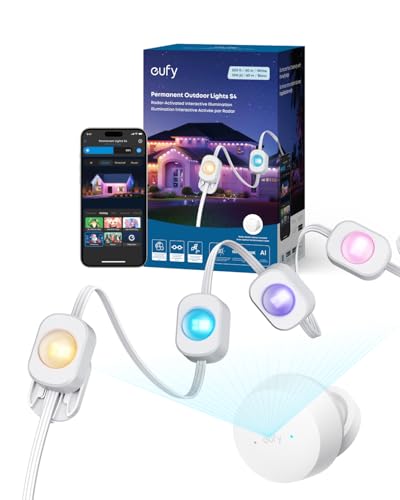
3-in-1 Lighting for Daily, Holiday, and Security: With 120°, 12 m radar coverage, this smart light strip offers precise motion detection for automatic lighting effects that follow your movement. Set customizable security alerts with flashing warnings to deter intruders.

Super Large Solar Street Light and 0 Electricity Bill: Our upgraded solar street light is larger in size than other street lights to provide super bright illumination. Solar street light fixtures are built-in with super bright led beads and high-capacity batteries (with a life span of up to 110,000 hours). solar powered, no electricity bill, automatically turns on at dusk, recharges during the day, and runs for approximately 74 hours in low-light mode
Use Cases: Security, Search-And-Rescue and Healthcare
When deployed in security environments, mmWave motion sensors operating at 60 GHz or 77 GHz provide persistent, privacy-preserving intrusion detection with through-drywall ranges typically of 15–20 meters (50–65 feet), subject to material attenuation, Fresnel zone effects, and antenna gain. 1. Security: Devices detect motion through drywall, using MIMO beamforming and FMCW processing to isolate targets, practical installation heights are 2–3 meters, coverage sectors set by antenna arrays, false alarms reduced by signal fusion. 2. Search-and-rescue: Portable systems penetrate light debris to locate survivors, range varies with rubble density, short-range handheld units map breathing and movement. 3. Healthcare: Non-contact monitoring measures heart rate and respiration, privacy is preserved, clinicians receive continuous essential-sign trends for patient safety. 4. Implementation guidance: calibration, firmware updates, and testing regularly. Motion-activated lighting, such as high lumen output options, can enhance the effectiveness of security by providing bright illumination only when needed, which conserves energy and extends the lifespan of the sensors.
Recommended Products

ZIGBEE 3.0: Extension for the SmartThings system and compatible with a growing number of Zigbee Smart Home Hubs.

Use w/ eeb2 or eeb3n
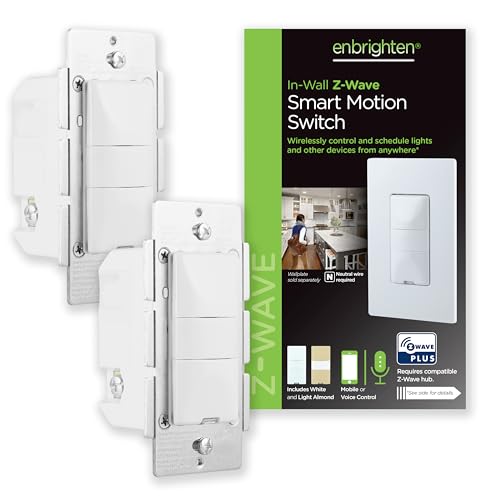
Motion settings – Personalize the switch with three motion-detection options; occupancy mode turns lights ON/OFF automatically, lights are turned on manually and off automatically in the vacancy setting and manual mode deactivates the motion sensor
Legal, Regulatory and Ethical Considerations
If installed in occupied buildings, 1. Regulatory compliance: Agencies such as the FCC require operation within assigned bands, commonly 24 GHz and 60 GHz ISM ranges, and limit continuous transmit power to approximately +14 dBm (25 mW) or lower, with specified duty cycle and spurious emission limits to prevent interference. 2. Legal obligations and consent: Operators must follow laws governing surveillance, obtain informed consent when required, document authorization, retain compliance records, and understand that failure to comply can incur fines and civil liability. 3. Ethical and data protection measures: Practitioners should minimize resolution and retention, encrypt raw I/Q data with AES-256, log access, anonymize crucial-sign outputs, and publish transparency statements to build public trust. Regular audits and certifications support compliance and institutional accountability periodically. Additionally, for outdoor applications, it’s important to consider the weatherproof ratings of equipment to ensure durability and reliability in various environmental conditions.
Deployment Best Practices and Integration Tips
- Deployment overview: When installing radar motion sensors for through-wall use, assess wall composition, note that drywall and plywood permit mmWave penetration, while concrete and brick reduce detection range by up to 70 percent.
- Sensor selection: Choose units with advanced algorithms, including MIMO beamforming and FMCW processing, to improve target discrimination and mitigate multipath reflections.
- Positioning and operation: Mount handheld or fixed radars flush against wall surfaces, maintain 0–5 cm standoff for fine-motion detection, and orient antennas toward expected target zones.
- Integration: Connect sensors to building management or emergency systems via Ethernet or MQTT for real-time alerts and data fusion.
- Maintenance: Perform calibration every 3–6 months, monitor temperature and moisture, replace components as needed. Routine logging guarantees reliable operational performance.
Recommended Products
Radar-Powered Accuracy Advanced radar technology delivers precise motion detection with reduced false alarms, ideal for complex indoor environments.

【Home Assistant Required】Works only with Home Assistant, an open-source smart home platform for local control and automation. Home Assistant must already be installed and running on a computer. Basic familiarity required.

Motion & Presence Detection: Presence Sensor combines mmWave radar with light-sensing technology and PIR sensor to accurately detect subtle chest movements from stationary humans. Perfect for bathrooms, reading, or office use, it prevents lights from turning off unexpectedly and enables automated lighting.
Future Directions and Emerging Sensing Technologies
Although several incremental improvements are already practical, future radar sensing will combine antenna, signal-processing, and engineered-material advances to broaden through-wall detection capabilities for mmWave systems. Antenna and waveform design: Deploy MIMO arrays 16–64 elements at 24–77 GHz to increase aperture gain and extend effective range, radar system’s sensitivity improves with beamforming and adaptive waveform shaping. Signal processing and ML: Implement real-time Doppler filtering and neural classifiers trained on labeled motion and essential-sign templates, enabling detection of respiration at 0.1–0.5 Hz and heartbeat at 1–2 Hz. Materials and multi-frequency operation: Integrate metasurfaces and dual-band sensors, combine 24 GHz penetration with 60–77 GHz resolution for robust indoor situational awareness. Cost reduction and compact packaging will enable wide deployment in homes and industrial sites at scale. Weatherproof garden lights often feature high IP ratings which reflect moisture and dust resistance, ensuring their durability under harsh environmental conditions.
Frequently Asked Questions
Can Radar See Through Objects?
Like a heartbeat felt through a wall, radar technology can see through thin materials; its sensing capabilities detect motion and essential signs, though effectiveness drops with thicker, denser obstacles such as concrete and brick structures.
Can a Motion Sensor See Through Glass?
Yes, a radar motion sensor can detect movement through glass, leveraging glass transparency; however, sensor limitations include frequency-dependent attenuation and reduced sensitivity through thicker or coated glass, affecting detection range and Doppler signal accuracy overall.
What Material Is Not Detected by Radar?
No material is entirely undetectable; continuous conductive surfaces such as metallized coatings or steel structures strongly reflect radar, while high radar absorption materials like thick wet concrete can prevent return signals and appear invisible altogether.
What Materials Are Invisible to Radar?
Metals with sufficient metal thickness and conductive shielding, along with dense structures exhibiting high radar absorption—such as thick reinforced concrete and heavy brick—tend to be effectively invisible to radar, while thin plastics remain detectable.


