As an Amazon Associate, we earn from qualifying purchases. Some links on this site are affiliate links at no extra cost to you. Our recommendations are based on thorough research and editorial judgment.

Motion Lighting Ideas for Front Yard Makeovers

1) Safety: mount IP65 motion fixtures at 1.8–3.5 m, use 800–2,500 lm output, space 2–3 m on perimeter for deterrence, set sensors to 10–200 lux and 10–60 s runtime. 2) Pathways: install 5–10 W solar or 8–15 W LED, mount 0.6–1.2 m high for even spread. 3) Accents: use 15°–60° beam, 8–60 cm stake height. 4) Driveways: pick low-glare optics, set dim-to-bright triggers, mount at 1.8–2.4 m to improve vehicle sightlines. Additional guidance appears below.
Key Takeaways
- Use motion-activated pathway lights (800–1600 lumens) spaced 2–3 meters to improve safety and curb appeal.
- Mount security sensors at 2.5–3.5 meters on walls or conduit for optimal perimeter coverage and deterrence.
- Add low-glare accent fixtures 8–24 inches high to highlight plants and sculptures with 15–60° beam angles.
- Choose IP65-rated, energy-efficient LEDs or solar units (5–10 W panel, 2000–6000 mAh battery) for durability and reduced runtime.
- Plan locations and cable routes on a scale drawing, then perform quarterly sensor checks and monthly lens cleaning.
Benefits of Motion-Activated Lighting for Front Yards
You may be interested
1. Section 1: Safety and visibility—motion activated systems illuminate walkways and entryways to 200–400 lux, reducing trip hazards and improving navigation at night. 2. Section 2: Security deterrence—Placed lighting fixtures at 2–3 meter intervals along perimeter walls create an impression of occupancy, discouraging intruders. 3. Section 3: Energy efficiency—Sensors activate lights only when needed, lowering runtime by 60–90 percent compared with constant-output systems, and reducing utility load. 4. Section 4: Installation guidance—Most units mount on 1/2-inch conduit or exterior walls at 2.5–3.5 meters height, requiring basic tools and minimal wiring for retrofit. 5. Section 5: Maintenance—Use IP65-rated enclosures, check sensors quarterly, and program sensitivity to keep your property monitored effectively. Select models with adjustable timer, detection angle, and dusk-to-dawn override for tailored performance effectiveness. Additionally, motion sensor light features such as wide detection range and configurable lumens output can significantly enhance security and illumination in front yard spaces.
Best Solar Motion Lights for Pathways and Borders

An effective selection of solar motion lights for pathways and borders requires evaluation of panel wattage, battery capacity, lumen output, detection parameters, and enclosure rating, to ascertain reliable night-time illumination without supplemental wiring. 1. Performance specifications: choose 5–10 W effective panel equivalents, 2000–6000 mAh lithium batteries, and 200–800 lumen outputs to secure 3–6 meter usable illumination corridors, adjust detection angles to 90–180 degrees, and set motion range to 4–8 meters for pedestrian traffic. 2. Durability and placement: select IP65 or higher housings, mount at 0.6–1.2 m height for peak beam spread, orient panels for maximum insolation, and space units 2–4 m along borders. Solar-powered lighting solutions are environmentally friendly as they reduce electricity costs and minimize wiring efforts. 3. Aesthetics and integration: use matching fixtures to boost curb appeal, coordinate with backyard lighting, and ascertain consistent color temperature for visual continuity.
Motion-Triggered Porch and Entryway Fixtures

Section 1. 1. Overview: Motion-triggered lighting for porches and entryways provides deterrence and visibility, activating in response to movement within a 6–12 meter radius, adjustable via sensitivity controls. 2. Fixture selection: Choose light fixtures rated for exterior use, IP54 or higher, with LED modules of 800–1600 lumens to illuminate thresholds and steps effectively. 3. Placement and install motion guidance: Mount at 2.1–2.4 meters height above finished floor, angle sensors to cover approach vectors, space fixtures to avoid blind spots approximately 3–4 meters apart. 4. Energy and operation: Use LED drivers with dusk-to-dawn photocell override and five to thirty second timers, test activation range after installation. 5. Maintenance: Inspect seals annually. Adjust sensitivity to reduce false triggers from road traffic, and document settings for future reference. Motion-triggered lights can also integrate with home automation systems to provide centralized control and enhance user convenience.
Highlighting Landscaping With Motion Accent Lights

When aiming to highlight landscape features while conserving energy and improving safety, a structured, technical approach is required: 1. Site assessment: measure distances from fixtures to focal points, typically 3 to 10 ft for small shrubs, 10 to 25 ft trees. 2. Fixture selection (outdoor lighting): choose low-glare, dimmable motion accent lights with adjustable beam angles of 15 to 60 degrees, specify IP65 rating, color temperature 2700 to 3000 K. 3. Placement strategy: mount at 8 to 24 inches above ground for flower borders, 2 to 4 ft for sculptures, orient sensors to cover pathways without triggering traffic. 4. Wiring and power: use 12 V transformers or solar modules sized for cycles. 5. Testing: verify coverage, adjust sensitivity, confirm highlight landscaping outcomes. Consider using solar options for a cost-effective and environmentally friendly installation in areas with adequate sun exposure.
Recommended Products
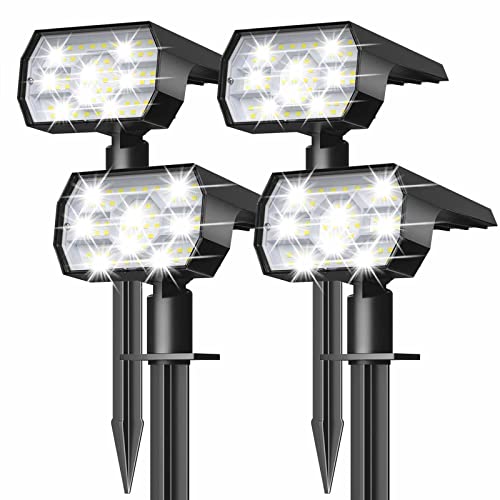
NYMPHY Outdoor Lights 4 Pack: Equipped with 56 amazing LEDs (market leading). Solar outdoor lights will create the perfect lighting accent wherever it is placed. Light up your garden by channeling the power of the sun without incurring a huge electricity bill. These solar lights can stay lighted for up to 6-20 hours, depending on the amount of sunlight they get. Compared with other solar-powered lights in the market, ours will stay lighted for longer, stay brighter, and are more durable.

Solar garden lights: Each solar lights has 8 LEDs, adopt of the advanced, LED energy-saving, Ni-MH 600 solar lamp. 8-10 hours runtime with 8 hours of sunshine, save energy and be eco-friendly

GKGG Solar Outdoor Lights: With 76 amazing LEDs!Easily create an unparalleled lighting feast. Use the sun's natural energy to bring light to your garden while staying away from high electricity bills.
Motion Lighting for Driveways and Garage Areas

- Driveway illumination enhances access and visibility, motion-activated lighting activates when vehicles or pedestrians approach, providing automated illumination for nighttime arrivals and reducing manual control requirements.
- Energy and integration considerations instruct installers to select low-wattage LED modules and motion-triggered controls, conserving power since lights operate only on detection, and enabling significant reduction in runtime and utility expense.
- Installation flexibility and durability recommend planning for integration during construction or retrofitting to existing garages, using weather-resistant fixtures rated for outdoor use, sealed enclosures, corrosion-resistant mounts, and compatible wiring, sure to check manufacturer IP ratings and local codes.
- Maintenance and functionality: schedule periodic inspections for sensor cleanliness, lamp efficacy, and connection integrity; lighting can increase home curb appeal and perceived security when implemented professionally.
- Low voltage lights significantly reduce energy consumption, making them an energy-efficient choice for homeowners looking to save on utility bills while maintaining effective outdoor lighting.
Safety Tips for Motion Sensor Placement and Angle
Guideline 1: Sensor height and coverage — Position motion sensor lights at a mounting height between 7 and 10 feet above ground level, which minimizes activation from pets and small animals while preserving a broad detection envelope for approaching pedestrians and vehicles, and guarantee the fixture is oriented to capture lateral movement across paths and driveways rather than direct radial motion. 1. Angle and field of view: set sensors with a 90–180° detection arc, tilt down 15–30° to prioritize cross-path motion, and verify overlap to eliminate blind spots. 2. Sensitivity and interference: reduce sensitivity to ignore small animals and vegetation, test with human walk-by events, adjust light levels to avoid glare. 3. Maintenance: keep lenses clean, trim foliage, and inspect quarterly. Weatherproof rating is also crucial, ensuring durability against rain and snow. Lighting alongside recommended.
Styling Tips: Materials and Finishes for Motion Fixtures
A primary consideration in selecting materials and finishes for motion fixtures is weather resistance, indicated by corrosion class, coating thickness, and IP ratings. 1. Material selection: Specify metals such as weathered bronze, copper, or brass, with coating thickness of 50–100 µm, corrosion class C3–C5, and expected service life of 10–25 years, the materials used age attractively and withstand salt and moisture. 2. Finish and glare control: Choose matte or textured finishes to reduce glare, permit a bright light distribution without hotspots, and favor 120–140 degree diffusers for even illumination. 3. Functional design: Prefer LED light fixture modules rated IP65, with lumen outputs of 800–2500 lm, and incorporate decorative patterns that match architectural style for cohesive curb appeal. Select finishes that require minimal refinishing intervals. Many top security lights, like the Onforu 120W model, offer great weather resistance with IP65 ratings, ensuring long-lasting performance in diverse climates.
DIY Installation and Maintenance for Motion Lighting
When preparing a DIY motion-lighting installation, the installer should document fixture locations, power sources, and sensor coverage, using scale drawings at 1:50 and site photographs. 1. Planning: specify mounting heights (1.8–2.4 m), cable routes, and sensor arcs, calculate load and select LED fixtures to maximize energy efficiency, and verify waterproof ratings. 2. Installation: use appropriate anchors, conduit, and IP65 junctions, connect circuits following local code, and adjust timers and sensitivity to desired activation distance. 3. Maintenance: clean lenses and solar panels monthly, check seals and batteries every six months, and recalibrate sensors after vegetation changes to maintain motion lights performance. Documentation should be retained, and testing recorded after each service. Owners should schedule preventive checks annually, retain manufacturer manuals, and log operational anomalies promptly. It’s important to choose solar lights with a high lumen output for bright and efficient illumination in outdoor spaces.
Recommended Products

210 High-Power LEDs & Focused Optical Lens Technology: Upgrade your security with KOOPER motion sensor outdoor lights, featuring 210 high-brightness LED beads and honeycomb lens technology. Unlike basic 100-LED solar flood lights, this solar motion light delivers a concentrated beam to significantly reduce dark areas in your driveway or backyard. The 3-head solar powered outdoor lights design provides 300° ultra-wide coverage for real-world visibility and safe

【270° Wide-Angle Solar Motion Flood Lights】Our solar lights outdoor waterproof are equipped with 3 adjustable lamp heads and an upgraded motion detection chip, delivering 270° wide-angle illumination for all-around coverage. The built-in PIR sensor detects movement within a 180° range up to 30 feet, instantly activating bright light to enhance outdoor security. Perfect as solar motion lights outdoor and motion flood lights for outside, these solar powered outdoor lights provide reliable protection for your yard, patio, and house.

🔋 【INNOVATIVE BATTERY & MODE INDICATOR with STEALTH OPTION】 Unlike traditional solar lights, our upgraded motion sensor outdoor lights eliminate guesswork. The Left Indicator displays real-time battery levels (25%-50%-75%-100%), while the Right Indicator shows the active mode via distinct colors (Red/Green/Blue). 💡Upgraded Feature: Simply press and hold for 3s to turn off the indicator lights for a completely dark, stealth look at night. Setup and monitoring are now entirely intuitive and frustration-free!
Frequently Asked Questions
What Are the Latest Garden Lighting Trends?
Latest garden lighting trends emphasize solar powered fixtures, smart lighting integration and refined LED design, plus motion activated security, festoon accents, in ground pathway lights, natural metal finishes for energy efficiency and enduring outdoor appeal.
What Is the Rule of Thumb for Landscape Lighting?
The rule: aim for 1–2 foot‑candles on paths; space driveway lights ~10ft; set accents 10–15ft from features; mount fixtures 6–8ft high—ensuring balanced landscape lighting, considered illumination design and outdoor ambience for safety and visual appeal.
What Lighting Is Best for a Front Porch?
65% of homeowners favor layered illumination; the best lighting for a front porch is fixtures combining porch lanterns styles with ambient lighting options and motion-activated, energy efficient solutions to balance safety and curb appeal value.
What Is the Cheapest Way to Light up a Backyard?
The cheapest way is combining Solar Pathway Lights, LED String Lights and simple DIY Lighting Solutions to avoid wiring and electricity costs, using motion-activated solar options and retrofitted LEDs for long-term efficiency and low maintenance.


