As an Amazon Associate, we earn from qualifying purchases. Some links on this site are affiliate links at no extra cost to you. Our recommendations are based on thorough research and editorial judgment.

Choosing Color Temperature That Keeps the Night Sky Dark

1. Color: Specify 2700K or lower, preferably 2200–2700K, to minimize blue-rich emission, reduce Rayleigh scatter and skyglow, and favor LED sources. 2. Shielding: Employ full-cutoff fixtures and downward optics, mount at the lowest effective height, and eliminate uplight. 3. Intensity: Limit residential fixtures to ≤800 lm, pole lighting to 300–500 lux, and add dimmers and motion sensors. 4. Timing: Use timers and curfews to limit nocturnal exposure. Refer to municipal codes, ENERGY STAR, and community standards.
Key Takeaways
- Choose warm color temperatures at or below 2700K to minimize blue light and reduce skyglow.
- Avoid cool lights above 4000K, which increase scattering and harm wildlife and human sleep.
- Use LEDs with low blue spectral content or filtered optics to limit short-wavelength emissions.
- Pair warm fixtures with full cutoff shielding to prevent upward light and preserve dark skies.
- Implement dimming, timers, and motion sensors to reduce nighttime lumen output and unnecessary illumination.
What Is Outdoor Lighting and Why It Matters
1. Outdoor lighting is defined as intentionally installed luminaires for exterior spaces, designed to provide safety, security, ambiance, and functionality, with fixture placement, shielding, and color temperature specified to minimize light pollution. 2. Technical specifications: recommend warm color temperatures of 2700K–3000K for pedestrian areas, limit pole-mounted flood lighting to 300–500 lux peak with fully shielded downward optics, avoid high-Kelvin sources above 6000K that increase skyglow. 3. Implementation examples: use full cutoff fixtures, aim shields at task areas, set timers or motion controls to reduce operating hours, and employ 10–30 lux pathway illumination for wayfinding. 4. Outcomes: properly selected outdoor lighting enhances safety and preserves nocturnal environments, reassuring stakeholders of measurable dark-sky compliance. Periodic photometric surveys, using lux meters and sky quality meters, verify performance. Solar-powered outdoor lights, such as the LYWALT Solar Outdoor Lights, are effective in reducing energy consumption while providing adequate illumination for exterior spaces.
Understanding Color Temperature and Kelvin Ratings

Consider spectral characteristics and Kelvin ratings when specifying exterior luminaires, because color temperature directly influences perceived warmth, atmospheric scattering, and ecological effects.
- Definition and scale: Color temperature is measured in Kelvins, a numerical scale where lower values (2000K–3000K) produce warm white tones, while higher Kelvin ratings exceed 6000K and yield cool, blue-rich light.
- Practical recommendations: Specify 2700K or lower for permanent outdoor fixtures to minimize light pollution and preserve star visibility, use color-selectable drivers to switch modes, and choose shields and optics to control glare.
- Technical rationale: Cooler color temperatures scatter more in the atmosphere, increase skyglow, and elevate ecological impact; hence, selecting warm light reduces environmental consequences.
Modern garden lights often feature energy-efficient LED technology, which consumes up to 80% less energy than traditional incandescent bulbs, making them a sustainable choice for outdoor illumination.
Implement specifications in municipal codes and project plans, documenting Kelvin limits and operational curfews. Regular monitoring.
How Light Affects Circadian Rhythms and Wildlife

Why does artificial night lighting, particularly blue-rich spectra, exert measurable effects on human circadian rhythms and wildlife behaviors? 1. Human physiology: Exposure to light above 4000K suppresses melatonin production, shifting circadian phase by hours, increasing sleep disorder risk, measured in lux thresholds as low as 30–50 lux for sensitive individuals. 2. Wildlife impacts: Blue-rich light disrupts mating and foraging cues, alters nocturnal activity patterns, and elevates predation and collision mortality rates near illuminated structures. 3. Mitigation guidance: Selecting warm tones of 2700K–3000K reduces spectral blue content and physiological impact, while managing light levels to the minimum required supports ecosystem health. 4. Conservation outcome: Preserving dark sky conditions helps maintain natural behaviors, supporting biodiversity and resilient habitats. Recommended practices are evidence-based and practically achievable today. Solar-powered garden lights, such as those with high efficiency solar panels, offer an environmentally friendly option that can help reduce the impact of artificial lighting on natural ecosystems.
The Four Steps: Shielding, Color, Intensity, and Timing

Although engineering goals often emphasize uniform illumination, the Four Steps framework directs attention to targeted control, specifying shielding, color, intensity, and timing as sequential priorities for outdoor lighting design, each step tied to measurable parameters and regulatory compliance. 1. Shielding: Specify shielded fixtures, full cutoff optics, mounting heights, and aiming angles to direct light downward, minimizing skyglow and glare, use 0°–10° tilt and restrict uplight to 0%. 2. Color: Select warm color temperatures below 2700K, which reduce Rayleigh scattering and blue emissions, improving star visibility. 3. Intensity: Limit output to task-appropriate levels, approximately 800 lumens for residential zones, with dimming capability. 4. Timing: Employ timers and motion sensors, curfews after 23:00, and verify compliance with local lighting ordinances. Implementation reduces skyglow and preserves night. Solar-powered landscape lights offer an eco-friendly solution that reduces reliance on electricity through solar energy, supporting sustainable landscaping practices.
Best Color Temperatures for Common Outdoor Fixtures

- Path and step lights: specify 2700K Warm White to reduce glare and guarantee safe navigation, fixtures should provide 5–15 lux at walking surface, use full cutoff optics and 10–15° downward tilt.
- Uplights: choose 2700K Warm White for tree and façade accent, apply narrow beam angles (10–25°) and low lumen outputs (100–300 lm) to avoid skyglow.
- Downlights/moonlighting: select 3000K, emulate natural moonlight, position at canopy edge, mount high with shielded lenses, target 1–3 lux.
- Security lighting: prefer 3000K over Cool White, maintain 200–600 lm with motion sensors and timers, minimize continuous lighting after dark to protect wildlife and preserve darkness.
Select fixtures rated for correlated color temperature stability, specify 2700–3000K, verify spectral power distribution, and document installation parameters for municipal review. Solar-powered lights are a great option for security lighting, as they are environmentally friendly and can automatically charge in the daylight, providing illumination throughout the night.
Dark Sky Communities: Principles and Benefits
Many Dark Sky Communities adopt extensive lighting controls and measurable limits to preserve nocturnal environments, reduce skyglow, and protect wildlife. 1. Ordinances: Establish quantitative limits on lumen output per fixture, specify correlated color temperature at or below 3000K, require warm color for exterior lighting, mandate curfews and lumen caps, and define penalties. 2. Fixture requirements: Require fully shielded, downward-directing luminaires to eliminate upward light, limit mounting heights to reduce horizontal spill, and specify photometric testing and BUG ratings. 3. Benefits: Enhanced stargazing, reduced ecological disruption, improved human sleep, and community tranquility, measurable via sky quality meters and biodiversity monitoring. 4. Implementation: Combine public education, incentives for retrofit, and enforcement protocols to guarantee sustained dark sky protection. Results are monitored annually using standardized metrics. Communities may also adopt energy efficiency certifications like ENERGY STAR to ensure that lighting not only complies with dark sky principles but also contributes to energy conservation.
Choosing Dark-Sky Compatible Fixtures and Shielding Options
Section 1: Fixture selection and shielding principles establishes specifications for luminaires, including correlated color temperature limits, shielding construction, lumen caps, BUG ratings, and mounting height guidelines, all intended to comply with dark-sky compliant lighting ordinances and reduce skyglow while maintaining functional illumination. 1.1 Color and spectral control: specify 2200K–2700K sources, do not exceed 3000K, lower color temperature reduces short-wavelength scatter and preserves scotopic vision for stargazing. 1.2 Shielding and photometry: select fully shielded fixtures with U0 full cutoff optics, require IES photometric files confirming zero uplight and limited off-axis candela. 1.3 Lumen and mounting guidance: use 300–600 lm for pathways, 600–1200 lm for security, mount at 3–4 m in residential areas. 1.4 Controls and verification: require timers, PIR sensors, dimming and post-installation photometric verification. For optimal solar-powered performance, ensure that motion sensor bollard lights are exposed to full sun exposure, as this is crucial for their effective operation and longevity.
Practical Tips for Homeowners: Installation, Controls, and Testing
For homeowners, 2.1 Installation planning and fixture placement: evaluate site conditions, choose fixtures at 2700K or lower, and position luminaires to minimize glare. 1. Placement and orientation: map property, installing downward shielding, limit uplight, keep fixtures at or below 2.5 meters for even coverage, maintain 3–4 meter spacing for pathway lights. 2. Light levels and color: select 2700K or lower, set outputs near 800 lumens per fixture for general use, dimmers can reduce intensity while preserving color fidelity. 3. Controls and energy: use timers, motion sensors, and photocells to restrict runtime, place sensor arcs to avoid false triggers. 4. Verification and maintenance: perform nighttime testing, document trespass or glare, adjust aim, and schedule annual inspections. Record results and provide neighbor notifications when adjustments occur. Consider using remote control features for easy brightness adjustments and automated scheduling to enhance energy efficiency and convenience.
Recommended Products

【ALL-IN-ONE LANDSCAPE LIGHTING KIT & COST SAVING】 Buy the set for $399.99, buy the items separately for $480.95—save $80.96. Comes with everything you need: 12*5W landscape spotlights (with pre-installed MR16 LED bulbs), 1*200W low voltage transformer (timer & dusk-to-dawn sensor included), 1*150FT 14/2 AWG landscape wire, 12*wire connectors, and a user manual. No need to purchase additional accessories – truly plug-and-play for your outdoor lighting project
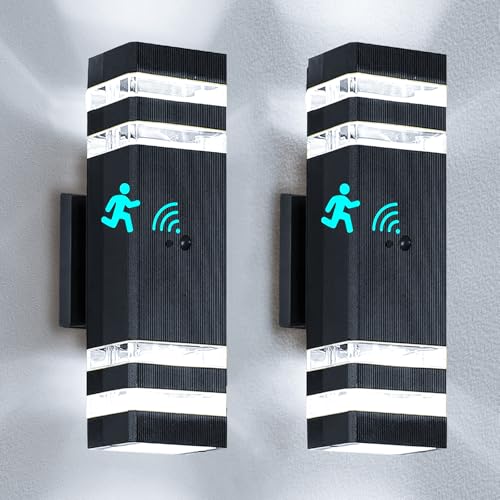
【Smarter Lighting with Motion & Dusk-to-Dawn Sensors】 Equipped with both PIR motion(25Ft)and IC dusk-to-dawn sensors, this outdoor wall light automatically turns on at sunset and brightens to full intensity when motion is detected. Say goodbye to stumbling in the dark and wasting electricity—perfect for enhancing security while saving energy.

【Smart Motion Sensor with 3 Custom Modes】Motion Mode: Our motion sensor porch light auto turn on 40% brightness at dusk and boosts to 100% brightness when motion is detected, then back to 40% brightness after 120s ; ECO mode: Activates the lights only when motion is detected ; Dusk to Dawn Mode: Constant 100% brightness from dusk for up to 8 hours, Meet the needs for special times of parties, gatherings, or all-night lighting.
Local Examples and Case Studies of Dark Sky-Friendly Lighting
- Case study: In Texas, several towns adopted dark sky ordinances specifying fixtures below 2700K, shielded luminaires, and mounting heights limited to 4 meters, which reduced skyglow and improved stellar visibility.
- Implementation details: The Greater Big Bend International Dark Sky Reserve installed fully shielded downlights, 2200K–2700K LEDs, 300–500 lumens for path lighting, and motion sensors with 15-minute timers, which minimized scatter and glare.
- Policy and outreach: Local ordinances require downward shielding, low-lumen limits, and curfews, while community engagement includes workshops, demonstration installations, and homeowner guides, providing measurable compliance rates and reassurances about safety and visibility improvements.
- Technical rationale: Warm-colored lighting reduces Rayleigh scattering, lower CCT yields less blue emission, cutoff fixtures below 90 degrees prevent uplight, improving sky brightness metrics measurably.
- Weatherproof outdoor lights are designed with high waterproof ratings and shatterproof materials to withstand extreme weather conditions, ensuring reliable performance and durability.
Frequently Asked Questions
What Is the Color Temperature for the Dark Sky?
It is about 2700K or lower, favoring warm tones to minimize scattering; this recommendation reflects color temperature effects and supports night sky preservation as a practical light pollution solutions approach through shielded, low‑lumen fixtures overall.
Is 4500K or 5700K Color Temperature Better?
4500K is preferable; the avenue shimmers like a washed parchment at dusk while planners note LED lighting impact and color temperature effects, recommending urban lighting solutions favor warmer, lower kelvin choices to reduce sky glow.
Is 4000K or 6500K Brighter?
4000K is not inherently brighter than 6500K; a light intensity comparison emphasizes lumen output differences, and visual perception effects make 6500K appear harsher and brighter despite identical lumen ratings, so lumen values determine actual brightness.
What Is the Best Color Temperature for Night Lights?
A gentle recommendation: warm tones below 3000K are best for night lights, balancing safety and serenity. Designers consider night light types, calming colors, and reduced light pollution to preserve sleep, wildlife, and clearer night skies.


