As an Amazon Associate, we earn from qualifying purchases. Some links on this site are affiliate links at no extra cost to you. Our recommendations are based on thorough research and editorial judgment.


Radar Vs PIR: What’s Really Inside Motion Sensor Bulbs?

1) PIR: uses dual thermopiles behind a Fresnel lens to sense infrared differentials, effective 5–10 m with 90–120° field, suited for focused line‑of‑sight mounting, minimal RF emissions. 2) Radar: emits 3.2–4.0 GHz continuous waves, measures Doppler shifts for 360° or up to 6 m omnidirectional detection through non‑metal obstacles, higher supply current but fewer false alarms. 3) Hybrid bulbs combine both for reliability, see device schematics for integration. Further sections provide implementation details, wiring diagrams, and calibration steps.
Key Takeaways
- PIR-based bulbs contain passive infrared sensors (dual thermopiles), Fresnel lenses, and simple comparator electronics to detect warm-body heat and motion.
- Radar-based bulbs include microwave Doppler modules, RF front-ends, and microcontroller signal processing for 360° detection and obstacle penetration.
- PIR excels at low power and long straight-line range but needs clear line-of-sight and can false-trigger from temperature changes.
- Radar detects small, through-obstacle motion and reduces nuisance alarms but uses more power and more complex digital filtering.
- Many bulbs combine PIR and radar for complementary reliability: PIR for low-power presence sensing, radar for fine motion tracking and fewer false alarms.
How PIR Sensors Detect Motion
1. Overview. PIR sensors require precise alignment to function, they detect infrared radiation emitted by warm bodies and compare signals from dual thermopiles to identify movement within a defined detection range of up to 10 meters and a typical sensing angle of 90 to 120 degrees. 2. Operation. The device measures changes when a warm object crosses zones, systems detect heat differentials and trigger outputs when motion detected exceeds sensitivity thresholds, sensitivity is adjustable for indoor or outdoor lighting applications. 3. Constraints. Environmental factors such as temperature shifts, humidity, and physical obstructions can reduce reliability and cause false triggers, installers must position sensors to minimize direct sunlight and airflow, and test coverage under expected conditions. Routine calibration and documented testing improve long term performance. Additionally, weather resistance is crucial for outdoor PIR sensors, with ratings like IP65 ensuring durability against harsh conditions.
How Radar Sensors Work
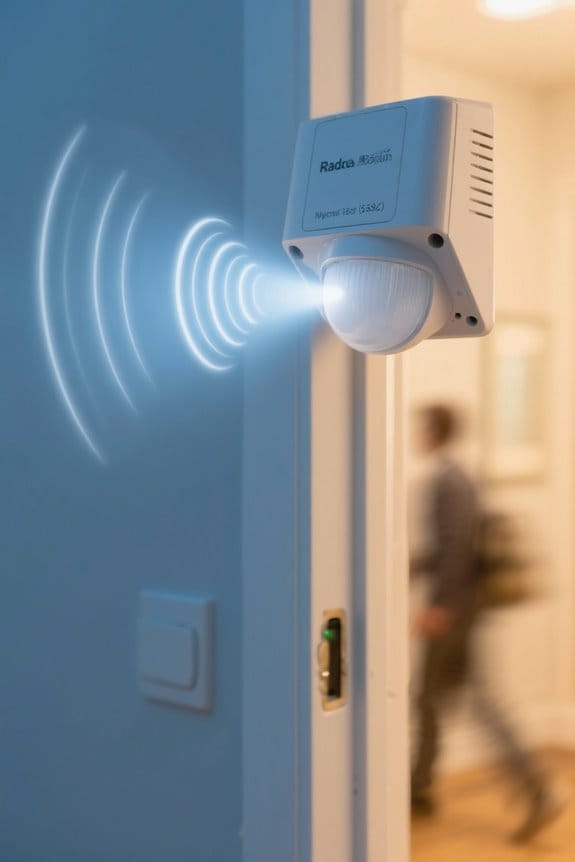
Radar sensors operate by emitting a continuous stream of radio waves and analyzing frequency shifts caused by moving objects, using the Doppler effect to detect motion across wide areas and to estimate speed and direction. 1. Principle: Radar-based motion sensors measure frequency changes in returned signals, compute velocity and vector components, and support object detection through phase and amplitude analysis, enabling signal transmission processing that isolates moving targets. 2. Implementation: Typical systems use FMCW or CW architectures, digital filtering, and microcontroller firmware to interpret echoes, provide 360-degree scanning, and penetrate non-metallic obstacles, unlike PIR. 3. Practical notes: Installation requires attention to antenna placement, interference management, and calibration. Maintenance is minimal, reliability is high. Manufacturers recommend periodic firmware updates and sensitivity reassessment for sustained accuracy. Additionally, some motion sensor lights are equipped with upgraded PIR sensors designed to reduce false triggers from pets or wildlife, enhancing their practicality for residential use.
Comparative Performance: Range and Coverage
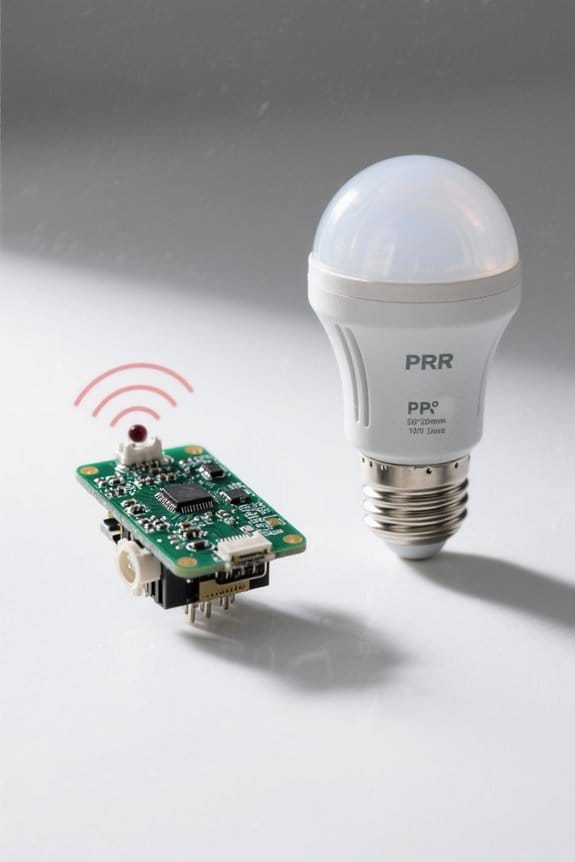
1) Detection range and field of view: motion sensor bulbs differ markedly in maximum distance and angular coverage, which directly influences mounting height, spacing, and zoning strategies for effective area protection. Radar sensors typically offer up to 20 feet range with 360-degree coverage, suitable for central ceiling placement, while PIR technology often provides 30–50 feet range but a limited 90–120 degree field of view, requiring directional placement. 2) Line-of-sight and penetration: PIR requires unobstructed line-of-sight, radar sensors can detect through thin partitions, enabling corridor and multi-room sensing. 3) Implementation guidance: for open areas use radar for extensive coverage and advantages of radar include consistent environmental performance; for focused detection use PIR to reduce irrelevant coverage. Adjust mounting height and overlap zones for reliable motion detection. Solar-powered models might be less effective in cloudy climates, impacting their performance and suitability for certain regions.
Recommended Products

3000K Soft White and Energy Saving: 100-watt replacement uses only 11.5 watts of energy and produces about 1050 lumens of light, saving more than 80% electricity bill...
Sensitivity, False Alarms and Reliability
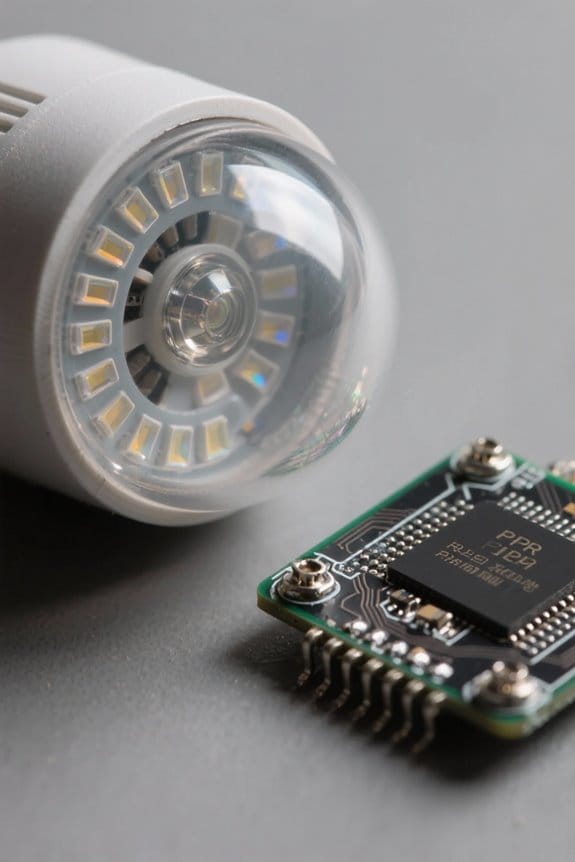
1. Sensitivity assessment and reliability evaluation require quantifiable metrics, because sensitivity, false-alarm susceptibility, and consistency determine effective sensor selection and placement. Radar technology typically provides 360-degree coverage and can detect motion detection events as small as 0.05 m/s, through obstructions, while PIR sensors have a 90 to 120 degree field and detect larger thermal differentials. 2. False alarms: radar tracks position, speed and direction, reducing spurious triggers from small animals and thermal shifts. PIR sensors are prone to false alarms due to rapid temperature changes and drafts. 3. LED models typically consume ~11.5W while offering multi-level brightness, contributing to energy efficiency and cost-effectiveness. 4. Reliability: radar maintains performance across weather and diurnal cycles, PIR performance degrades with extreme temperature or humidity. 5. Cost: higher radar expense often yields lower operational costs. 6. Implementation guidance recommends sensor calibration intervals, diagnostics logging, and firmware updates sustain reliability.
Environmental and Installation Considerations
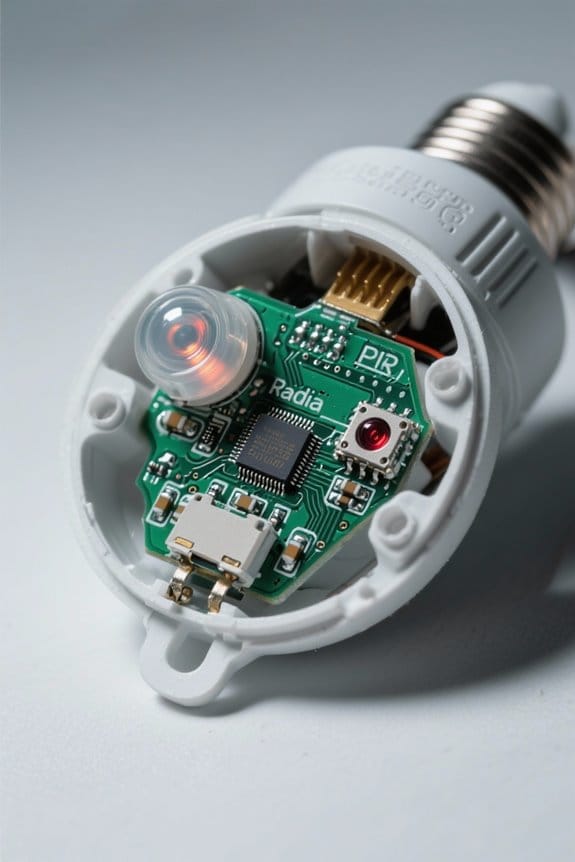
Overview: Environmental and installation factors determine sensor performance, including detection frequency, field of view, mounting geometry, and ambient thermal and moisture conditions, all of which must be evaluated before selecting or placing a motion-sensor bulb. 1. Radar deployment: A radar sensor operating near 4.0GHz provides 360-degree coverage and up to 20 feet range, permitting covert placement behind fixtures, consistent operation in varied environmental conditions, and dusk-to-dawn control for improved energy efficiency. 2. PIR constraints: PIR sensors require direct line of sight, are temperature sensitive, and commonly detect within roughly 10–15 meters, hence needing clear open space and careful orientation during installation. 3. Recommendations: Match sensor type to site geometry, verify mounting height, and test coverage before finalizing installation. Document motion sensors settings, schedule verification. Solar-powered security lights should ideally have an IP65 weatherproofing rating, ensuring durability and functionality even in harsh outdoor conditions.
Power Consumption and Cost Trade-offs
Power consumption profiles and cost considerations: radar sensors draw about 15 watts, providing light equivalent to a 100-watt incandescent, increasing system-level efficiency. 1) Power consumption overview: radar motion sensor units typically consume 15 W under active operation, while PIR sensors operate with lower electrical requirements, commonly specified at 5–12 volts for low-power modules, resulting in reduced standby and operational draw. 2) Cost trade-offs and lifespan: radar devices incur higher upfront cost, offer longer rated life, and can yield energy savings when used for extended active periods or large detection range coverage. 3) Implementation guidance: choose PIR for budgeted, small-area installs; select radar for wider coverage, variable-speed environments, and where long-term energy savings justify higher purchase price. A professional energy audit informs the final decision. Motion sensor bulbs are typically not compatible with dimmer switches, which can lead to performance issues and should be considered when planning for an installation.
Combining PIR and Radar: Dual‑Sensor Advantages
When combined into a single bulb assembly, passive infrared (PIR) and Doppler radar sensors create a complementary detection system that reduces false triggers. 1. System architecture: A dual-sensor bulb requires signal fusion logic, where PIR confirms thermal signatures within about 10 meters, and radar validates motion vectors beyond 30 meters, improving motion detection confidence, minimizing spurious activations from light, wind, or small animals. 2. Implementation details: Typical units bias PIR for low-power standby, then enable radar bursts for confirmation, conserving energy efficiency while maintaining perimeter awareness. 3. Applications and benefits: Such designs enhance security applications by reducing nuisance alarms, support automated lighting control, and provide reliable detection through obstacles, reassuring installers and end users, with measurable reductions in false activations and operational costs annually. Motion detection range is a critical factor to consider when choosing an outdoor light, with many models offering a range up to 72 ft.
Typical Use Cases and Market Applications
Building on combined PIR and radar designs, this section enumerates typical use cases and market applications, specifying deployment scenarios, measurement parameters, and integration approaches. 1. Residential perimeters: PIR motion sensors commonly trigger security lighting at 10–15 meters, deployed on porches and driveways, configured for low false positives and manual sensitivity adjustment. 2. Commercial and municipal sites: radar units cover 360-degree fields, detect through obstructions up to 20 feet, ideal for parking lots and building exteriors, integrated with lighting controls and CCTV. 3. Energy management: motion sensors with energy-saving schedules disable during daylight, activate at night, reduce consumption across campuses. 4. Hybrid installations: combined sensors provide redundant detection, improve reliability, and support zone-based automation for security lighting. These deployments meet regulatory standards and operational expectations. In addition, energy-efficient options, such as LED bulbs, can be integrated into these systems to further reduce electricity costs while maintaining brightness.
Recommended Products
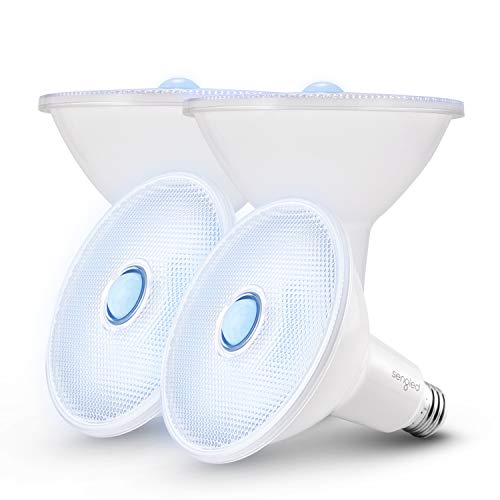
5000K Daylight Super Bright: Outdoor motion sensor light gives off a bright amount of blue-white light, 5000 Kelvin, similar to the daylight, best for porch, garage, driveways, and work environments where bright illumination is needed. Not for sale in California.
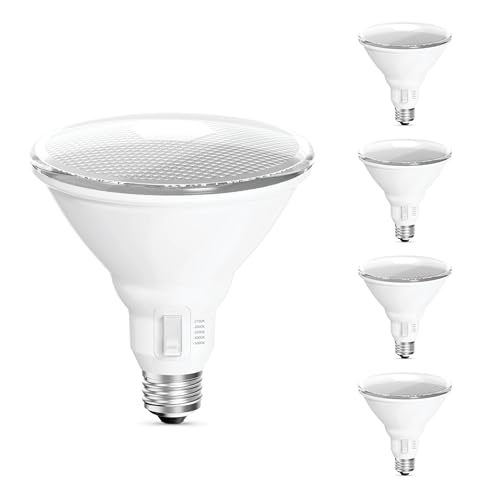
CUSTOMIZABLE LIGHTING WITH 5-COLOR ADJUSTABLE WHITE – The PAR38 LED Flood Light Bulb comes with a 5-color adjustable white feature, allowing you to select the perfect light temperature to suit your needs. Whether you prefer a cool white for bright security lighting or a warmer tone for ambiance, you can easily adjust the color temperature for optimal performance.
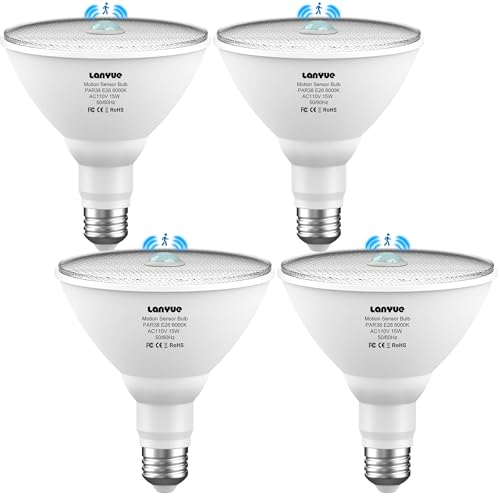
Motion Sensor Light Bulb, Super Bright 15W with 1200lm brightness, 6000k daylight provides crisp, vibrant lighting, fits standard E26 socket, easy to install, just plug and play.
DIY and Development Platforms for Radar and PIR
- DIY platforms overview: Hobbyists and engineers can integrate PIR and radar modules on Arduino boards for motion detection projects, using digital outputs to read triggers, set thresholds, and log events to storage or displays. The HC-SR501 operates at 5–12V and offers adjustable delay, enabling timed lighting and security applications.
- Radar development: Modules like the RCWL-0516 run at 3.2GHz with 360° sensing, suitable for range detection; development kits such as Infineon XENSIV BGT60LTR11AIP support antenna, IC integration, and range profiling for compact designs.
- Implementation guidance: Both sensor types output digital signals compatible with microcontrollers, use level shifting when required, and require calibration, shielding, and power filtering for reliable operation. Developers should prototype on breadboards, document tests, and validate real-world performance. Many motion-activated lights utilize PIR sensors with a 120-degree coverage and a 10-20 ft detection range for enhanced security and energy efficiency.
Recommended Products

All-in-One Learning Starter Set: 300+ components with 50+ guided projects and HD video lessons. Includes pressure/acceleration/angle sensors, LCD display, motors, LEDs, and a prototyping breadboard system. All modules are soldered. Designed for beginners ages 14+ to quickly learn electronics, breadboarding, robotics, and science concepts. Comes with software code, libraries, and datasheets on CD or via download link.

IoT Starter Kit for Beginners: The SunFounder Raspberry Pi Pico W Ultimate Starter Kit offers a rich IoT learning experience for beginners aged 8+. With 450+ components, 117 projects, and expert-led video lessons, this kit makes learning microcontroller programming and IoT engaging and accessible, RoHS Compliant

**Wide Compatibility**: Supports Arduino series (R4 WiFi/Minima/R3/Mega 2560), and Raspberry Pi 5/4/3B+/3B/Zero, Raspberry Pi Pico W, ESP32, accommodating a broad range of development platforms. Contains 169 projects
Choosing the Right Sensor for Your Motion Sensor Bulb
Although both radar and PIR sensors detect motion, choosing the sensor for motion-sensor bulbs requires evaluating range, field of view, environmental robustness, power budget, and cost. 1. Range and coverage: Radar motion sensors use Doppler radio waves to detect movement up to 20 feet with 360° coverage, while PIR sensors sense infrared changes to about 10 meters with 90–120° field of view, select based on mounting height, approach vectors. 2. Environmental factors and reliability: Radar is less affected by temperature and light, making it preferable outdoors; PIR sensors can fail in extreme heat or direct sunlight. 3. Power and cost trade-offs: Radar provides speed and direction data but increases power draw and price; PIR sensors are budget-friendly for motion detection, choosing the right sensor. There are advanced units that can achieve detection ranges up to 328 feet for perimeter monitoring.
Recommended Products

💡 Energy-Efficient Solar Technology: XCQMHF solar street lights harness advanced solar technology to provide a high-efficiency and environmentally friendly lighting solution with zero electricity cost. Perfect for both residential and commercial uses, it saves on your electricity bills while contributing to Earth's wellbeing.

【Three Light Colors Create Different Ambiences】This pole-mounted solar street light features upgraded 5730 high-lumen LED beads. The color temperature can be switched to 3000K (warm and cozy, ideal for dating or dinners), 4000K (natural and non-dazzling, suitable for fishing or barbecues), or 6500K (bright and clear, perfect for work or studying).With a pole height of 92 inches, it provides a lighting area of up to 2,500 square feet . The outdoor post light offers 360°illumination without dark spots.

💡 Energy-Efficient Solar Technology: XCQMHF solar street lights harness advanced solar technology to provide a high-efficiency and environmentally friendly lighting solution with zero electricity cost. Perfect for both residential and commercial uses, it saves on your electricity bills while contributing to Earth's wellbeing.
Frequently Asked Questions
What Is the Difference Between PIR Motion Sensor and Radar Motion Sensor?
Unbelievably, they differ: PIR technology overview highlights infrared detection with limited range and sensitivity; Radar technology comparison shows longer range, through-wall detection, superior Sensor accuracy factors, differing Installation requirements, Energy efficiency debate, Applications in security.
What Is Inside a PIR Sensor?
It contains PIR sensor components such as pyroelectric elements, Fresnel lens and circuitry; sensor technology details include infrared detection mechanism, energy efficiency features, application scenarios, and sensitivity adjustments via gain or timing controls for lighting
What Are Three Disadvantages of Using PIR Sensors?
Three disadvantages of PIR sensors are limited detection and PIR sensor limitations in range and stationary detection; frequent false alarms from environmental interference; and temperature sensitivity leading to missed triggers plus installation challenges affecting coverage.
Is There Such a Thing as Motion Sensor Light Bulbs?
Yes, there is a discreet guardian of darkness: they use motion detection technology, offer varied light bulb features, boost energy efficiency, require simple installation tips, invite product comparisons, and demand scrutiny of sensor reliability consideration.


