As an Amazon Associate, we earn from qualifying purchases. Some links on this site are affiliate links at no extra cost to you. Our recommendations are based on thorough research and editorial judgment.

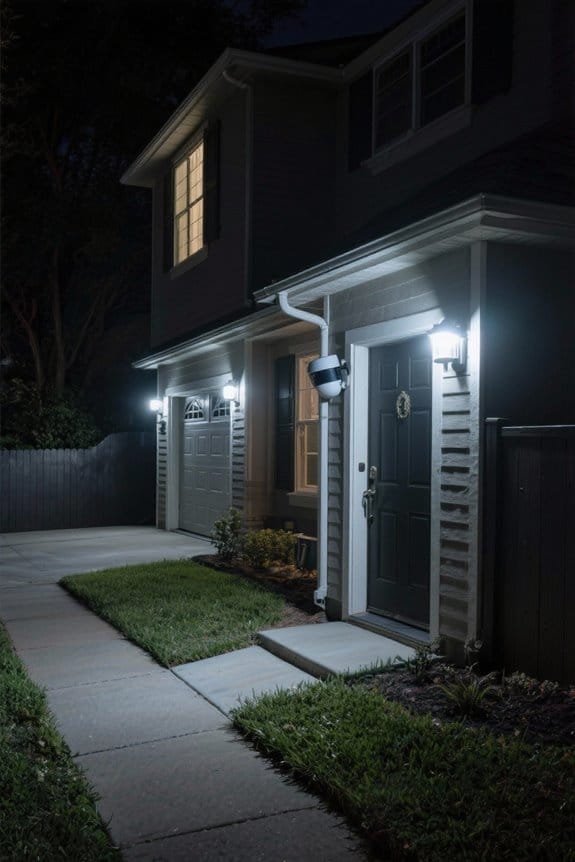
Best Places to Put Motion Lights for Maximum Home Security

1. Front and back entrances: Mount lights 6–10 feet above doors, angle sensors downward, use dual-beam coverage to expose concealment areas and reduce false triggers. 2. Driveways and garages: Place fixtures 6–10 feet high, space sensors to create overlapping fields every 12–20 feet, aim toward parking areas. 3. Walkways and porches: Space lights 12–20 feet apart, test at night, adjust sensitivity. 4. Perimeter corners: Provide 30% overlap, protect fence lines. Continue for detailed implementation guidance.
Key Takeaways
- Mount motion lights 6–10 feet above front and back doors, angled down to reliably detect approaching people and expose hiding spots.
- Place sensors at garage entrances and along driveways, spaced to provide continuous, overlapping illumination for vehicles and pedestrians.
- Space lights every 12–20 feet along walkways, porches, and outdoor living areas, angled toward approach vectors to eliminate blind spots.
- Install fixtures at corners and along perimeter lines and fences, with roughly 30% overlap to create an early-warning illumination corridor.
- Ensure adjacent sensors overlap, set heights and angles for downward coverage, and adjust sensitivity to minimize false triggers.
Front and Back Entrances
When securing primary access points, installers should prioritize mounting motion lights above front and back entrances, positioning fixtures to eliminate dark zones and guarantee immediate activation upon approach. 1. Placement guidelines: Mount units 6 to 10 feet above entry points, angle fixtures slightly downward, so motion sensors reliably detect movement at door height and steps. 2. Technical settings: Use security lights with adjustable sensitivity and configurable timers, calibrate coverage patterns to illuminate thresholds while minimizing false triggers. 3. Risk reduction: Properly aimed, sensor fixtures reduce the risk of unauthorized entry by exposing concealment areas and thereby enhance safety. 4. Implementation example: Install dual-beam units centered over each door, verify detection arcs, and test activation from typical approach vectors. Maintain documented calibration logs. In addition to placement, IP65 weather resistance ensures that the lights remain functional in various outdoor conditions, providing reliable security regardless of weather changes.
Recommended Products

OUTDOOR TV DESIGNED FOR PATIOS & COVERED SPACES: This outdoor TV is built for outside use on patios, decks, and covered porches. Unlike indoor TVs, this outdoor television is weather-resistant and outdoor-rated, perfect as a patio TV.

Ultra High Definition 6K 12MP (4512x2512) SIX TIMES the resolution of 1080P! 64 Channel H.265+ 12MP NVR Security Camera System with (32) 6K 12MP Weatherproof 145° Diagonal Wide FOV H.265+ Starlight Color Night Vision PoE IP Dome Cameras (Built-in Microphone)

64 CHANNEL SECURITY CAMERA SYSTEM: This system has 48pcs 5MP 2.8mm fixed lens PoE IP cameras with built-in microphone, IP67-rated waterproof for indoor and outdoor use. The 4K 64CH NVR of this system comes with 2X 8TB hard drive. it has 8 SATA port to expand to total 80TB storage space.
Driveways and Garage Areas
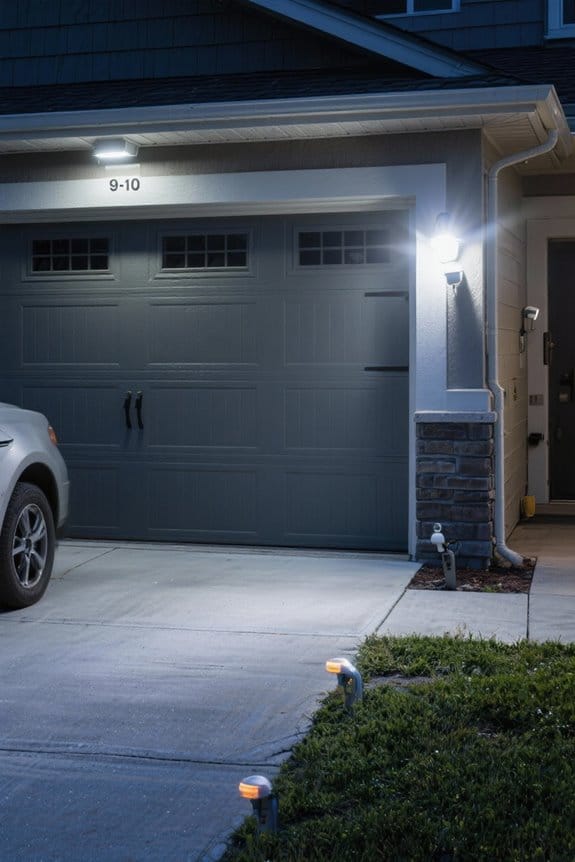
1. Install motion sensor lights at the garage entrance and along the driveway area to provide reliable illumination for vehicles and pedestrians, positioning fixtures 6 to 10 feet above ground to detect changes in heat and motion while remaining tamperproof and out of reach. 2. Design overlapping coverage with multiple sensors spaced so each unit’s detection zone intersects adjacent zones, eliminating dark spots that could conceal intruders and creating a brightly lit corridor that acts as an effective deterrent. 3. Aim lights toward vehicle parking areas and access points to maximize security lighting, use fixtures with adjustable sensitivity and timers, and guarantee wiring is protected and labeled for maintenance, which reassures occupants and simplifies repairs. Follow manufacturer guidelines and test coverage seasonally for consistency. Additionally, consider using models with IP65 weatherproof rating to ensure durability against rain and dust, maintaining their effectiveness in various weather conditions.
Recommended Products

【0.5-Mile High Visibility for Maximum Safety】Command attention with our 30x30" flashing LED pedestrian crossing sign. Featuring 8 ultra-bright LED beads and engineering-grade reflective film, this sign is visible from up to 1/2 mile away. It provides a high-intensity warning for distracted drivers in low-visibility conditions like heavy fog, rain, or snow, ensuring the safety of children, seniors, and pets in school zones and busy community corners

🔥【3-IN-1 POWER ADJUSTABLE LUMINAIRE】300W/240W/200W Adjustable LED Parking Lot Light with 150LM/W Efficacy, 45000LM Super Brightness Saves 85% Energy vs HPS Lights. Commercial-Grade Dimmable Driver Allows Customized Lighting Solutions for Parking Garages, Stadiums, Warehouses & Roadways.

【Wall Lamps with Motion Sensor】Outdoor wall lamp with motion sensor with a detection angle of 140° and a sensing distance of 1-5 metres. It lights up when the sensor detects a person and goes out 40 seconds after the person has left, so that the sensor light reacts in time, no matter which direction you are approaching.
Walkways, Porches, and Outdoor Living Spaces
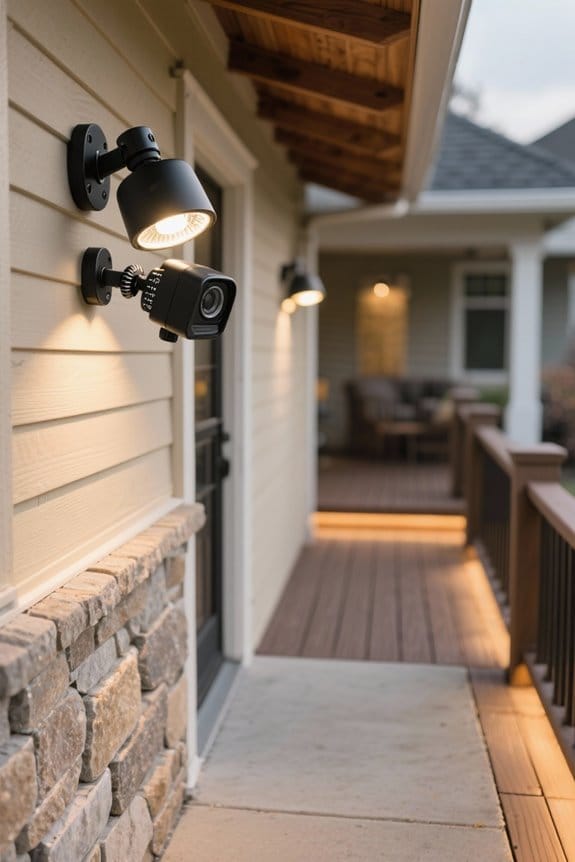
Although often underestimated, walkways, porches, and outdoor living spaces require systematically placed motion lighting to provide consistent illumination, reduce trip hazards, and create effective intrusion deterrence across approach routes. Solar motion lights are particularly beneficial for outdoor security due to their easy installation and eco-friendly operation. 1. Assessment: Inspect walkways and porches for path widths, step locations, and furniture clusters, measure distances in 6–12 foot increments to plan motion lights for overlapping coverage that will eliminate blind spots and enhance visibility. 2. Placement: Mount motion lights at 8–10 feet on posts or eaves, angle sensors toward approach vectors, space fixtures every 12–20 feet where possible to deter intruders and provide uniform light across outdoor areas. 3. Operation: Use adjustable sensitivity and dusk-to-dawn controls to balance security and nuisance activation. Follow local codes for mounting height, glare control, and energy efficiency requirements.
Recommended Products

OPENLUX Only Make High-Quality: Our LED post top light is ETL listed made of SMD3030 LED chips; High-end driver; heavy-duty aluminum Anti-shock, anti-moisture, no glare, no strobe light, protecting your eyes

HIGH BRIGHTNESS SOLAR STREET LIGHT – Experience superior illumination with this commercial solar street light. Equipped with high-efficiency LEDs, it serves as a powerful solar powered street light that delivers intense brightness, perfect for acting as large solar street lights outdoor waterproof solutions for expansive areas.

【0 Electricity Costs】Enjoy bright illumination without worrying about rising energy costs. The Loyoele 10000W Solar Street Light is powered entirely by solar energy, eliminating the need for electricity and saving you money on utility bills.
Corners, Perimeter Lines, and Fence Areas
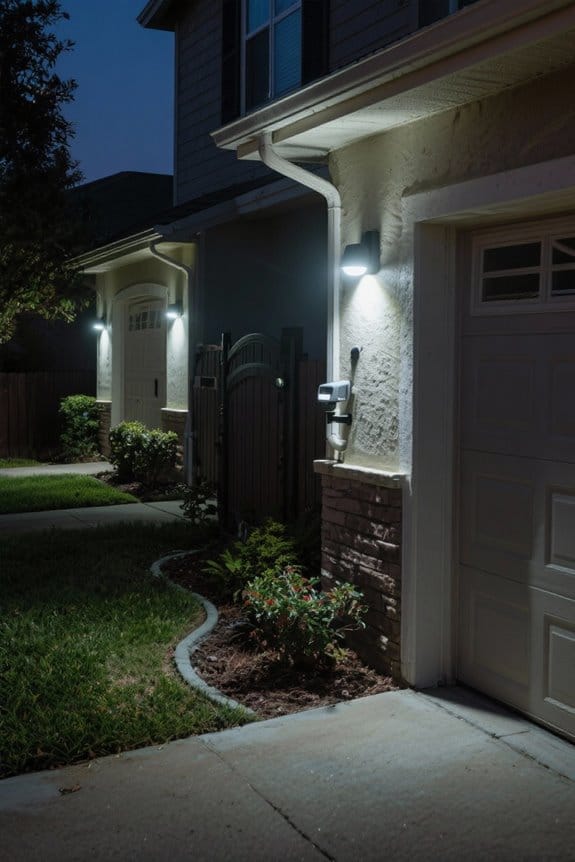
1. Corners: Install motion lights at corners to maximize visibility of entry points and high-traffic areas, mounting fixtures 6 to 10 feet above ground to enhance detection capabilities and reduce blind spots, aim sensors diagonally to cover approaches and walkway intersections, and avoid pointing directly at reflective surfaces. 2. Perimeter lines: Position lights along perimeter lines such as property boundaries and walkways to create an early-warning illumination corridor that highlights movement and deters intrusion, spacing fixtures so their detection zones overlap coverage by at least 30 percent to eliminate dark spots. 3. Fence areas: Mount units on fence areas where reachable height is limited, keep controls inaccessible to tampering, and focus beams toward vulnerable outdoor spots rather than into neighbors’ yards. Maintain regular testing.
Overlapping Coverage, Height, and Sensor Orientation
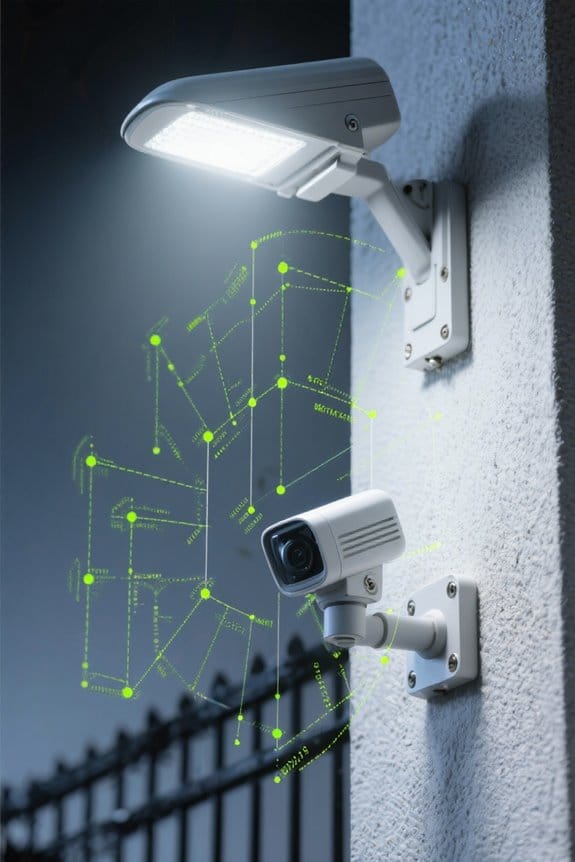
Building on corners, perimeter lines, and fence placements, proper overlapping coverage, height selection, and sensor orientation greatly improve detection reliability and reduce blind spots.
- Height and positioning: Mount motion lights at 6 to 10 feet above the ground to guarantee ideal detection while minimizing tampering.
- Overlapping coverage: Overlap coverage areas of adjacent fixtures by 30 to 50 percent to eliminate dark spots and cover entry points, this redundancy prevents single-point failures and improves security system continuity.
- Sensor orientation and settings: Angle sensors downward to focus detection on approaching individuals, adjust range settings to reduce false triggers from vehicles or small animals, test and iterate during night conditions to enhance detection, protect your home.
Place lights at driveways and walkways regularly. Consider using solar lights for easy, low-maintenance installations that can be strategically placed for optimal performance.
Recommended Products

16 Channel 12MP NVR with (16) 4K 8MP@25FPS 5X Motorized Zoom IP PoE Cameras - Each camera is built in 2.7-13.5mm 5X Optical Zoom Auto-focus len which allow you to adjust the angle of View from 20-135°and Remotely Zoom In & Out through NVR, Computer, Phone

16 Channel 12MP NVR with (16) 4K 8MP@25FPS 5X Motorized Zoom IP PoE Cameras - Each camera is built in 2.7-13.5mm 5X Optical Zoom Auto-focus len which allow you to adjust the angle of View from 20-135°and Remotely Zoom In & Out through NVR, Computer, Phone

Frequently Asked Questions
Where Is the Best Place to Put Motion Lights?
They should place motion lights at outdoor entryways, porch lighting, driveway entrance, garage areas, along pathway illumination and stairwell safety zones, near window coverage, around backyard fencing, patio spaces and fence corners to maximize security.
Where Should You Not Place a Motion Sensor?
Never place motion sensors behind outdoor furniture or landscaping obstacles; homeowners should avoid motion sensor locations causing common mistakes, as near windows, facing neighboring properties, installation height issues, electrical issues, false alarms, or privacy concerns.
Do Motion Lights Deter Burglars?
Yes, generally motion lights deter burglars; burglary prevention strategies, outdoor security tips, lighting effectiveness assessment, home safety measures, crime deterrent effectiveness, neighborhood security trends, lighting technology advancements, visual deterrent impacts, homeowner experiences, motion sensor placement.
Should a Security Camera Go Above or Below a Light?
Above advantage: camera should go above lights. Camera positioning and light placement at installation height improve outdoor visibility, overlapping coverage, motion detection and night vision, while wiring considerations and aesthetic integration enhance overall security effectiveness.


