As an Amazon Associate, we earn from qualifying purchases. Some links on this site are affiliate links at no extra cost to you. Our recommendations are based on thorough research and editorial judgment.

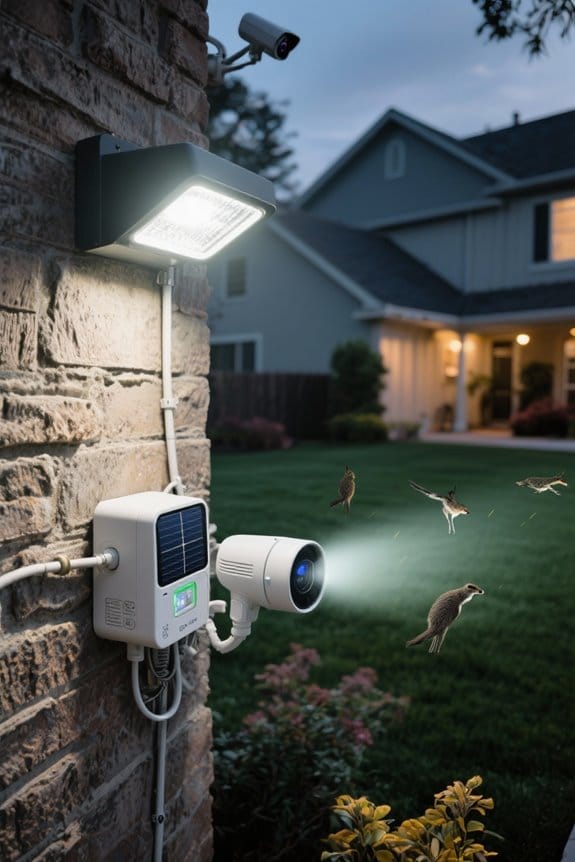
Questions to Answer Before Choosing Motion Sensor Technology for Your Yard

1) Coverage: identify entry points, driveways, pathways, gardens, specify detection ranges of 9–24 m (30–80 ft), and mounting heights of 1.8–3 m (6–10 ft). 2) Technology: select PIR for heat-based detection, microwave for large open areas, dual‑tech for fewer false alarms. 3) Power: choose hardwired for constant power, solar for sunny sites, batteries for remote zones. 4) Installation and maintenance considerations follow. Assess obstacles, sensor density, IP65 weather rating, and routine lens cleaning schedules now. Continue for detailed guidance.
Key Takeaways
- What specific areas need coverage (doors, driveways, pathways, patios) and where are the likely sensor mounting points?
- What detection range and sensitivity are required, and which sensor type (PIR, microwave, dual-tech) best fits that range?
- Which power source is feasible: hardwired, solar, or battery, considering installation complexity and sunlight availability?
- At what mounting heights and angles will sensors avoid false triggers from heat sources, trees, or pets while maximizing field of view?
- What are the maintenance needs and long-term costs, including bulb life, battery replacements, cleaning, and potential professional inspections?
What Areas and Detection Ranges Do You Need to Cover?
1. The first step identifies primary areas requiring coverage, such as entry points, pathways, driveways, and patios, to optimize safety and visibility. 2. Determine the detection range needed, noting that motion sensor lights commonly span thirty to eighty feet, to monitor areas without blind spots. 3. Assess yard layout and size, calculate required sensor density for thorough coverage, and position units to minimize overlap and gaps. 4. Survey obstacles including trees, fences, and structures that impede beams, and adjust mounting height and angle accordingly to maximize effectiveness. 5. Match application needs to output, as security lighting may require brighter, longer-range sensors compared to garden or porch illumination. Consider multi-sensor networks for irregular spaces, and test performance at night under realistic conditions before final deployment. Additionally, consider models with IP65 weatherproof rating to ensure durability and resilience in various environmental conditions.
Which Motion Sensor Technologies Best Suit Your Environment?
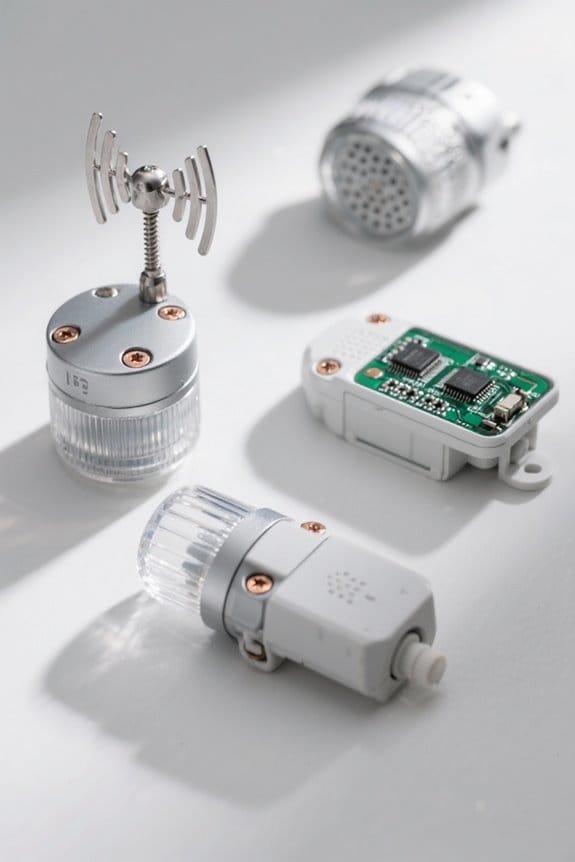
Building on the assessment of areas and detection ranges, sensor technology selection should align with coverage requirements, environmental conditions, and acceptable false-alarm rates. 1. Passive infrared (PIR): Best for residential yards, PIR sensors detect motion by sensing heat differentials, work well for home security, and minimize false alarms from objects. 2. Microwave sensors: Suitable for larger outdoor areas, microwave sensors use radio waves to cover 10–30 meters, penetrate fog and darkness, yet require careful tuning to avoid triggers. 3. Dual-tech sensors: Combine PIR and microwave, require both heat and motion to activate, provide reliable detection for environments and security purposes. 4. Ultrasonic sensors and area reflective sensors: Ultrasonic suits small sheds, area reflective suits flat entry points, require calibrated placement and outdoor lighting for best performance. Consider adjustable heads for optimal coverage and flexibility in positioning when selecting motion security lights, as they can enhance the effectiveness of the installed sensors.
What Power Source and Energy-Efficiency Options Work for Your Yard?
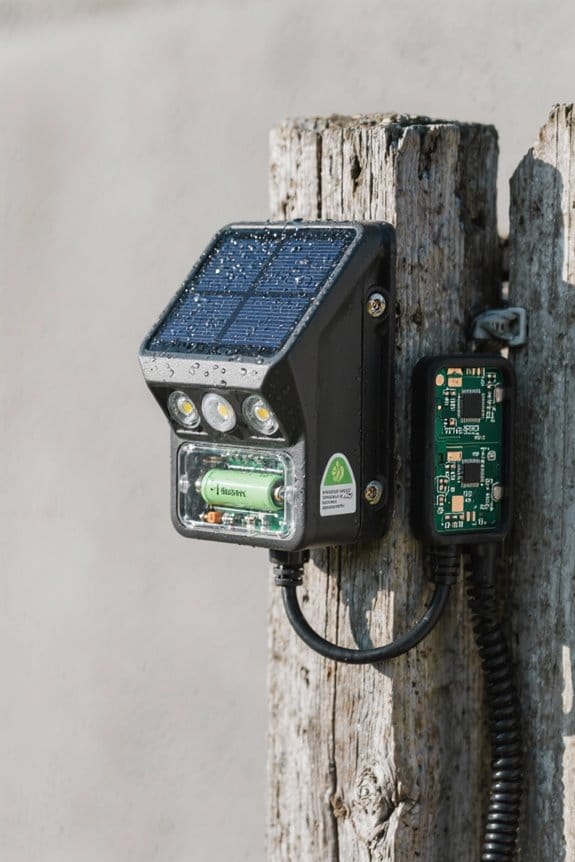
How should a yard lighting system be selected to balance continuous availability, installation constraints, and long-term operating cost, given site insolation, load wattage, and maintenance capability? 1. Power source selection: Evaluate hardwired systems for continuous power and high-load fixtures, consider solar lights where insolation exceeds four sun-hours per day, and use battery-operated units for remote locations without wiring. 2. Energy efficiency considerations: Specify LED technology, which reduces consumption by up to 80% versus incandescent, calculate expected lumen output per watt, and size battery or panel accordingly. 3. Installation and maintenance: Compare professional installation costs and conduit needs for hardwired systems with the simple DIY installation process of solar or battery-operated options, plan periodic battery replacement and panel cleaning, choose renewable energy where feasible now. Solar lights should be oriented south at a 20-35° tilt for optimal sun exposure, ensuring efficient charging and prolonged runtime.
Where Should Fixtures and Sensors Be Placed for Reliable Performance?
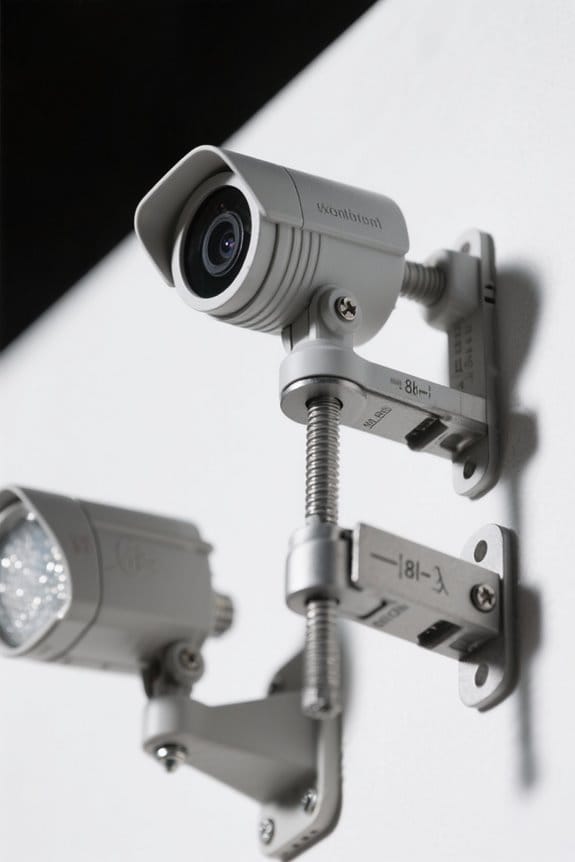
Section 1. 1. Mount motion sensors and fixtures at 6 to 10 feet above ground, this height maximizes field of view and helps sensors work within intended detection range of 50 to 80 feet for outdoor lights, providing effective coverage. 2. Position sensors at choke points such as doorways, driveways, and building corners to cover essential entry points, follow installation instructions for angle adjustments and to minimize false triggers from motion of animals or vegetation. 3. Keep placement away from heat sources, vents, and HVAC exhaust, these disturb infrared-based sensors and create false alarms. 4. Regularly review and adjust angles to compensate for landscaping changes, moveable furniture, or growing trees to maintain reliable performance. 5. Ensure that your chosen motion sensor light has an IP65 rating or higher for weather resistance, which is crucial for durability in adverse weather conditions. Inspect coverage monthly, document adjustments, and verify sensor alignment regularly carefully.
What Are the Installation, Maintenance, and Long-Term Cost Considerations?
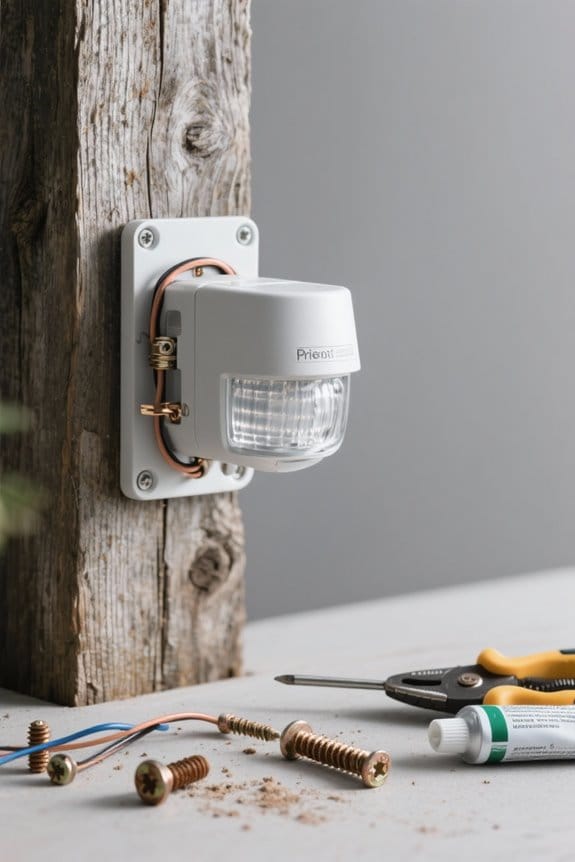
- Installation: Proper installation of motion sensor lights requires evaluating mounting height, typically 8–12 ft, sensor angle, and wiring routes; owners may self-install if skilled, otherwise, hire an electrician to guarantee safe wiring and ideal placement.
- Maintenance: Regular maintenance demands cleaning lenses monthly with a cloth, inspecting seals and brackets quarterly, and testing detection zones after storms to confirm ideal functionality.
- Long-term costs: Evaluate initial costs including fixtures and installation fees, anticipate long-term costs from energy consumption and potential repairs or replacements, favor LED options for lower electricity use, and select high-quality fixtures to reduce maintenance and extend lifespan, which often justifies higher upfront expenditure. Budget for periodic professional inspections biennially. Document warranty terms, keep spare bulbs and mounting hardware on hand.
Additionally, choosing energy-efficient lights can significantly reduce electricity costs by up to 88% compared to traditional bulbs, making them a cost-effective choice in the long run.
Frequently Asked Questions
What Are Two Drawbacks of Using Motion Sensors?
False alarms and range limitations are primary drawbacks: sensitivity levels cause nuisance triggers, increasing maintenance needs and cost issues; installation challenges, power requirements, weather resistance and compatibility concerns also raise privacy concerns for many users.
What Is the Best Motion Sensor Outdoor Light?
Hyperikon ranks best motion sensor outdoor light, combining motion sensor types, outdoor lighting solutions, security light features, energy efficiency ratings, installation cost factors, sensor sensitivity settings, durability ratings, smart home integration, aesthetic designs, user reviews.
What Is the Rule of Thumb for Outdoor Lighting?
Like moonlight, rule of thumb: one foot-candle for pathways, 2–3 lumens per sqft elsewhere; outdoor lighting balances energy efficiency, aesthetic appeal, safety concerns, installation tips, maintenance needs, light intensity, sensor sensitivity, weather resistance, cost considerations.
Where Should You Not Place a Motion Sensor?
They should not be placed near heat sources, obstructed spots where sensor height, sensor angle, obstruction issues, field range, temperature sensitivity, installation location, sunlight exposure, weather resistance, wiring proximity and security effectiveness are greatly compromised.


