As an Amazon Associate, we earn from qualifying purchases. Some links on this site are affiliate links at no extra cost to you. Our recommendations are based on thorough research and editorial judgment.

Talking to Neighbors About Security Lighting and Shared Benefits

1) Benefits: Shared lighting improves perimeter surveillance, 800–1,200 lumen fixtures, 3,000–4,000K color temperature, mounted 2.5–3.5 m high, increasing illuminated zones to 1.5–2.5 lux at property lines. 2) Design: Use shielded, motion-activated LEDs, 300–800 lumen garden fixtures, 30–60 second sensor delay, IP65 rating, tamper-resistant fittings. 3) Implementation: Define responsibilities, document costs, schedule quarterly maintenance. Additional guidance covers pilot tests, cost-sharing percentages, illuminance targets, sensor calibration, and practical coordination steps.
Key Takeaways
- Start by agreeing neighborhood security goals, targets, and measurable outcomes to ensure collective understanding and commitment.
- Propose lighting standards: 800–1200 lumens, 3000–4000K, fixtures mounted 2.5–3.5m for consistent coverage.
- Suggest cost-sharing models, clear installation responsibilities, and a maintenance schedule with quarterly inspections and a community registry.
- Pilot shared fixtures at key locations, monitor crime and illumination metrics, then scale based on documented results.
- Minimize wildlife disturbance and light pollution using motion sensors, shielded optics, 300–800 lumen kiosks, and 30–60 second sensor delays.
Benefits of Shared Security Lighting
1. Section 1: Overview. Shared security lighting improves perimeter surveillance, reducing burglary risk by illuminating yards and primary ingress routes. Section 2: Specifications, recommend 800–1200 lumens per fixture, 3000–4000K color temperature, mounting height 2.5–3.5 meters, beam angle 60–120°, spacing 10–15 meters for continuous coverage. Section 3: Implementation examples, install motion-activated LED bollards along shared paths, wall-mounted fixtures near porches, and pole-mounted panels at communal corners, integrate photocell controls and tamper-resistant fittings. Section 4: Operational benefits, shared benefits include higher property values, lower insurance rates, and deterrence of nocturnal wildlife in gardens. Section 5: Maintenance and governance, establish inspection intervals, 6–12 months, and a cost-sharing agreement among neighbors. Document decisions in writing, assign responsibilities, and budget proportional contributions, 20–30 percent of fixture cost per household. Ensure that PIR motion sensors are used for reliable intrusion alerts as they offer a detection range of 5-12 meters and wide fields of vision.
Clearing the Shadows for Safer Streets
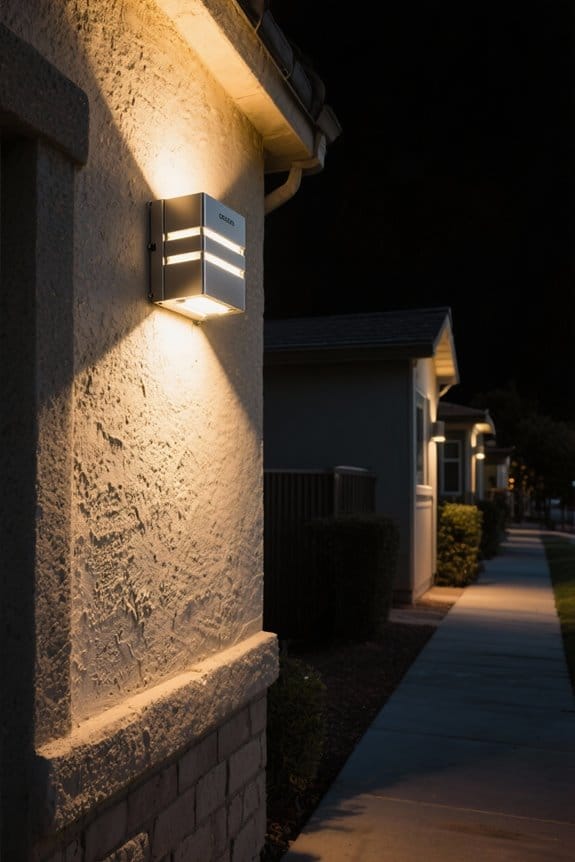
Building on shared security lighting strategies, this section defines specific methods to eliminate dark zones along streets and between properties, using measured illuminance levels, fixture selection, and placement protocols to improve detectability and deterrence. 1. Assessment: Conduct a lux survey, record 1–5 lux for sidewalks and 10–20 lux for entryways, note obstructions and mounting heights, and map shadow patterns. 2. Fixture selection: Choose full cutoff LED fixtures, 3000–4000 K color temperature, 300–800 lumens per fixture for pathways, 800–1600 lumens for entries. 3. Placement protocols: Space fixtures at 8–12 meter intervals on poles or walls, aim beams to overlap by 30–50%, avoid glare into windows. 4. Community practice: Coordinate installation, share maintenance schedules, provide lighting to increase security lights effectiveness, deliver measured peace of mind. Additionally, consider selecting lights rated between 8,000-25,000 lumens to ensure effective illumination for larger areas, thus enhancing overall security and visibility.
Strengthening Neighborhood Watch Through Light

Although neighbors frequently install fixtures independently, a coordinated lighting strategy increases effective detection distance, standardizes illuminance targets (10–20 lux for walkways, 30–50 lux at primary entry points), and reduces concealment by eliminating interstitial dark zones through controlled beam overlap and mounting-height consistency. 1. Objective: Define clear neighborhood security goals, specify fixture types, CRI and color temperature ranges (2700–4000 K), and set motion sensor parameters, for consistency and minimal glare. 2. Implementation: Map property lines, prescribe pole or wall-mount heights (2.5–3.5 m for walkways), recommend lumen outputs and beam angles, and promote motion-activated, dusk-to-dawn operation. 3. Coordination: Share maintenance schedules, encourage neighbor adoption for good lighting, integrate pathways into outdoor living plans, and monitor outcomes collectively. Reassurance: measurable reduction in incidents supports continued cooperation regularly. Consider installation location to ensure optimal performance of motion detection lights, especially in regions with extreme weather conditions.
Recommended Products

Dusk to Dawn Technology – Keep your home as efficient as possible, with dusk to dawn technology the animated flame bulb will immediately ignite when the sun starts to set
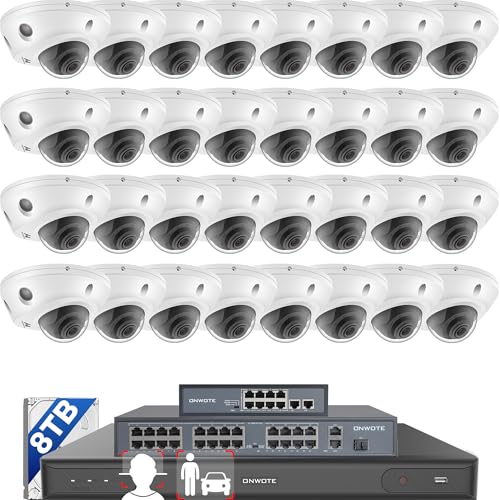
Facial Recognition-- Recognizes people to reduce false alarms and save storage space.

8.0 Megapixel Full HD Realtime Recording 16 Channel 6K 12MP NVR and (16) 8MP Weatherproof POE H.265+ 4K Full-time Color Night Vision Two-Way Audio IP Bullet Cameras with Spotlights (Built-in 2.8mm 8MP HD Lens for Wide View Angle and Built-in Microphone and Speaker for Audio Recording and 2 Way Talk)
Increasing Property Value With Thoughtful Lighting
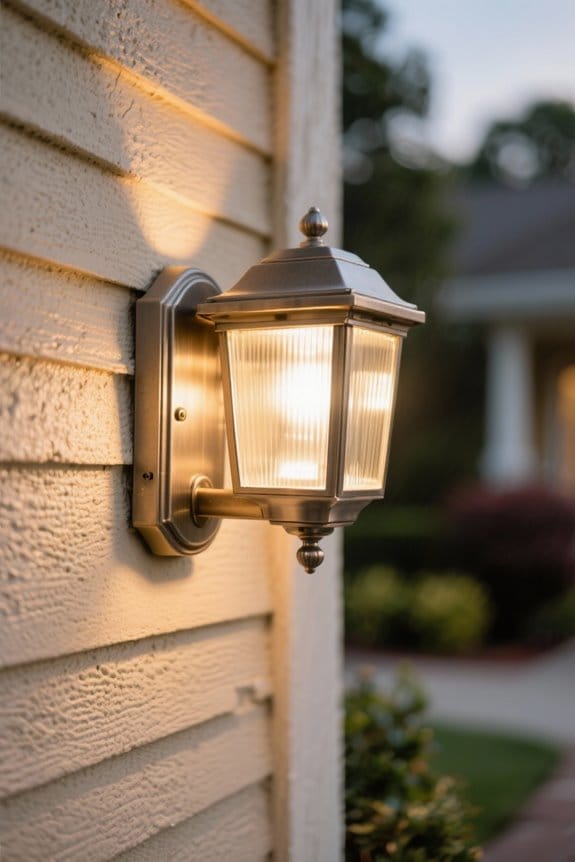
When exterior lighting is designed to balance security, aesthetics, and energy efficiency, buyers perceive higher property value due to improved curb appeal and functional features, which supports faster sales and stronger market interest. 1. Assessment: Conduct a photometric survey, measure lux levels at 1.5 m height, maintain 5–20 lux on walkways, and guarantee uniformity ratio below 4:1 to maximize increasing property value. 2. Design: Specify LED fixtures with correlated color temperature 2700–3000K, CRI ≥80, 10–30° beam angles for accents, and timers or motion sensors for efficiency. 3. Installation: Place fixtures 0.5–1 m from path edges, mount at 300–900 mm above grade, and angle to highlight landscape features, improving Outdoor Lighting performance and curb appeal. Professional commissioning and documentation secure consistent results and resale confidence. Many landscape LED lights, such as the LEONLITE LED Landscape Path Lights, offer energy-efficient illumination to enhance both safety and aesthetics in outdoor settings.
Reducing Wildlife and Pest Disturbances

1. Overview: The discussion addresses reducing wildlife and pest disturbances through targeted lighting, explaining technical measures and expected outcomes. Motion-activated fixtures, positioned 2–3 meters from trash areas and garden edges, deter nocturnal mammals such as skunks and raccoons, because sudden illumination disrupts foraging behavior. 2. Implementation: Use 300–800 lumen motion LEDs with 120° beam angles, mounted 2.5–3.5 meters high, aimed downward to avoid skyglow. 3. Outcomes: Proper placement and timing reduce animal activity, protect landscaping and belongings, and decrease unwanted encounters for families and pets. 4. Contextual Benefits: In shared Outdoor spaces the Benefits of Security extend beyond theft prevention, as lights help minimize pest habitation and foster a calmer nighttime environment. Recommended sensor delays of 30–60 seconds balance detection efficiency and nuisance illumination. Ensure materials are corrosion-resistant to extend the durability of outdoor security lighting, enhancing long-term effectiveness.
Designing Aesthetically Pleasing, Functional Lighting
Because thoughtfully integrated fixtures balance visual appeal with functional illumination, designers can create layered outdoor lighting schemes that enhance safety while reinforcing landscape and architectural character through measured choices in lumen output, color temperature, and fixture placement, avoiding harsh contrasts and glare. Design principles: Specify 100–300 lumens for pathways, 400–800 lumens, 2700–3000K color temperatures, mount fixtures 18–36 inches for paths and 7–9 feet for wall lights, orient shields to prevent glare. Fixture selection: Choose low-profile, vandal-resistant fixtures, opt for adjustable beam angles 10°–45° for spotlights, select scale to be aesthetically pleasing, lighting makes features legible without overpowering. Implementation: Plan layers, locate circuits, use timers and motion sensors, document photometric plans to limit stray light and minimize light pollution, and boost resale value. A variety of battery-operated PIR stair lights can be used in these schemes, offering options such as adhesive, magnetic, or screw mounts for flexible installation.
Recommended Products

With its timeless colonial profile, this stately looking design in Black is ideally suited for traditional exterior styles
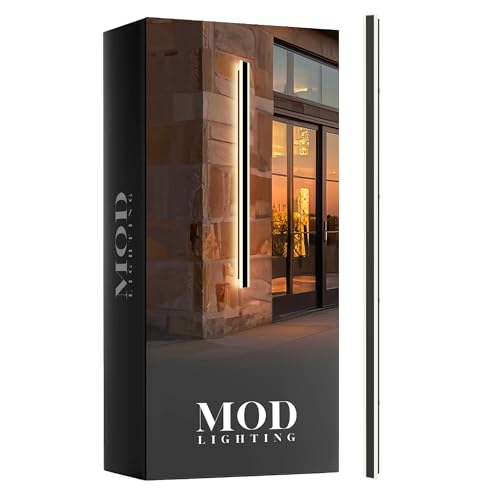
Wired LED Wall Light: 79" black outdoor sconce designed for defined, linear illumination; this single pack outdoor wall light provides controlled light distribution across patios, facades, and corridors for residential and commercial applications

CUSTOMIZABLE OUTDOOR WALL LIGHTS: The WMCL Cylinder Wall Light provides up to 36 configurations one fixture; Use built-in switches for light direction, light temperature, and photocell sensor to ensure the perfect light; UVOLT offers 2 voltage options
Addressing Light Pollution and Night-Sky Friendly Options
Section 1: Overview: After designing layered, visually balanced outdoor lighting, mitigating light pollution requires shielded optics, directional controls, and lower lumen limits. 1. Problem definition: Light pollution disrupts ecosystems and circadian rhythms, produces glare and trespass, and reduces visibility in critical dark zones, measurements above 20 lumens per square meter often indicate excess. 2. Technical remedies: Specify shielded outdoor fixtures with full cutoff optics, use 2700–3000K LEDs, limit fixture output to 400 lumens for path lights and 800–1,200 lumens for security fixtures, install timers, dimmers, and motion sensors, and orient fixtures downward within 90 degrees. 3. Policy and implementation: Review local lighting ordinance for lumen caps and curfews, document plans, and provide neighbor education materials. Follow measurable targets and monitor results annually for community benefit. Additionally, consider installing motion sensor bollard lights with IP65 weatherproof ratings to ensure durability and effectiveness in various weather conditions.
How to Bring Solutions to Your Neighbors
Purpose and scope: When presenting neighborhood lighting solutions, outline measurable goals, shielding specifications, lumen limits, and installation responsibilities to guarantee clarity and compliance across households.
- Objectives: Define measurable targets, reduce burglar incidents by ninety percent, increase illuminated zones to one point five to two point five lux at property lines, and document cost percentages.
- Technical standards: Specify full cutoff fixtures, two thousand seven hundred to three thousand Kelvin color temperature, maximum eight hundred lumens per fixture, and downward shielding angles less than ninety degrees.
- Community engagement: Offer to help coordinate meetings, present nearby examples showing improved lights and increased property valuations, and propose pilot sites.
- Social cohesion: Emphasize shared visibility improving neighbors informal vigilance, bolster consent processes, and record agreements.
Security lights like the MAGAGUVU model can enhance detection zones and reduce blind spots through its multi-head design, offering a viable option for improving neighborhood safety.
Recommended Products

[ HIGHLY ANTICIPATED ] Euri's highly anticipated EHL-130W-MD, Flickering Flame Hanging Lantern is now available to the market! This hanging lantern was designed to pair with our EFL-130W-MD Flickering Flame Outdoor Wall Lantern. This unique piece was designed with a water glass lens to enhance your exterior decoration, while delivering an abundance of light to your garden, yard, porch or any exterior area in darkness. Make your space stand out with this unique addition. Our non-dimmable hanging lantern offers a unique look with our signature ultra-natural LED flame bulb.

Bidet function with front and rear cleansing; pulsating and oscillating cleanse, and aerated spray for a complete clean
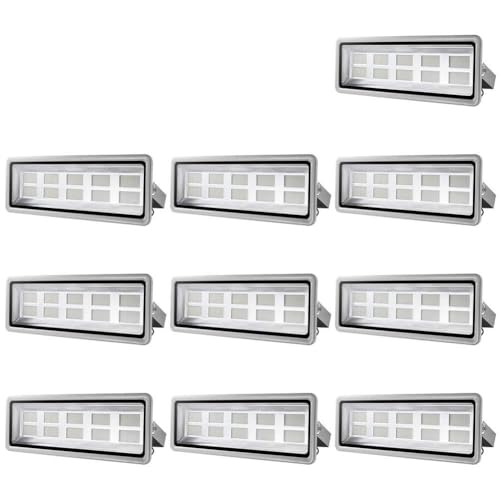
【Super Bright】: High quality outdoor security work lights,110V,1000W 800000 lumens output,120°wide beam angle.Comparing with traditional lights,the LED flood lights energy saving up to 70%,save your money and replacement time!
Installation, Control, and Ongoing Maintenance
How should installation, control, and maintenance be specified to guarantee consistent performance, energy efficiency, and minimal nuisance glare across a neighborhood, while complying with the previously stated technical standards for fixture type and lumen output? 1. Installation: Specify LED fixtures of 3000K, 800–1200 lumens, 30°–60° cutoff shields, mounted 2.5–3.5 m high, with motion sensors rated for 10–15 m detection, and wiring to GFCI-protected circuits, documenting placement distances to avoid overlap and glare. 2. Control: Standardize smart controllers supporting remote scheduling, occupancy triggers, and manual override, integrate with timed scenes to simulate presence when residents are away. 3. Ongoing maintenance: Establish quarterly inspection protocols, cleaning, bulb replacement, sensor recalibration, and a community registry to coordinate work for neighbors and loved ones. Log actions and assignments. Additionally, consider incorporating IP65 waterproof ratings for outdoor fixtures to ensure durability and operational reliability in various weather conditions.
Recommended Products

[Zero Energy Costs]— The Gefolly G-16000W solar street light delivers your choice of warm to daylight white (3000K/4000K/6000K). Built with 150 ultra-bright 5054 LEDs and a high-capacity 36,000mAh battery rated for 50,000+ hours, it shines up to 20x brighter than standard lights. Weatherproof IP67 design stands up to rain, snow, and heat. Solar-powered, so you save on bills—automatically lights up at dusk and turns off at dawn.

Motion Activated Security Lighting: 180° motion detection automatically illuminates outdoor areas when movement is detected, helping improve security around garages, driveways, patios and building entrances
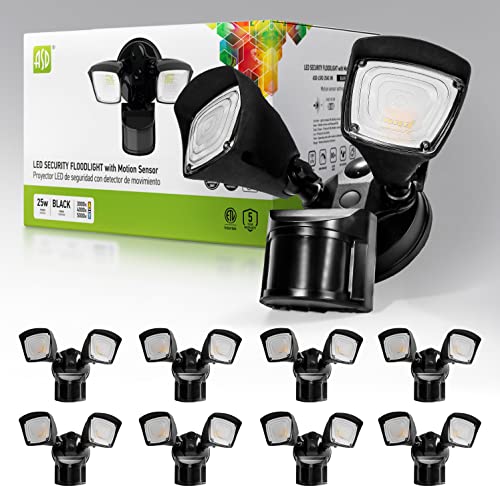
✅ DESIGN - LED dual-head security light with motion sensor is a great way to keep your home safe at night. 360° rotatable light heads allow you to direct light where it is needed. It is designed to operate on 120-277V circuits
Frequently Asked Questions
Can I Sue My Neighbor for His Security Light Shining in My Windows?
They usually cannot sue solely for a compliant security light, but may pursue legal action options if the light constitutes nuisance or trespass; neighbor communication strategies and checking light pollution laws are recommended before litigation.
Can My Neighbour Complain About My Security Light?
Yes, a neighbor can complain; municipalities and neighbors may raise light pollution concerns. Detached parties recommend neighborly communication to negotiate adjustments and adopt effective lighting solutions, shielding, timers, and lower lumens to resolve disputes amicably.
Can Your Neighbor Shine Lights on Your Property?
Coincidentally, yes: a neighbor can shine lights onto one’s property, though local rules, neighborly agreements, careful light placement and shared responsibilities often guide adjustments, mediation or legal remedies to reduce intrusive glare and restore comfort.
What to Do if Your Neighbor’s Lights Are Too Bright?
They should request a discussion proposing adjusted light positioning, shields or motion sensors, emphasize glare reduction benefits, share dark‑sky resources, and pursue neighborhood communication to collaboratively develop a secure, considerate outdoor lighting plan for safety.


