As an Amazon Associate, we earn from qualifying purchases. Some links on this site are affiliate links at no extra cost to you. Our recommendations are based on thorough research and editorial judgment.


Dual‑Tech Motion Sensors: How They Reduce False Triggers

1. Function: Dual‑tech sensors combine PIR and microwave modalities, requiring both sensors to trigger within 0.5–2.0 seconds, which filters transient stimuli and reduces false alarms from pets, drafts, and HVAC. 2. Placement: Mount at 2–2.5 m, avoid windows and vents, and aim at entry paths for ideal Fresnel lens coverage to about 10–12 m. 3. Maintenance: Clean monthly and test response times. Adjust sensitivity per site to balance. Continue for model selection and troubleshooting guidance.
Key Takeaways
- They require simultaneous PIR and microwave activation, so transient stimuli triggering only one sensor are ignored.
- PIR detects body heat while microwave senses Doppler motion, filtering non-thermal movements like swaying curtains.
- A short coincidence window (0.5–2.0 seconds) ensures only sustained, true motion causes alarms.
- Adjustable sensitivity and beam pattern settings let installers balance detection range versus false-trigger susceptibility.
- Proper placement, sun/vent avoidance, and monthly lens cleaning minimize environmental and contamination-induced false alarms.
What Dual‑Tech Motion Sensors Are and How They Work
You may be interested

1. Dual-Tech Motion Sensors combine Passive Infrared (PIR) and microwave sensors into a single unit, requiring concurrent activation of both channels to register an event, which reduces false alarms from pets, HVAC drafts, and other environmental factors. 2. Technical specification: typical PIR detection range is 5–12 meters, microwave frequency commonly 10.525 GHz with effective range to 15 meters, and coverage patterns are configurable with beam angles from 60° to 90°. 3. Functional operation: the PIR monitors changes in infrared energy, while the microwave system emits and receives Doppler-shifted signals to detect motion, both outputs are logically ANDed, improving selectivity. 4. Implementation examples: ceiling and wall mounts in residential and commercial sites, calibrated per enclosure and activity profile to reduce nuisance alerts and maintain reliability. 5. Many motion sensor lights have weatherproof ratings such as IP65 or IP66, ensuring they function reliably in various weather conditions.
How Passive Infrared (PIR) Detection Operates

Although Passive Infrared (PIR) detectors are passive devices that sense changes in mid-to-long wave infrared radiation, they require careful placement and configuration to achieve reliable coverage. 1) Principle: PIR measures infrared energy emitted by warm bodies, detecting motion when differential patterns cross a sensor array, typical detection range up to 35 feet, field of view defined by Fresnel lens geometry. 2) Installation: Mount at 6–8 feet height, angle to cover intended zone, avoid direct sunlight and HVAC outlets, prevent environmental changes that can trigger false alarms. 3) Configuration: Adjust sensitivity settings to balance detection and rejection of temperature fluctuations, test with walk‑throughs, reposition as necessary for consistent performance. Document placement and test results, and schedule periodic re-evaluation under varying seasonal conditions to guarantee reliability. Most security lights have PIR/microwave detection capabilities extending up to 100 feet, enhancing their effectiveness for perimeter security.
How Microwave Detection Complements PIR

To extend the capabilities described above, 1. Overview: PIR and microwave modules operate complementarily, with PIR sensing 8–12 μm infrared signatures and microwave emitting 10.525 GHz waves to detect motion through dielectric changes, providing overlapping coverage. 2. Technical function: microwave penetrates glass and thin walls up to 0.5–1.5 cm of common materials, it measures Doppler shifts to detect movement, while PIR senses thermal contrast. 3. Implementation: dual-technology sensors require both channels to trigger within 0.5–2.0 seconds, this design reduces false alarms from HVAC cycles, sunlight, or small pets. 4. Deployment guidance: install at 2.1–2.4 m height, aim away from HVAC vents, calibrate sensitivity for reliable detection in varied environmental changes. Wide-Angle Sensors are crucial in solar motion lights to ensure extensive detection coverage, as referenced in the knowledge section. This configuration helps reduce false alarms and increases user confidence. Consider firmware filtering.
Why Requiring Two Sensors Reduces False Alarms

1. Dual‑sensor principle: Dual‑Tech systems require PIR motion and microwave concurrence, a dual activation scheme that forces verification from independent physical modalities, typically within 0.5–2.0 seconds, to reduce false alarms from single‑sensor triggers. 2. Technical rationale: The PIR measures infrared flux changes from warm bodies, the microwave measures Doppler shifts in GHz band reflections, combined thresholds filter transient signals and minimize false alarms caused by spurious stimuli. 3. Installation practice: Mount sensors 2–2.5 meters high, angle to cover intended zones, calibrate sensitivity and timing windows to balance detection and nuisance filtering. Adjustable sensitivity settings in driveway sensor lights can help minimize false triggers caused by environmental factors, enhancing the reliability of the detection system. 4. Operational benefit: This architecture improves motion detection reliability, directing responses to genuine intrusions while reassuring system managers of consistent performance. It also resists environmental factors, preserving serviceability and minimizing maintenance burdens consistently.
Common Causes of False Triggers and How Dual‑Tech Helps

Section 1 — Common causes and mitigation: environmental stimuli such as pets moving indoors, direct sunlight striking detector optics, airflows from vents or HVAC systems, and heat‑generating appliances commonly produce PIR‑only triggers by creating rapid infrared flux changes, while small reflective motions and oscillatory objects can generate microwave Doppler returns; for this reason, Dual‑Tech systems require both PIR and microwave concurrence within a 0.5–2.0 second verification window to reject single‑modality events and reduce false alarms; installers should mount sensors at 2.0–2.5 meters, avoid sightlines to windows and supply registers, and adjust sensitivity and coincidence thresholds during commissioning to balance detection probability against nuisance filtering. Additionally, motion sensor bollard lights are designed with specific PIR range and detection angles, ensuring reliable performance even in varying weather conditions. 2. Diagnosis: dual-Tech motion sensors mitigate environmental changes impact on infrared, improving motion detectors reliability through proper placement. false alarms.
Best Practices for Mounting and Positioning Dual‑Tech Sensors
When installing dual‑tech motion sensors, installers should follow precise mounting and aiming guidelines to enhance detection coverage while minimizing modality‑specific false alarms caused by environmental interference. 1. Height and placement: Mount sensors between 4 and 8 feet off the ground, this range provides ideal detection of human movement and helps minimize false alarms from small animals. 2. Aiming and orientation: Aim toward likely pathways and entry points, avoid direct lines to windows or heat sources that alter infrared radiation and can trigger alarms. 3. Avoidance of disturbances: Keep units away from vents, fans, and direct sunlight, environmental factors that disrupt microwave or infrared elements. 4. Verification: Test and adjust angles post‑installation per manufacturer guidelines to guarantee reliable performance. Periodic retesting maintains consistent system sensitivity. Motion sensor lights with IP65 or higher ratings offer enhanced durability against environmental factors, ensuring long-term operational efficiency and reducing maintenance frequency.
Recommended Products

This product has a variety of unique self-test functions, automatic temperature compensation, anti high frequency interference and other functions, the experiment proves that the detector can work reliably under the high frequency interference of 20~1000mhz (such as mobile).

Wireless Motion Sensor Alarm: A Motion detector is essential in a home security system; It can detect movement in the surrounding areas: driveway, front porch, gate, home, shed, office, walkway, swimming pool, etc, and trigger alerts to the linked receiver; It provides an added level of security and safety to your property and loved ones

Dual Detection with PIR + Microwave for Accurate Alerts: This wireless driveway alarm combines infrared and microwave sensing to reduce false triggers in outdoor use. It provides a reliable driveway alert even in changing weather and light conditions. When battery is low, the LED blinks once every 3 seconds. For added privacy, the sensor light can be turned off.
Outdoor Environmental Challenges and Mitigation Strategies
Following proper mounting and aiming between 4 and 8 feet, installers must account for environmental conditions that can impair dual-tech sensors’ performance, including direct sunlight, wind-driven vegetation, precipitation, and rapid temperature swings, because these conditions differentially affect passive infrared (PIR) and microwave elements and can defeat modality-combination logic if unaddressed. 1. Sunlight and temperature: direct solar heating elevates infrared energy on surfaces, causing false alarms, installers should orient outdoor sensors away from east and west exposures, use sun shields, and locate devices where ambient temperature variation stays within sensor specifications. 2. Wind and precipitation: moving foliage and rain can trigger the alarm, employ vegetation clearance of 3 meters, use adjustable microwave sensitivity, and select IP-rated housings for moisture rejection. Periodic verification regularly confirms performance. Additionally, solar-powered models may be less effective in cloudy climates, thus installation location should be carefully considered to optimize performance.
Recommended Products
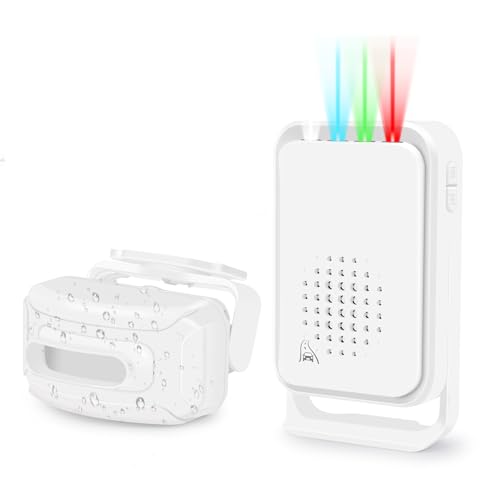
⚡4 Different LED Zones & Vibration Reminder - 4 independent LEDs to distinguish sensing zones, with the option to synchronize sound alerts. New silent strong vibration reminder for discreet alerts. Wireless driveway alarms are essential in a home security system. Driveaway alarm system provides an added level of security and safety to your property and loved ones.

Motion-Activated: The wide sensing angle of 110 degrees detects motion up to 0-33 ft away, detecting motion more accurately with its sensitive motion sensor. The adjustable timer can be set for tests, 1, 3 or 10 minutes.

High-Efficiency Lighting: Onforu hardwired dual-head motion sensor outdoor lights deliver 3200LM brightness with 32W power and a 6500K cool white light, ensuring optimal illumination for your outdoor spaces.(No Solar, No Plug, No Camera)
Maintenance, Testing, and Troubleshooting Tips
- Maintenance: Clean sensor lenses monthly with a lint-free cloth, remove dust or cobwebs within 1–2 minutes, avoid solvents that damage coatings, inspect mounting brackets for loosening and confirm alignment to manufacturer tolerances.
- Testing: Perform functional testing monthly by walking across coverage zones at 1–3 meters per second, trigger both PIR and microwave elements, record response times under varied environmental factors, and log results for trend analysis.
- Troubleshooting: When false alarms persist, adjust sensitivity settings in 1‑level increments, relocate sensors away from windows or HVAC outlets, consult manufacturer troubleshooting guides for wireless connectivity, recalibrate per instructions, replace components showing voltage or signal anomalies. Reassurance: Follow procedures consistently to sustain reliable operation. Document interventions, dates, and measured thresholds for audit and warranty purposes.
- For optimal performance, ensure that solar panels used in conjunction with motion sensors are oriented for peak sun exposure to maximize charging efficiency and maintain consistent power supply.
Recommended Products

DUAL SENSOR FOR COMMERCIAL SPACES: The SensorSwitch CMR Series motion sensor provides high-performance indoor motion sensor light automation; The CMR is a line voltage sensor that is capable of covering an entire private office or small room by itself

Dual technology motion light switch combines passive infrared (PIR) and ultrasonic sensors in one sensor switch for enhanced accuracy and to detect fine motion, such as typing, reading, etc

Advanced DualCore Signal Processing
Comparing Models: Wired, Wireless, and Long‑Range Options
- Wired models: The Honeywell DT8035 is a wired Dual‑Tec sensor, designed for reliable performance in diverse environments, integrating passive infrared (PIR) and microwave detection so an alarm triggers only when motion is detected by both channels, reducing false alarms and providing consistent power and supervised communication to central panels.
- Wireless models: The Honeywell 5898 offers the flexibility of wireless motion sensors for home security systems, permitting placement where wiring is impractical, using battery power and encrypted RF links, with supervised polling to report status.
- Long‑range options: The Honeywell DT906 targets larger commercial spaces, providing extended coverage over tens of meters while maintaining dual‑technology logic to minimize false alarms.
- Selection should match site geometry, traffic patterns, and installation constraints for reliability. Brass outdoor lighting fixtures, like the Hemali Waterproof Brass Lanterns, enhance outdoor decor while offering durability and weather resistance, similar to the robust design needed in dual-tech motion sensors.
Recommended Products
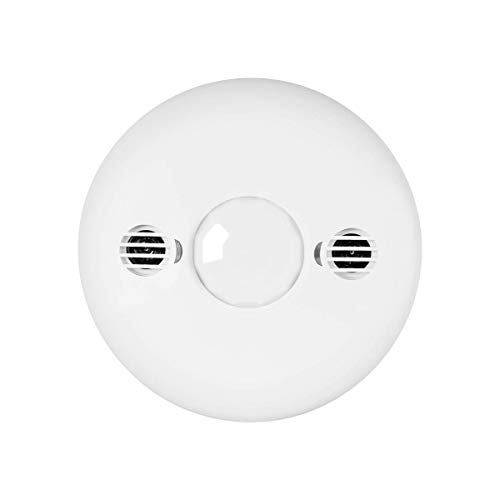
Combines passive infrared and ultrasonic technology providing the most accurate motion ceiling sensor possible. The ultrasonic sensor can defect fine movements such as typing, and flipping book pages

【Versatile Compatibility】This Wireless Gaming Controller is compatible with PS5, PC, and Steam Deck, making it a perfect all-in-one solution for gamers across multiple platforms (When using the ps5 controller for the first time, it needs to be connected to the PS5 console via a USB-C cable, It must be the data cable included in the package or the original data cable, and then press the Home button to activate it)

Selecting the Right Dual‑Tech Sensor for Your Property
Assessment of site requirements: a thorough evaluation should quantify interior and exterior coverage volumes, mounting heights, traffic lanes, and potential sources of interference, and these parameters will determine whether a long‑range commercial model such as the DT906, a wired Dual‑Tec like the DT8035, or a wireless residential unit such as the 5898 is most appropriate. 1. Coverage and range: measure room dimensions in meters or feet, select sensors matching coverage needs, consider DT906 for 12–15 m ranges, 5898 for typical 6–8 m domestic zones. 2. Placement and interference: verify mounts are unobstructed to reduce false alarms, account for HVAC, glass, and reflective surfaces. 3. Configuration: apply sensitivity adjustments for pets, factor environmental factors, and align settings with security requirements. Consider installing dual-technology sensors to differentiate between animals and humans, thereby reducing false triggers caused by pets. Consult professionals for final selection.
Recommended Products

PowerG* robust industry leading commercial grade wireless technology

ZIGBEE STANDARD COMPATIBLE MOTION SENSOR: Works with compatible Zigbee hubs or Echo devices with Zigbee hub built-in, such as Echo (4th Gen), Echo Plus (1st Gen and 2nd Gen), Echo Studio, Eero 6, Eero Pro 6, Home Assistant, SmartThings 2015/2018, Aeotec, Hubitat, Homey Bridge, Homey Pro, Third reality Hub and Third Reality Smart Speaker. Zigbee Hub Required.

COMBINES PIR AND ULTRASONIC CONTROL - for unrivaled performance and reliability
Frequently Asked Questions
Why Do Motion Sensors Give False Detections?
Motion sensors give false detections because environmental factors, installation errors, improper user settings, poor device quality, electromagnetic interference and incorrect sensor range cause misreads of movement, temperature, airflow, shadows, pets, or nearby electronic noise signals.
How to Minimize False Alarms?
One minimizes false alarms by testing whether placement causes errors: adopting best practices like outdoor placement, precise sensor calibration, thorough environment analysis, consistent maintenance checks, and focused user education yields measurable reductions in nuisance triggers.
How Do Dual Technology Motion Sensors Work?
They combine motion detection methods by fusing infrared sensing principles with microwave sensing basics; sensor technology advancements enable validation so alarms require dual triggers, providing dual technology advantages while mitigating environmental influences and false alarms.
What Could Cause False Triggers in a PIR Sensor?
Obviously, false triggers in a PIR sensor can be caused by environmental factors such as direct sunlight, poor sensor placement, temperature fluctuations, pet movements, foliage movement, warm equipment, and electrical interference disrupting signals and reflections.


