As an Amazon Associate, we earn from qualifying purchases. Some links on this site are affiliate links at no extra cost to you. Our recommendations are based on thorough research and editorial judgment.


Using Motion Path Lights Around Pools and Water Features Safely

1. Safety goal: illuminate pool edges and paths to 5–10 lux, using low-voltage 12V LED fixtures rated IP65–IP67, fixtures spaced 1.5–3.0 m and mounted ≥1.5 m above water. 2. Sensors: use PIR or dual-technology sensors mounted 6–8 ft high covering 10–20 ft, set sensitivity 30–70%. 3. Wiring: employ GFCI protection, 12V transformers, corrosion‑resistant materials, and annual inspections. More technical guidance follows for implementation and compliance. Consult a licensed electrician and local code officials for specifics.
Key Takeaways
- Illuminate walkways and pool edges with low-voltage LED fixtures spaced 1.5–3.0 m to maintain consistent 5–10 lux visibility.
- Position fixtures at least 5 ft from pool edges and, where required, mount lighting a minimum of 12 ft above water.
- Use IP67/IP68 wet-rated fixtures, GFCI protection, 12V transformers, and corrosion-resistant materials for safety and durability.
- Install PIR or dual-sensor motion detectors 6–8 ft high, set sensitivity to 30–70%, covering 10–30 ft to minimize false triggers.
- Program timers, dimming, and app alerts, and perform regular cleaning, biweekly sensor tests, and quarterly wiring inspections.
Why Motion Path Lights Improve Pool Safety
1. Motion path lights improve pool safety by illuminating walkways and pool edges, reduce risk of slips, and guide users through elevation changes and contours around the pool perimeter. 2. Technical rationale: a lighting system delivering 5–10 lux at walking surfaces, with fixtures spaced 1.5–3.0 meters, provides consistent visibility and visual interest without glare. 3. Implementation: use durable, low-voltage outdoor lighting options rated IP67, place fixtures at 150–300 mm above grade to mark edges, and mount controls with strategically placed motion sensors to activate lighting when occupancy is detected, ensuring safety while conserving energy. Adjustable sensitivity allows fine-tuning of detection effectiveness and can help prevent unintentional activation by animals or wind-blown debris. 4. Outcomes: well-lit outdoor spaces deter unauthorized access and can reduce accident-related injuries by 30 percent. Designers should document illumination levels, sightlines, and maintenance intervals to sustain long-term performance.
Choosing the Right Motion Sensor Technology

Choosing appropriate motion sensor technology requires matching detector performance to pool perimeter geometry, fixture spacing, and the documented safety requirements described previously, so that illumination activates reliably without unnecessary triggers. 1. Sensor selection: Choose passive infrared motion sensors that detect body heat within 10 to 30 feet, consider dual or triple sensor arrays to reduce blind spots around water features, and adjust sensitivity to limit wildlife false triggers. 2. Placement and spacing: Locate fixtures 5 to 10 feet from water edges, maintain line-of-sight, orient detectors to cover approach paths, and verify illumination patterns for full coverage. 3. Integration and safety: Prefer models with remote control and smart integration, mandate professional installation to guarantee electrical safety, grounding, and compliance with lighting safety codes, safety first. For outdoor environments, consider using lights with an IP65 or higher weatherproof rating to ensure reliability and durability in diverse weather conditions.
Recommended Products

No Subscription Required with Local Storage: Say goodbye to monthly subscriptions for a home security camera system! All videos captured by the security cameras are encrypted and stored locally on the 64GB built-in Sehmua hub (expandable up to 256GB), providing 4 months of recording history. Your data stays private with no cloud storage needed. Even if the cameras are damaged or lost, the data remains safe.

【SUPER BRIGHT & 0 ELECTRICITY BILL】 1175 Super bright LEDs ,have the capability of producing over 12000W light to supply lightening and security to your garage, pathway and more. solar street light built-in 48000mAH large capacity lithium battery, which will provide over 3 Night Lighting time after full charged, Each component has repeated testing and undergone aging.

Bright Outdoor Lighting: 102-inch solar post light with enhanced full-angle PIR motion sensors illuminates your garden, driveway, patio, porch, walkway, or backyard, covering up to 1200 sq.ft for safe evening activities. Switch between warm and white light, and choose Auto Dusk-to-Dawn or Motion Sensor mode for evening barbecues, family gatherings, or late-night chores
Waterproof and Durable Fixture Options
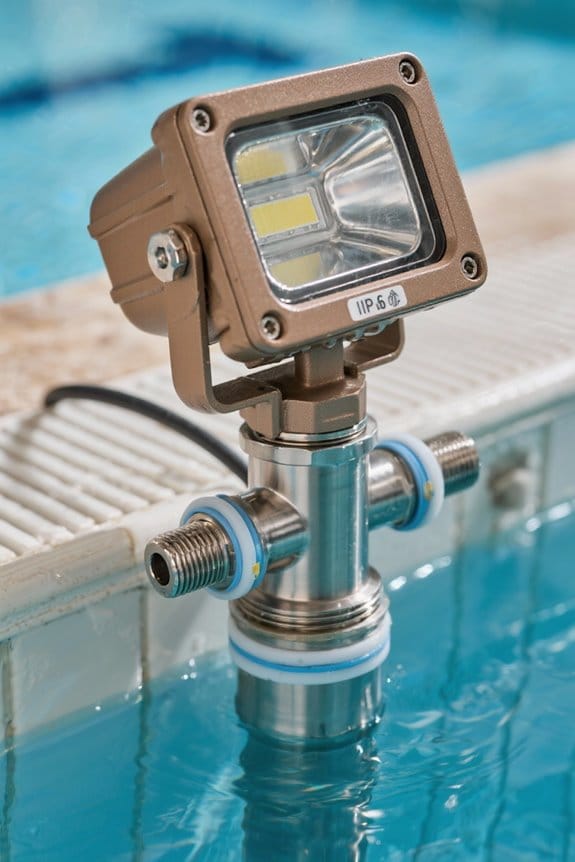
Overview: Waterproof and durable fixtures around pools require IP65/IP67 ratings for surface-mounted lighting and IP68 for submerged installations, combined with low-voltage (12–24 VDC) LED drivers and corrosion-resistant housings to provide reliable, code-compliant illumination and long service life. 1. Fixture selection: Specify waterproof fixtures with IP68 rating for submerged areas and IP65/IP67 for deck-mounted pathway lighting, select Low-Voltage LED systems to reduce shock risk, and prefer built-in waterproof connections to maintain safety and prevent shorts. 2. Materials and construction: Use durable materials such as solid brass or stainless steel, choose corrosion-resistant finishes and sealed gaskets to withstand chemicals and foot traffic, and select high-quality products tested for reliable operation. Wall mount LED lights are known for their energy-efficiency and savings, providing significant reductions in electricity bills while delivering excellent lighting quality. 3. Installation notes: Follow manufacturer torque, cable routing, and drainage guidelines for long-term consistent performance.
Optimal Placement Around Pools and Water Features

1. Ideal placement around pools and water features requires a systematic approach, motion path lights should be positioned no less than 5 feet from the pool edge to reduce electrical hazards and meet safety standards, and fixtures along walkways provide safe navigation while avoiding glare on water surfaces. 2. Spacing and coverage: fixtures are typically spaced 8 to 10 feet apart to deliver consistent pool lighting and prevent dark spots, this spacing supports even illumination of outdoor spaces and highlights edges of water features. 3. Electrical considerations: use low-voltage LED fixtures installed on circuits with GFCI protection to mitigate shock risks, routing cables away from splash zones and following local code guarantees compliance and reassures users. Proper Wattage Considerations are crucial when selecting path lights to ensure adequate brightness without overpowering the area, with recommendations varying based on the size and purpose of the space. Placement diagrams and measurements must be documented now.
Low-Voltage LED Systems and Energy Savings

- Low-voltage LED systems provide substantial energy savings, consuming up to 80% less electricity than traditional fixtures, and operate at safe voltage levels (12V or 24V), which reduce shock risk in wet environments, making them suitable for pool perimeter and fountain installations. These lighting solutions typically use bulbs rated for up to 25,000 hours, reducing maintenance frequency compared to halogen alternatives. Solar lights with monocrystalline panels offer an efficient option for energy capture, enhancing the sustainability and performance of outdoor lighting.
- Implementation guidance: specify 12V transformers sized 20–30% above load, run no more than 100 feet on 14 AWG to limit voltage drop, and integrate smart controllers to schedule operation and optimize energy-efficient performance. Long run cost analyses show reduced carbon footprint and lower lifecycle expenses, which enhance aesthetic outcomes while ensuring safety. Recommend verifying local codes and using GFCI-protected circuits, regularly inspected.
Color Temperature and Light Intensity for Nighttime Use
1. For nighttime use, specify color temperature between 2700K and 3000K to achieve a warm ambient glow that balances illumination and visual appeal around pools and water features, ensuring safety while minimizing cool blue spill that can obscure depth perception. 2. Determine light intensity using measured lux levels of 50–150 lux on walking paths and 20–50 lux at pool edges, configure motion path lights with adjustable brightness settings for higher activity and lower relaxation scenes, position outdoor lights at varied angles to reduce glare and harsh shadows, integrate layered illumination with task and ambient sources to guide movement, select low-voltage LEDs for energy efficiency and consistent output, and verify final layout with on-site photometric tests. Regular cleaning of solar panels is necessary to ensure the efficiency of motion path lights, especially in outdoor settings with potential exposure to debris. Maintain documented settings for review and seasonal adjustments annually.
Wiring, GFCI Protection, and Code Considerations
When installing wiring around pools, the designer must follow NEC 680, specify GFCI protection within ten feet, and maintain required clearances. 1. Wiring: All wiring shall comply with NEC regulations for voltage, conduit type, burial depth, and bonding, using wet-location rated cable and metallic conduit where indicated, and separation from water features at specified distances. 2. GFCI protection: GFCI protection must serve lighting fixtures within ten feet, and cord-and-plug lights within sixteen feet must meet NEC 680.7, minimizing electrical hazards and preventing shock. 3. Installation: Professional installation is recommended to guarantee adherence to safety codes, correct bonding, grounding, and fixture placement at twelve feet above water where required. 4. Inspection: Permit and inspection guarantee ongoing electrical safety in aquatic environments. Follow local amendments regularly. Additionally, surface mount LED lights are ideal for illuminating areas around pools due to their energy efficiency and customizable lighting features.
Smart Controls, Timers, and Motion Sensitivity Settings
Prior wiring, bonding, and GFCI requirements influence the placement, grounding, and circuit selection for smart control components, hence designers must account for conduit runs, service disconnects, and separation distances specified under NEC 680 when specifying sensors, controllers, and timers. Sensor placement: Mount motion sensors 6 to 8 feet high, angled to cover 10 to 20 foot detection zones along illumination pathways, adjusting lighting systems’ motion sensitivity settings to 30 to 70 percent to reduce false triggers from wind, and integrate smart controls. Timers and schedules: Program timers to enable safety lighting from dusk to midnight, and use schedules for energy conservation. Integration: Link motion alerts to apps for security around pools, allow manual overrides, document circuit IDs and conduit paths for outdoor spaces. Motion sensor lights with IP65+ weatherproofing are essential for maintaining functionality and durability in outdoor areas exposed to various weather conditions.
Maintenance Tips for Reliable Performance
- Maintenance tips and routine inspections: Inspect motion path lights every 3 months for frayed wires, corrosion, loose fittings, water ingress, verify 12–24 VDC continuity with a multimeter, measure resistance <5 ohms on connectors. Solar lights are constructed from high-quality, waterproof materials to withstand harsh weather, such as rain and snow, ensuring minimal maintenance and long-lasting performance.
- Cleaning procedures: Clean lenses monthly with mild detergent and a soft cloth, remove deposits to restore lumen output by up to 20%, improving visibility and reducing slip risks.
- Sensor and lamp checks: Test motion sensors biweekly, confirm activation distance and dwell time settings, and replace burnt-out bulbs immediately with identical specifications to maintain uniform color temperature and reliable performance.
- Seasonal maintenance: Before winter, drain low spots and reseal junctions to prevent freeze damage and preserve safe operation around water features. Schedule documented inspections annually.
Design Strategies to Balance Safety and Ambiance
1. Site planning establishes priorities, placement, and functional goals for motion path lights around pools and water features, mapping walkways, steps, and perimeters to optimize safety and ambiance. 2. Lighting selection specifies low-voltage LED fixtures, warm white color temperatures (2700K–3000K) to create a welcoming tone while maintaining clear illumination of edges, drains, and slippery surfaces, and prioritizes energy efficiency. 3. Spacing and layout prescribe fixtures 6 to 8 feet apart on straight runs, reduced to 3 to 4 feet near steps and abrupt elevation changes, ensuring consistent light levels without glare. 4. Controls and sensors integrate motion sensors tied to dimming and timers, activating full output on approach, conserving energy while providing immediate visibility. Installations should follow local codes and properly use wet-rated equipment. IP65-rated lights ensure durability against various weather conditions, making them ideal for outdoor installations around pools and water features.
Frequently Asked Questions
What Is the Best Landscape Lighting Around a Pool?
Low-voltage LED fixtures provide the best landscape lighting around a pool, delivering poolside ambience and glow effects; landscape strategy using lighting variety, careful fixture placement and underwater illumination balances design aesthetics, energy efficiency, safety measures.
Can I Put LED Lights Around My Pool?
Yes, one can install LEDs around a pool: LED safety measures, Pool light types, Waterproof lighting options, Energy efficient solutions, Color temperature choices, Lighting installation tips, Dimming controls benefits, Motion sensor usage, Aesthetic design considerations.
What Is the Code for Lighting in a Swimming Pool?
Better safe than sorry: The pool lighting code mandates electrical safety guidelines, underwater lighting requirements, circuit breaker specifications, GFCI protection standards, fixture installation rules, voltage limitations, distance regulations, and licensed electrician necessity for safe installations.
How to Light up Around a Pool?
Owners light around a pool with layered fixtures, pool safety tips, lighting design ideas, ambient lighting options, energy efficient choices, fixture placement strategies, color temperature effects, underwater lighting benefits, lighting maintenance practices, seasonal lighting trends.


