As an Amazon Associate, we earn from qualifying purchases. Some links on this site are affiliate links at no extra cost to you. Our recommendations are based on thorough research and editorial judgment.


Limitations of PIR Motion Sensors in Cold or Hot Climates

1) Temperature effects: PIR sensitivity declines as ambient approaches ~33°C, reducing range to under 3–5 m, and external heat sources cause false triggers. 2) Cold impacts: larger thermal differentials improve detection, but snow, ice, or HVAC heating pulses cause missed or delayed alarms. 3) Calibration: thermal drift requires adaptive thresholds and calibration every 6–12 months. 4) Mitigation: use combined microwave or thermal cameras, proper mounting at 2.4–3.6 m, and quarterly maintenance; further guidance follows. Consult manufacturer specs for limits.
Key Takeaways
- High ambient temperatures near body temperature reduce PIR sensitivity, causing missed detections and increased false alarms.
- Heat waves and sun-heated surfaces create thermal noise, triggering spurious motion events.
- Cold conditions increase temperature differentials unpredictably, causing delayed detection or inconsistent sensitivity.
- Thermal drift over time shifts detection thresholds, requiring frequent recalibration in extreme temperatures.
- Snow, ice, direct sunlight, or nearby HVAC units obstruct or confuse sensors, degrading accuracy and range.
How Temperature Extremes Impact PIR Detection Performance
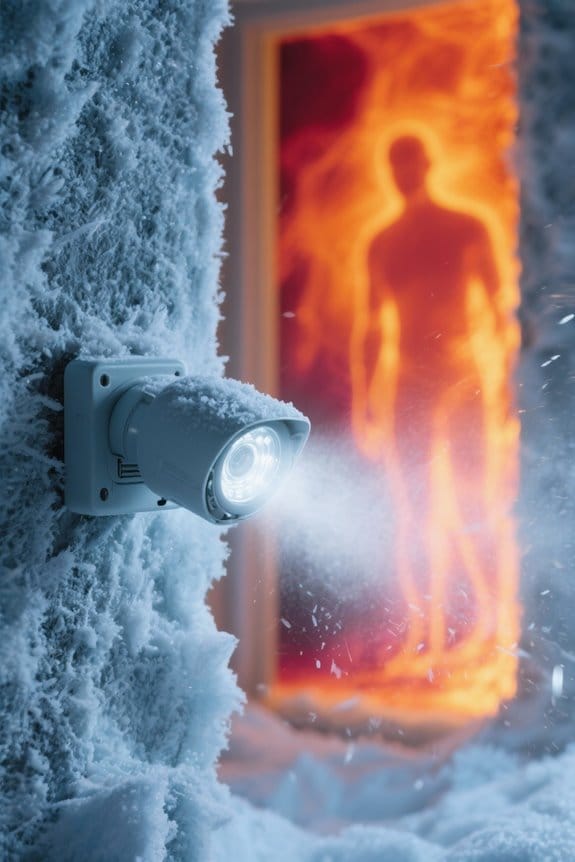
Temperature effects on PIR detection: Section 1 describes how sensors respond to ambient temperature changes, explaining motion detection principles and practical limits. PIR sensors detect heat emitted by objects, typically human skin at about 33°C, and rely on a differential of several degrees Celsius to trigger reliably. In hot climates when ambient temperature approaches body temperature, performance degrades and false alarms increase, reducing reliable detection range to under 3–5 meters in some models. In cold conditions, larger differentials improve contrast but extreme cold can chill sensor elements and reduce sensitivity, causing missed events. Design recommendations include adaptive sensitivity algorithms, environmental factors compensation, calibration routines every 6–12 months, and placement strategies to mitigate direct sunlight and radiant heat sources. Periodic testing is advisable monthly. For optimal performance in varying environments, choosing motion lights with adjustable auto-off timers and high lumen output can enhance energy efficiency and brightness in different settings.
Typical False Alarm Sources During Heat Waves and Cold Snaps
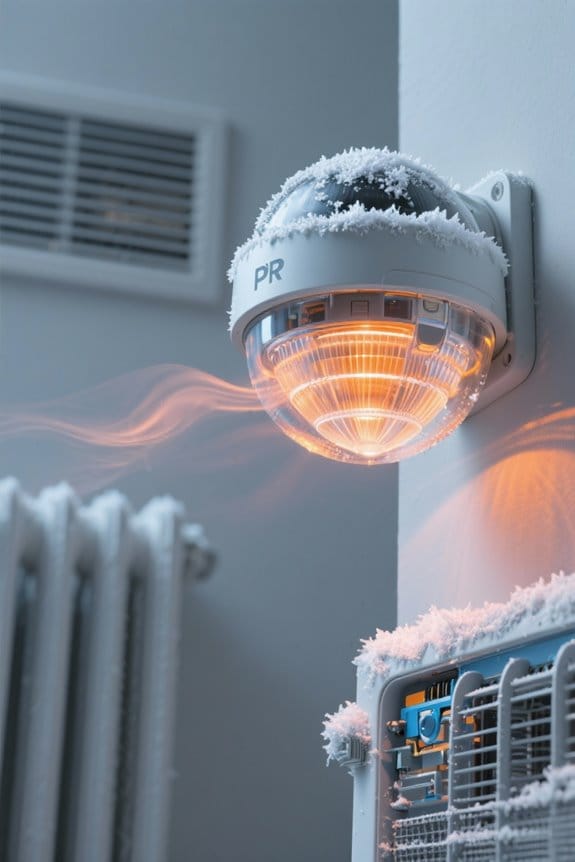
Overview: False alarms during extreme temperature events result from reduced thermal contrast, rapid temperature changes, reflective surfaces, and physical obstructions, all of which degrade PIR detection reliability.
- Sources in heat waves: Sensors may fail to distinguish body heat from ambient air when temperature variations reduce differential below 2–3°C, moving objects like foliage, curtains, or vehicles that reflect thermal radiation commonly trigger false alarms, and heat emitted by living occupants near vents confuse detection.
- Sources in cold snaps: Rapid heating from HVAC units, animals, or sunlight patches produce transient thermal radiation spikes, snow or ice can obstruct the sensor’s field and lower detection accuracy, and sensitivity settings that are too high increase common triggers.
- Mitigation: Adjust placement, sensitivity, and monitor environmental conditions. Ensuring proper setup for smart home integration can enhance system reliability by allowing remote monitoring and control, which can help mitigate the effects of environmental changes on PIR sensor performance.
Sensor Calibration Challenges and Thermal Drift Effects
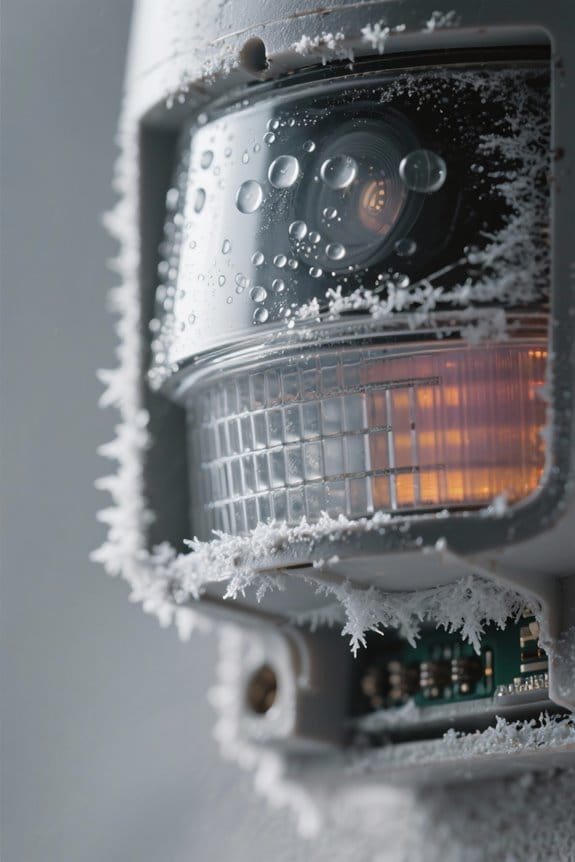
Calibration complexity arises when PIR sensors experience thermal drift, producing gradual baseline shifts that change detection thresholds over hours to days, and ultimately affect alarm reliability. 1. Overview: Technicians note PIR sensors work to detect infrared from 37°C sources, yet thermal drift, challenges of thermal drift, alters baseline voltages, reducing the temperature differential needed for triggers, and degrading accuracy. 2. Cold effects: In cold climates the smaller temperature differential causes delayed detection or missed alerts, recalibration interval recommendations extend to checks when ambient is below 5°C. 3. Hot effects: In hot climates, when ambient approaches body temperature, false alarms increase, necessitating adaptive sensor calibration and firmware compensation to maintain optimum performance. 4. Implementation: Log baselines, schedule recalibration, document environmental temperature changes. Record thresholds, adjustments.
Alternatives and Complementary Technologies to PIR Sensors
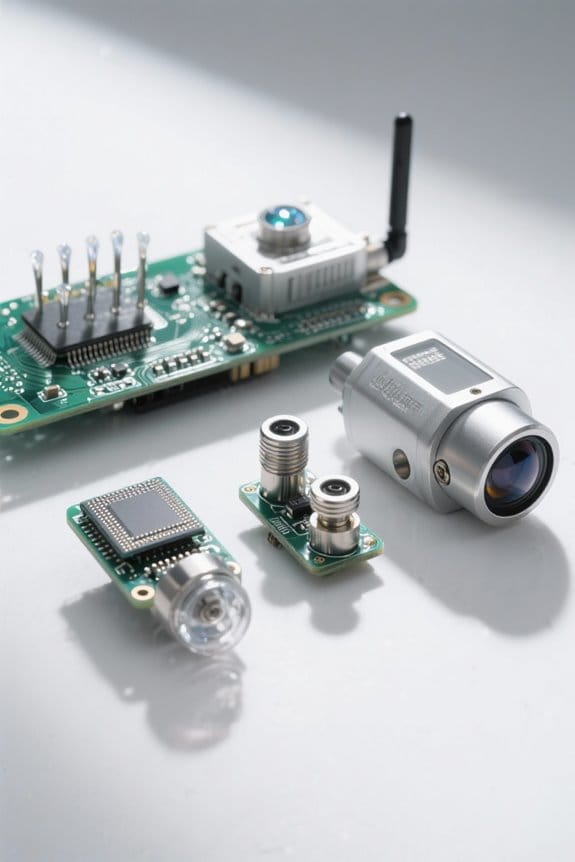
Because environmental limitations of PIR can compromise detection, alternatives and complementary technologies should be evaluated systematically, with attention to operating frequency, temperature tolerance, and deployment scenarios. 1) Microwave sensors: operate at 10.525 GHz or 2.4 GHz, use the Doppler effect to detect velocity changes above 0.1 m/s, tolerate -40°C to 85°C, recommended for outdoor perimeters, metal-clad enclosures, integrate with PIR to form dual-technology sensors, reducing false alarms by 70% field tests. 2) Ultrasonic sensors and thermal imaging cameras: ultrasonic systems emit 40 kHz pulses, detect displacement down to 1 cm in cluttered spaces, thermal imaging provides radiometric resolution of 0.05°C for precise object recognition. 3) AI-powered analytics: fuse sensor inputs in motion detection systems, classify human versus environmental movements, enable adaptive thresholds reliably and event logging. Choosing weather-rated and durable outdoor lights can enhance the functionality and reliability of sensor-based systems in various climates.
Installation and Maintenance Best Practices for Extreme Climates
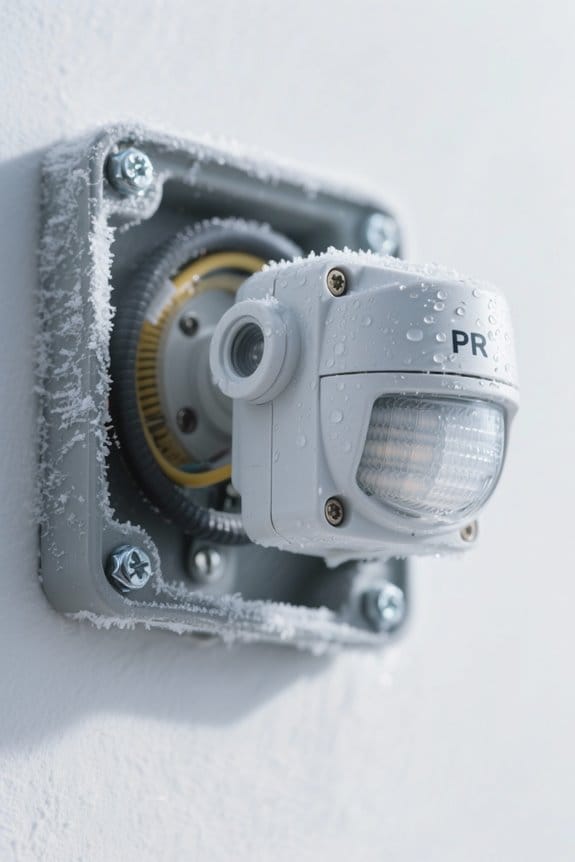
- Selection and installation: When installing PIR or infrared (PIR) sensors in extreme climates, choose models that adjust sensitivity with temperature, mount sensors 2.4–3.6 m high, avoid direct sunlight or heat sources within 1.5 m, and orient lenses to minimize air turbulence, ensuring peak performance and reducing thermal gradients that impair ability to detect motion.
- Maintenance and calibration: Establish maintenance intervals every 3 months, clean lenses with lint-free cloths, remove snow or debris promptly, and verify field-of-view. Calibrate sensitivity for local environmental conditions, log settings, and adjust thresholds to minimize false alarms. For critical sites, integrate multi-sensor systems and perform documented functional tests. Periodic professional inspections increase reliability, and provide measured reassurance regularly.
For solar-powered security lights, IP65 weatherproofing is crucial to withstand extreme weather conditions and maintain functionality over time.
Recommended Products

An ideal 360 degree high bay occupancy sensor for high mounted areas like warehouses, manufacturing and other commercial spaces designed to replace standard light or fan switches
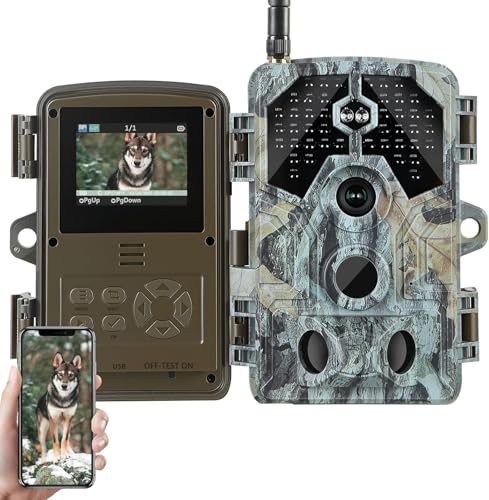
【WiFi Connectivity & App Control】No home WiFi or monthly fees required! This trail camera pairs instantly with your phone via Bluetooth and creates its own built-in WiFi hotspot (range up to 10–15m / 30–50ft in open areas). Use the free "TrailCam GO" app to adjust settings, preview photos, and download videos directly to your phone—no need to remove the SD card. Even when not connected, the camera continues recording automatically.

✅【Easy to install】 No neutral wire required 【Grounding Wire is Required for Function】 - ideal for homes of all ages. Replace existing switch or sensor in as little as 15 minutes. Ultra slim profile, easily fits in electrical box and wall plate.
Frequently Asked Questions
Does Temperature Affect PIR Sensor?
Yes, 70% indicate temperature sensitivity affecting PIR sensors; it reacts to ambient light, causes false detections, depends on installation height, material interference, humidity levels, impacts energy consumption, requires sensor calibration, outdoor placement caution, seasonal fluctuations.
What Are the Limitations of PIR Motion Sensor?
They have sensor sensitivity issues, installation location impact, false alarm triggers, and energy consumption rates, environmental interference factors, coverage area limitations, response time delays, humidity effects, seasonal performance variations, and technological advancements comparison complicate suitability.
What Is the Most Common Problem With PIR Sensors?
Sensor sensitivity issues, thermometer adrift, are most common; environmental interference, outdoor placement challenges, humidity impact effects, electronic component degradation, latency response delays, power supply variations, motion detection accuracy, false alarm frequency, user installation mistakes today
Do Motion Sensors Work in the Cold?
Yes, sensors work in the cold; motion detection can persist, though sensor sensitivity varies in low temperatures. Outdoor installations require attention to battery performance, humidity impact, signal interference, heat sources, animal movement, and sensor placement.


