As an Amazon Associate, we earn from qualifying purchases. Some links on this site are affiliate links at no extra cost to you. Our recommendations are based on thorough research and editorial judgment.


How Weather Affects Motion Sensor Accuracy Outdoors

1. Sensors: PIR, microwave and dual‑tech detect infrared contrast and Doppler shifts, ranges typically 5–15 m, sensitivity affected by ambient‑target differentials of about 5–10°C, fog and heavy rain reduce PIR range by 30–50%, wind above 20 km/h raises false alarms. 2. Placement: mount 2.5–3 m high, tilt 5–10°, keep 1–2 m vegetation clearance. 3. Mitigation: use visors, IP65 housings, mmWave or ML filters, further guidance follows. More technical recommendations are available in subsequent sections below.
Key Takeaways
- Extreme temperatures shift PIR sensitivity, so cold or heat can reduce detection accuracy and require seasonal sensitivity adjustments.
- Wind-driven vegetation and debris create false triggers, especially when gusts exceed ~20 km/h.
- Fog, mist, and heavy rain scatter infrared and reduce effective range by about 30–50%.
- Wet surfaces and thermal gradients produce localized heat signatures that PIR can misinterpret as motion.
- Regular seasonal calibration, firmware updates, and physical shielding (awnings, IP65 enclosures) substantially reduce weather-related false alarms.
How Motion Sensors Detect Movement Outdoors
1. Outdoor motion detection: Sensors combine PIR and microwave principles to detect movement, PIR measures infrared changes from a 90° to 120° field of view and typical detection ranges of 5–15 m, while microwave modules emit 10.525 GHz pulses and analyze Doppler shifts to identify velocity and direction, dual-technology units cross-validate triggers to reduce false positives. 2. Installation and environmental considerations: Proper mounting height of 1.8–2.4 m, correct lens selection, and sensor zoning minimize triggers from vegetation, wind, or rain, thereby reducing false alarms; calibrate sensitivity, employ time-delay settings, and use shielding to account for environmental factors, all of which improve reliability and practical field performance. Manufacturers recommend annual testing, documented baselines, and firmware updates to maintain detection accuracy and reduce nuisance alerts regularly. It is crucial to select models that claim energy savings of 80-90% compared to halogens, as these provide both longevity and lower utility bills.
Which Weather Conditions Most Affect Sensor Accuracy

Overview: 1) Cold and heat: Cold weather increases PIR sensitivity to warm bodies, raising false triggers, while high ambient temperatures reduce thermal contrast, degrading ability to detect movement for motion sensors on security systems. It is essential to monitor temperature changes and maintain a 5–10°C differential to optimize sensor performance. 2) Wind and debris: Gusts moving vegetation or loose objects produce mechanical movement, these generate transient signatures that an outdoor motion sensor may misclassify, recommend 2–3 m clearance from sensors. 3) Fog and mist: Microscopic droplets scatter infrared signals, reducing effective range by up to 30–50%, installers should adjust mounting height and lens selection. Implementation: use adaptive algorithms, thermal zoning, calibrated thresholds, and regular field testing to reduce nuisance alarms consistently. Log analysis and recalibration extend reliable performance under variable conditions.
Rain and Humidity: Causes of False Triggers

Rain and humidity cause false triggers in outdoor PIR sensors by scattering infrared signals, creating surface heat differentials, and accumulating debris. 1) Signal interference: Heavy rain produces droplet reflections that perturb infrared signals, reducing detection range by up to 30%, and inducing spurious fluctuations in the sensor output that mimic motion. 2) Surface and air moisture: Wet surfaces and elevated humidity create localized thermal gradients, which the PIR interprets as moving heat sources, leading to false triggers, particularly within 1 to 5 meters of the sensor. 3) Mitigation and maintenance: Implement routine maintenance, clean optics weekly during storms, trim vegetation, and adjust sensitivity settings to lower gains by incremental steps, for example 10% decrements, while monitoring alarm rates. Document changes and evaluate performance over 30 days for accuracy regularly. Additionally, using IP65/IP68 rated motion sensors ensures durability and resistance to harsh weather conditions, reducing the likelihood of false triggers.
Temperature Extremes and PIR Sensor Performance

Following the previous section on rain and humidity, attention now focuses on temperature extremes and their impact on PIR sensor performance.
- Temperature effects: PIR sensors lose sensitivity as ambient temperatures approach human body temperatures, roughly 95–100°F, reducing motion detection and causing false negatives; conversely, very high temperatures above 105°F may restore reliable detection.
- Cold conditions: Lower temperatures increase heat contrast, producing faster responses to warm bodies, but heightened sensitivity can generate false alarms from small animals and heated objects.
- Implementation: For outdoor lighting and security, specify sensor models rated for wide operating ranges, calibrate thresholds for local temperatures, and test at representative ambient temperatures to guarantee consistent performance. PIR sensors with 180-270 degrees of coverage provide optimal detection angles, ensuring their effectiveness in outdoor settings. Periodic maintenance and firmware updates improve long-term reliability across temperature extremes. Regularly verify.
Wind, Vegetation, and Moving Debris Issues

- Wind effects and detection challenges: Wind causes vegetation, tarps, and debris to move, producing rapid thermal and optical changes that mimic human-sized motion, so outdoor motion sensors using PIR technology often register these transient signatures, leading to frequent false alarms. Measurements show branch deflections of 10–30 cm at 5 m can trigger sensors tuned to small targets. Sensor functionality degrades when gusts exceed 20 km/h, because chaotic motion raises background noise and reduces signal-to-noise ratio.
- Mitigation and installation guidelines: Trim vegetation to maintain a 1–2 m clearance, install barriers or rigid mounts, set detection zones to 3–10 m, adjust sensitivity thresholds, and schedule maintenance, yielding more reliable performance. Regular testing with calibrated targets restores confidence in sensor functionality, and documentation record outcomes. Consider selecting motion detector lights with an IP65 or higher weatherproof rating to ensure durability in changing weather conditions.
Recommended Products

12.0 Megapixel Full HD Realtime Recording 32 Channel 6K 12MP NVR NDAA & TAA Compliant Security System with (32) 8MP Weatherproof POE H.265+ 4K Full-time Color Two-Way Audio IP Dome Cameras (Built-in 2.8mm 8MP HD Lens for 135° wide view angle and Built-in Microphone & Speaker for 2-Way Audio)

> Certified for Zone and Division 2 > Deep learning-based analytics > Excellent video quality with 4K at 60 fps > Detailed images in any light conditions > Impact- and weather-resistant Model Memory Compute capabilities ARTPEC-8 2 GB RAM, 8 GB Flash Deep learning processing unit (DLPU) H.264 (MPEG-4 Part 10/AVC) Baseline, Main and High Profiles H.265 (MPEG-H Part 2/HEVC) Main Profile Motion JPEG 3840x2160 to 160x90 With Forensic WDR: Up to 25/30 fps (50/60 Hz) in all resolutions No WDR: Up to 50/60 fps (50/60 Hz) in all resolutions

Ultra HD 4K / 8MP 32 Channel NVR with (24) H.265+ HD 1920P 5MP @ 30FPS Realtime POE Outdoor/Indoor Two Way Audio PIR IP Camera
Fog, Mist, and Reduced Infrared Transmission
When fog or mist is present, infrared transmission is scattered and absorbed, reducing PIR effective range by roughly 20–70% depending on visibility and droplet size. 1. Impact on detection: Fog reduces visibility to under 100 meters in dense conditions, causing infrared attenuation, absorption by water droplets, and signal scattering that produces halos and range anomalies. 2. Performance metrics: Expect missed detections and increased false alarms, with range variability from 0.3–1.5 meters per sensor beam in dense fog, calibrate thresholds accordingly. 3. Implementation guidance: Position motion sensors with overlapping fields, raise mounting height by 0.5–1.0 meters, add complementary microwave or radar sensors for redundancy. 4. Maintenance: Clean optics and review firmware sensitivity settings monthly. Combined measures typically restore usable detection range and lower false alarms. Solar-powered motion security lights can experience variable performance in regions with long winters and limited sunlight, necessitating optimal sun exposure for consistent functionality.
Snow and Ice Effects on Sensor Functionality
5. 1. Overview: Snow accumulation and ice formation reduce sensor performance by obscuring lenses, reflecting infrared energy, and altering thermal contrast across detection zones, for example, 2–6 cm of packed snow can block low-profile housings. 2. Sensor impacts: Cold temperatures increase Passive Infrared (PIR) sensors sensitivity, producing false alarms when warm-bodied animals pass near reflective ice surfaces, and heavy snowfall can reduce detection range by 20–60 percent. 3. Maintenance and mitigation: Regular maintenance, including clearing 2–5 cm of snow, de-icing with non-corrosive agents, and angling housings downward by 5–10 degrees, preserves detecting motion capability. Inspect weekly during storms. Reassuringly, proactive care sustains reliable operation. 4. Documentation: Record baseline performance metrics, log temperatures to ±1°C, and track false alarms per week to guide calibration regularly. Additionally, using weatherproof construction with an IP65+ rating enhances the longevity and reliability of motion sensors in adverse weather conditions.
Recommended Products
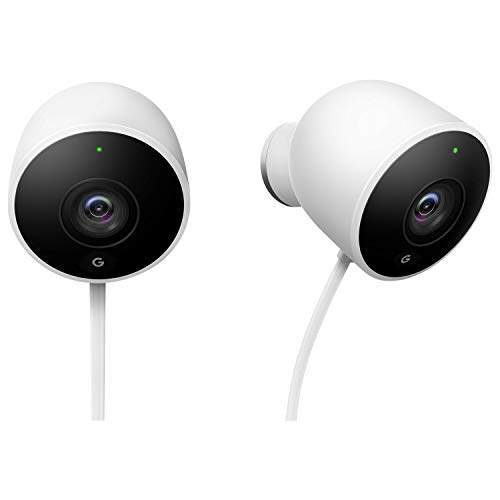
Mounting type: Ceiling Mount

Flexible Local & Cloud Storage: The security camera system comes preloaded with a 64GB memory card, giving you up to 120 days of loop recording with no monthly fees. You get reliable, secure local storage right out of the box, with support for up to 256GB. Optional cloud storage is also available for additional backup and AI analysis
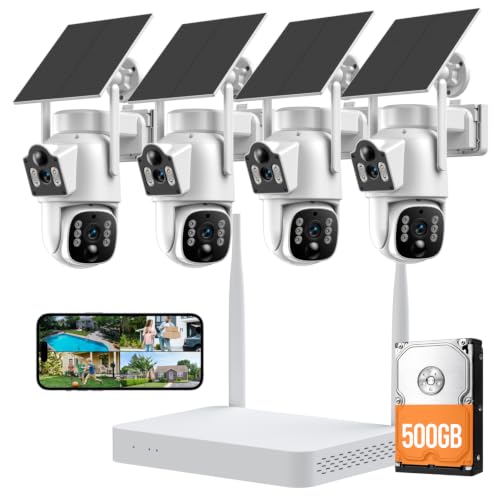
【Dual-Lens 360° Coverage - See More, Miss Nothing】Unlike single-lens cameras, our upgraded dual-lens design features an upper 180° fixed camera + lower 340° PTZ rotating camera (90° vertical tilt). Monitor 240° simultaneously or track moving objects with app-controlled pan/tilt. Perfect for outdoor security camera wireless coverage of driveways, yards, and entry points.
Sensor Technologies: PIR, Microwave, and Dual Systems
Although similar in purpose, outdoor motion sensors rely on distinctly different physical principles, and 1. 1) PIR sensors: detect infrared changes from warm objects, sensitive to temperature gradients of 0.1–0.5°C, perform poorly when ambient temperature equals target, adjust sensitivity and use 20–30° Fresnel lenses to optimize performance. 2) Microwave sensors: emit 10.525 GHz waves, measure Doppler shifts from reflections, maintain consistent range through fog and foliage, but can penetrate walls so require careful zoning for accurate detection. 3) Dual-technology sensors: require simultaneous PIR and microwave triggers to reduce false alarms, effective during rain and wind when one modality may be compromised. 4) Environmental factors and seasonal calibration are essential for reliable outdoor operation. Periodic testing, firmware updates, and documented thresholds improve long-term system reliability. Motion detection lights need to be installed at the appropriate height and location to ensure optimal performance and reduce false triggers in different weather conditions.
Installation and Placement Strategies for Harsh Weather
1. Installation and placement strategies: height: Install outdoor sensors under eaves or awnings to shield from heavy rain and snow, position sensors to minimize reflections and frequent false alarms, and place detectors at 8 to 10 feet above ground to reduce activation from moving vegetation. 2. Orientation and sun avoidance: Use adjustable mounts and angling features to orient sensors away from direct sunlight and glare, ensuring maximum performance and preventing thermal interference during extreme temperatures. 3. Enclosure and rating: Specify devices with an IP65 rating or higher for dust and water protection, supporting durability in conditions. Battery-powered outdoor motion sensor lights offer flexibility in placement without the need for wiring, making them ideal for harsh weather environments. 4. Inspection and maintenance: Periodically inspect after storms, clear obstructions, and verify functionality to sustain reliable operation. Document placement choices and record performance metrics after weather events.
Seasonal Calibration and Sensitivity Adjustment Tips
1. Conduct biannual seasonal calibration in spring and fall, technicians should verify baseline temperatures, note that PIR sensors often become overly sensitive below 5°C and less responsive above 35°C, adjust sensitivity settings by reducing detection range to 6–8 meters in winter and increasing to 10–12 meters in summer to mitigate temperature drift and reduce false alarms, prune vegetation 1–2 meters from field of view, and test with heat sources at 1 m and 5 m distances. 2. Evaluate environmental factors including wind, sun angles, and reflective surfaces, calibrate outdoor lights to avoid glare, log sensor performance metrics weekly for four weeks after changes, and consider dual-technology verification where available to improve reliability. Record settings, time, technician name, ambient temperature and humidity for each adjustment. Many automatic outdoor lights feature energy-efficient LED technology, providing reliable illumination while conserving power.
Advanced Solutions: Shielding, AI, and Alternative Sensor Types
Section 1: Shielding, AI, and alternative sensors build on seasonal calibration practices, offering hardware and advanced solutions to reduce weather-related errors and extend reliable operation across temperature extremes. 1. Shielding techniques: Install weather covers with 30–45° downward angles, use 50–100 mm overhangs, and mount sensors 2.0–2.5 m high to limit rain and wind load, this physical protection improves sensor stability and reduce false alarms by minimizing rapid thermal shifts. 2. Algorithmic AI: Deploy machine learning classifiers trained on labeled environmental and human movement datasets, updating models quarterly to adapt to seasonal variance and improve performance metrics such as precision and recall. 3. Alternative sensors: Employ dual-technology sensors or mmWave radar to maintain detection reliability across −40°C to +60°C, providing consistent operation and reassuring accuracy.
Frequently Asked Questions
Does Temperature Affect Motion Sensors?
Yes, temperature affects motion sensors; thermal variations and temperature fluctuations alter PIR responsiveness, while humidity levels, solar radiation, snow accumulation, wind speed and seasonal changes also influence detection accuracy, though radar-based sensors resist temperature-related effects.
Does Rain Affect Motion Sensors?
Yes, like a cloak, rain impacts sensors’ performance: Rain impact reduces sensor reliability, increases false alarms, forces careful sensor placement in wet conditions, and necessitates maintenance tips for prolonged outdoor usage to consequently preserve functionality.
What Interferes With Motion Detectors?
They are interfered with by pet movement, environmental factors such as humidity levels and wind disturbances, sunlight interference, nearby obstructions, and improper installation height, all of which can cause false alarms or reduced detection reliability.
How to Adjust Sensitivity on Outdoor Motion Sensor Light?
They adjust sensitivity settings via the sensor’s dial or app, test detection range, reposition for ideal sensor placement and light direction, perform environment adjustments, use calibration methods, then revisit settings for seasonal changes as needed.


