As an Amazon Associate, we earn from qualifying purchases. Some links on this site are affiliate links at no extra cost to you. Our recommendations are based on thorough research and editorial judgment.

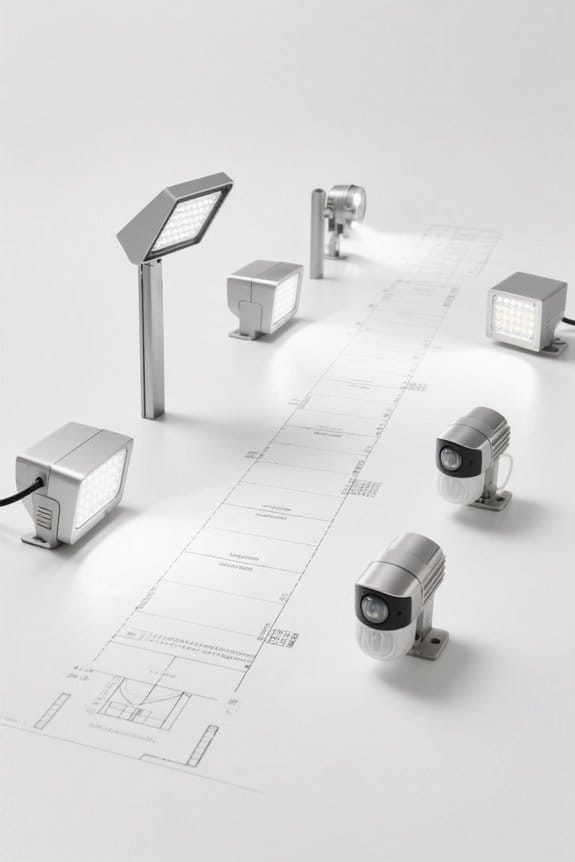
Mapping Out a Motion Lighting Plan for Your Walkways

1. Purpose: outlines motion lighting to improve walkway safety, specifying sensor types, placement, and timing. 2. Assessment: map traffic flows, mark approaches every 10–20 ft, note sightlines and preferred approach angles, and record mounting heights for fixtures. 3. Components: use IP65 LED fixtures, PIR sensors with ≥30 ft range, adjustable sensitivity, and 6–8 ft wall mounts. 4. Control: program sundown‑to‑sunrise timers, motion-triggered dimming, adaptive schedules, brightness adjustments, and energy monitoring. Continue for detailed layout diagrams, calibration procedures, and practical maintenance tips today.
Key Takeaways
- Survey foot and vehicle traffic times and directions to determine optimal sensor locations and trigger sensitivity.
- Map approaches and space sensors every 10–20 feet, focusing on likely entry points for full coverage.
- Specify weatherproof (IP65+) LED motion fixtures with ≥30-foot detection and adjustable sensitivity for walkway coverage.
- Mount sensors 6–10 feet high, angled toward paths to maximize detection and minimize false triggers.
- Configure smart controls for sundown-to-sunrise operation with motion-triggered brightness and scheduled energy-saving modes.
Why Motion Lighting Improves Walkway Safety and Convenience
1. Overview: Motion lighting systems employing motion sensors improve walkway safety and convenience by automatically illuminating path lighting as occupants approach, reducing trips and falls, and increasing visibility to deter intruders, with detection ranges up to 30 feet, ensuring timely activation without manual switches. Outdoor lights like the HGGH feature high-sensitivity PIR sensors that provide optimal security coverage, enhancing the effectiveness of motion lighting systems. 2. Benefits and implementation: A lighting company often recommends LED fixtures for energy savings and longevity, specifying lumen outputs of 200–600 lm per fixture for residential paths, mounting heights of 3–5 feet, and beam widths covering 3–4 feet of walkway. Systems integrate with smart controls for schedule and sensitivity adjustment, enabling remote management and tailored security lighting profiles, while providing practical, measurable improvements in access and risk reduction. Installers should verify sensor angles and response time to meet local codes.
Assessing Your Walkway: Traffic Patterns and Sensor Placement
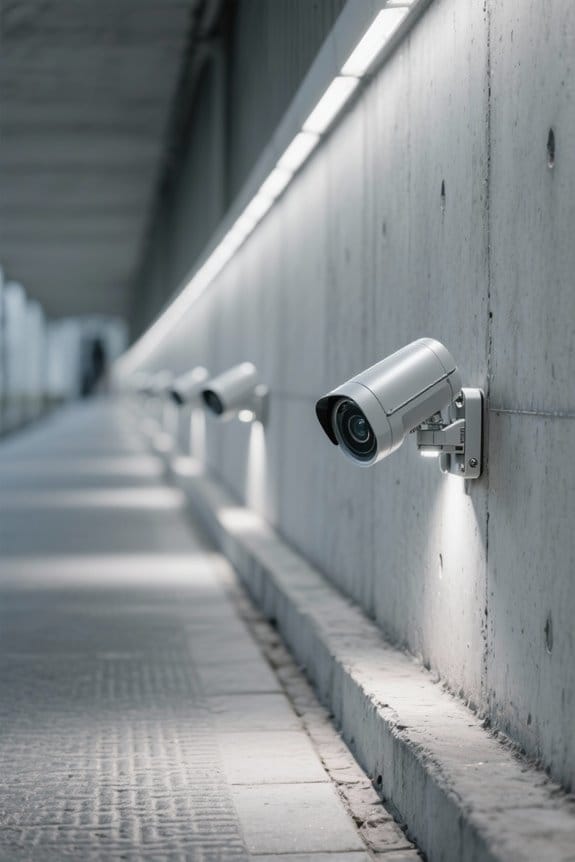
Why analyze walkway traffic patterns and sensor placement, and how should observable movement data drive decisions about sensor intervals, orientation, and sensitivity to guarantee reliable activation? 1. Traffic assessment: Observe frequency and timing of foot and vehicle traffic, record peak periods, and map directional approaches to inform intervals of 10 to 20 feet between sensors for continuous coverage. Motion sensors may struggle in extreme weather conditions, affecting detection accuracy, so consider environmental factors when positioning them. 2. Sensor placement strategy: Position motion sensors toward likely points of approach, aim sensors along travel vectors to reduce false triggers, and adjust sensitivity for typical speeds of users. 3. Environmental factors: Evaluate ambient light conditions, integrate outdoor lights with detection thresholds, and plan for regular maintenance, including cleaning and occasional repositioning, to preserve detection reliability and support practical lighting design. Implementation should follow these guidelines.
Choosing Fixtures and Sensors: Types, Range, and Mounting Options
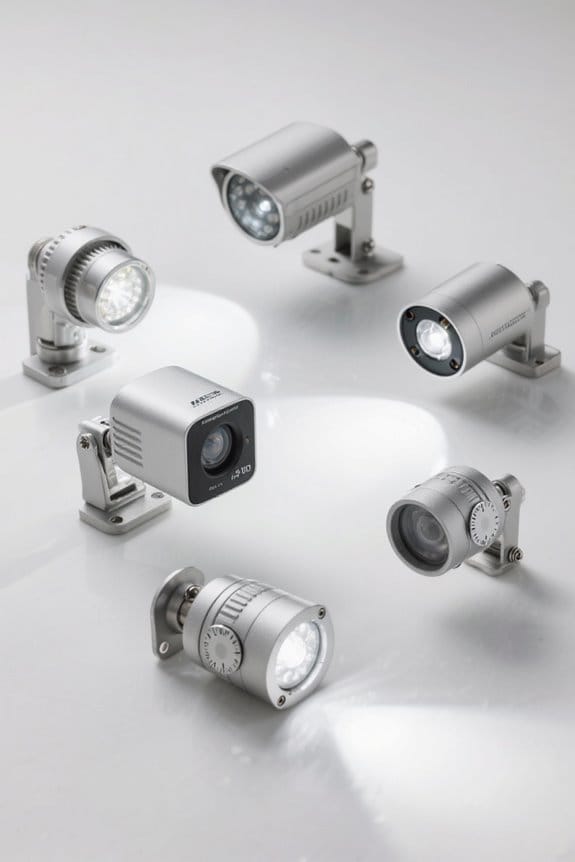
Overview: 1. 1) Fixture and sensor selection: Choose motion sensors integrated with outdoor light fixtures that use LED technology, rated weatherproof (IP65 or higher), and sized for walkway lighting, specifying a detection range of at least 30 feet to guarantee coverage for typical sidewalks and entries. 2) Sensor settings and placement: Select devices with adjustable sensor sensitivity, configure to reduce false triggers from pets and vehicles, mount wall sensors 6 to 8 feet high angled toward the path, or use post-mounted fixtures along edges for broader coverage. 3) Implementation notes: Use pathway lights spaced to overlap detection zones, confirm manufacturer specs for beam patterns, and prioritize durable housings for reliable long-term operation. Regular testing verifies coverage and maintains safety. Replace failing units promptly annually. Motion sensor bollard lights often feature a weatherproof rating of IP65, ensuring they withstand rain and snow and provide long-lasting outdoor performance.
Smart Controls, Timers, and Energy‑Saving Strategies
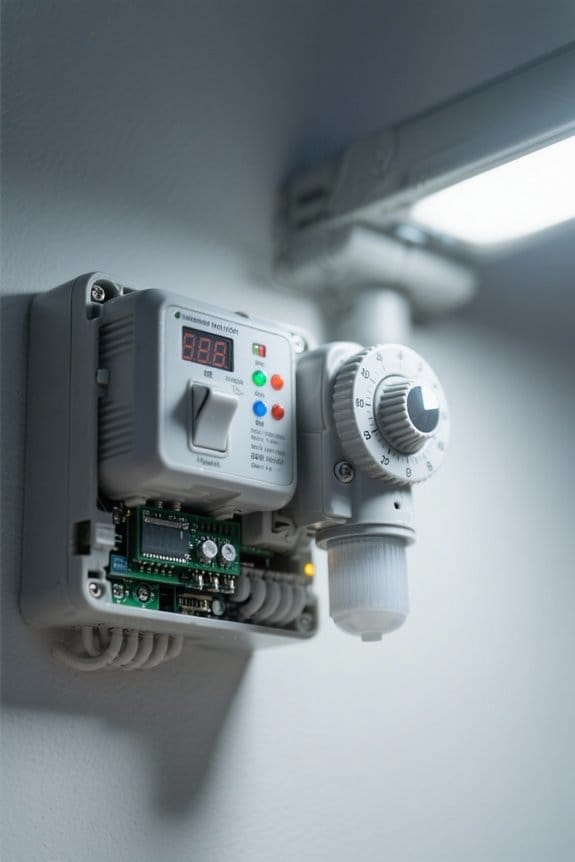
When configured properly, smart controls coordinate timers, motion sensors, and remote interfaces to deliver consistent walkway illumination, reduce energy consumption, and provide user-configurable responses for specific occupancy events. System planning: specify smart controls tied to home automation platforms, program timers for sundown-to-sunrise operation, and set motion sensors with 120° detection arcs and 5–15 second hold times to conserve energy. LED selection and metrics: choose LED lighting with ≥80 lm/W efficacy and 50,000 hour rated life, set 200–300 lm per step for walkway lights, dimming enabled to reduce output to 30% during low-traffic hours. Operational strategy: automate brightness schedules, use motion-triggered boost and remote override via smartphone, monitor energy use to verify energy-saving strategies and optimize sensor placement. Regular logging supports performance. Additionally, consider selecting IP65-IP68 weatherproof rated lights to ensure durability and protection against various weather conditions, enhancing the longevity of your lighting system.
Installation Tips, Maintenance, and Weatherproofing
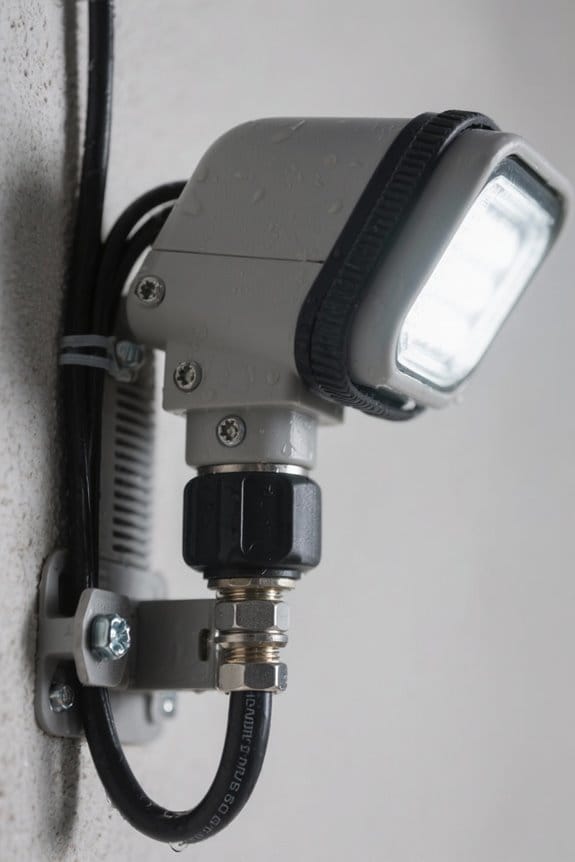
- Placement and installation tips for motion lights: mount sensors 6–10 feet above ground to maximize detection range while reducing false triggers from animals and branches, use adjustable sensitivity settings to calibrate activation for walkway traffic, and angle the light fixture to cover path length without causing glare.
- Weatherproof fixtures and durability: select fixtures rated IP65 or higher to resist rain, snow, and temperature extremes, use corrosion‑resistant mounts and sealed wiring connectors to extend service life. Consider outdoor lights with shatterproof materials to prevent breakage and ensure long-term reliability in harsh weather conditions.
- Maintenance and functionality checks: perform routine maintenance every few months, inspect sensors for debris on the lens, test detection range and adjust angles as needed, document findings and replace components when performance degrades to maintain safe outdoor space lighting. Follow manufacturer guidelines for warranty compliance regularly.
Frequently Asked Questions
How to Create a Lighting Layout Plan?
They sketch zones, select lighting types, plan fixture placement for safety features and aesthetic choices, set light intensity per area, weigh energy efficiency and solar options, factor budget considerations, and schedule seasonal adjustments for performance.
How to Layout Pathway Lights?
Planner spaces pathway light styles every six-eight feet, balances ambient lighting options, color temperature choices, selects solar powered lights with motion sensor features, uses decorative light fixtures, installation techniques, energy efficiency tips, landscape integration strategies.
How to Figure Out Lighting Layout?
60% fall at night; he maps zones, then pathway illumination styles, lighting design tips, outdoor ambiance ideas, energy efficiency solutions, motion sensor benefits, fixture style options, landscape enhancement techniques, seasonal lighting trends, safety features integration.
How Far Apart Should Walkway Lights Be Placed?
About 6 to 10 feet apart, with 4 to 6 feet for dimmer fixtures; planner considers light spacing, warm hues and color temperature, landscape integration, safety features, aesthetic appeal, energy efficiency, solar options, installation tips.


