As an Amazon Associate, we earn from qualifying purchases. Some links on this site are affiliate links at no extra cost to you. Our recommendations are based on thorough research and editorial judgment.

Planning Outdoor Motion Lighting With Local Light Ordinances in Mind

1. Purpose and compliance: Planners must follow local ordinances requiring fully shielded luminaires, maximum 2700K color temperature, lumen caps and mounting heights of 6–10 feet to prevent light trespass and protect wildlife; specify IP65-rated, downward-directed fixtures and document permits. 2. Sensors and placement: Use PIR or dual-technology sensors, set detection ranges to 10–30 m, angle downward, overlap fields. 3. Controls: Employ timers, photocells, and dimming to 10–20% curfew for energy savings. Continue for implementation guidance.
Key Takeaways
- Verify local ordinances for shielding, maximum color temperature (≈2700K), lumen caps, and permitting before designing motion lighting.
- Specify fully shielded, downward LED fixtures with warm (<2700K) color and IP65+/durable housings to limit spill and glare.
- Use PIR or dual-technology sensors placed 6–10 feet high, angled downward, with beam angles under 45° to focus detection on private property.
- Implement timers, photocells, and dimming (10–20% standby) or curfews to reduce runtime, energy use, and ecological impact.
- Document designs, settings, neighbor agreements, and maintenance schedules to demonstrate compliance and resolve disputes.
Understanding Local Light Ordinances and Their Purpose
You may be interested


1. Local light ordinances define objectives and metrics to mitigate light pollution, protect nocturnal wildlife, preserve the nighttime environment, and maintain human circadian health. 2. Fixture requirements specify fully shielded luminaires that prevent light trespass onto adjacent properties, with mounting heights limited to 12 feet in residential zones. 3. Photometric and spectral limits require maximum color temperature near 2700K, CCT controls, and lumen caps to reduce blue-rich emissions and glare. 4. Operational mandates promote energy conservation by requiring lights to be switched off when not in use, controlled by timers and curfews. 5. Compliance procedures emphasize legal adherence, permitting, inspections, and documented community engagement, fostering responsible outdoor lighting through education and enforcement. IP65 weatherproof rating is standard across most reliable security lights, ensuring durability against environmental elements. Consult local codes for exact numerical thresholds and approved product lists today.
Key Features of Motion Sensor Technology

Section 1 — Sensor types and detection principles: passive infrared (PIR) sensors, microwave sensors, and dual-technology units differ in operating wavelength, detection range, and false-alarm susceptibility, with PIR typically responding to 8–14 µm body-warmth radiation over approximately 10–50 feet and a 90–180° field, microwave using Doppler-shifted radio frequencies (commonly 10.525 GHz) to cover 30–60 feet with up to 360° coverage, and dual-technology requiring concordant triggers from both subsystems to validate motion before activation. Detection characteristics: Passive Infrared units offer strong energy efficiency and low maintenance, providing reliable security for residential zones when adjusted to a 10–30 foot detection range. Performance tradeoffs: Microwave increases detection range but raises False alarms risk, dual-technology mitigates that risk while enabling tailored light output and precise sensitivity tuning. For efficient outdoor lighting, it’s important to match light type with installation landscape, ensuring that the chosen sensor technology aligns with the specific needs and constraints of the property.
Recommended Products

ENERGY SAVING: LED units output 72W, 7500 Lumens, 5000K brightness(daylight white), equivalent to 720W incandescent bulb. Also save your electricity bill by up to 88%.

38 W Brightness and Energy Saving: Powered by LED lamp bead as the security light source, enabling it to produce up to 4200 lumens at low power of 38 W; With optical design filter lens, it provides better illumination; Save more than 80% electricity bill compared with equivalent traditional lights 175 W

40W Brightness and Energy Saving: Powered by LED lamp bead as the security light source, enables it to produce up to 4000 lumens at low power of 40W; With optical designed filter lens, it provides better illumination
Selecting Shielded Fixtures and Appropriate Color Temperatures

Shielding and color temperature selection are fundamental for outdoor motion lighting, directing lumen output downward, limiting skyglow, and reducing blue-rich emissions that affect residents and wildlife. 1. Shielded fixtures: Specify full cutoff, 0° uplight, and shielding that prevents light spill beyond property lines, limits light pollution, ensuring compliance with local light ordinances and reducing disturbances for neighbors. 2. Color temperature: Choose a maximum of 2700K to minimize blue light emissions, preserve a natural lighting environment, and address health and ecological concerns. 3. LED fixtures and standards: Use LED fixtures meeting FDA-related approvals, select appropriate lumen packages, and integrate dimming or controls to limit lumen output. 4. Product selection: Evaluate outdoor lighting products for photometric data, glare indices, and documented compliance. Implement specifications and retain records. Consideration of weather resistance ratings such as IP65 or IP67 is essential to ensure the durability and longevity of outdoor lighting fixtures.
Recommended Products

Simple Setup: Screw GE LED+ Motion Sensor light bulb into a fixture that fits an E26 medium base and turn on the power; light will turn on automatically when motion is detected at night - no app, hub or Wi-Fi needed!

Upgraded super bright LED chips independently designed by SANSI: This motion sensor outdoor lights enabling it to produce up to 3000 lumens at low power of 25 watt. Save more than 80% electricity compared with equivalent traditional halogen bulbs 200W. SANSI also uses the world's leading ceramic design to make the heat dissipation reach the first-class level,extendeding service life to 50,000 hours

Hardwire connection, NO battery powered, NO solar powered, NO plug in, NO camera
Placement Best Practices for Motion Sensor Wall Lights

Several practical placement principles guide motion sensor wall light installation, specifying mounting heights, sensor orientation, coverage overlap, and adherence to local light ordinances.
- Mounting and height: Install motion sensor lights between 6 and 10 feet above ground, optimizing detect movement, reducing false triggers, and satisfying lighting regulations for placement of outdoor lighting.
- Orientation and coverage: Angle sensors downward to detect movement on pedestrian pathways, doors, and key security zones, use overlapping fields from multiple fixtures on larger properties to avoid safety hazards, and select fixtures consistent with lighting codes and compliance regarding brightness and color temperature.
- Maintenance and review: Regularly inspect positioning, document proper installation, review local lighting regulations, and record dates, test sensitivity annually.
Additionally, consider using remote functionalities such as dimming and multiple modes to enhance control over the lighting setup and ensure compliance with local lighting ordinances.
Recommended Products

Upgraded Motion Sensor Outdoor Lights: BesLowe is a brand dedicated to outdoor wall lights. Our outdoor wall light features advanced PIR motion and photocell sensors, offering 3 lighting modes for intelligent, energy-efficient illumination. Moreover, this motion sensor porch light utilizes the latest sensor design for a sleek look and easy operation. With a simple click, you can effortlessly switch between motion sensor modes and say goodbye to complex mode-switching steps
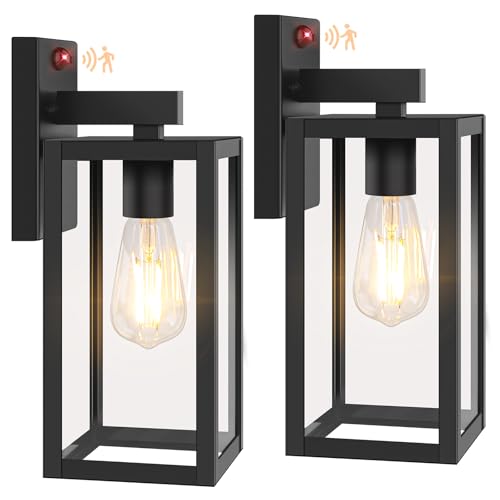
Upgraded Motion Sensor Outdoor Lights: BesLowe is a brand dedicated to outdoor wall lights. Our outdoor wall light features advanced PIR motion and photocell sensors, offering 3 lighting modes for intelligent, energy-efficient illumination. Moreover, this motion sensor porch light utilizes the latest sensor design for a sleek look and easy operation. With a simple click, you can effortlessly switch between motion sensor modes and say goodbye to complex mode-switching steps

Upgraded Motion Sensor: Our motion outdoor wall light features an advanced motion sensor with three versatile modes:Mode 1 (30%-100%-30%): The light automatically turns on at 30% brightness at dusk, increases to 100% when motion is detected, then returns to 30% after a set period with no motion. Mode 2 (Off-100%-Off): The light remains off until motion is detected, activates at 100% brightness, and turns off again after no motion. Mode 3 (Manual Override): The light stays continuously on for 8 hours through the night, then turns off at dawn and automatically reverts to Mode 1 or 2 (based on your previous setting). All three modes can be easily toggled using a standard wall switch
Height, Angle, and Coverage Guidelines for Reliable Detection

1. Height and Angle: Motion sensors perform best when mounted 6 to 10 feet above grade, this height balances range and resolution for human detection, and angles should be tilted downward to focus on pedestrian paths while reducing triggers from vehicles or small animals. 2. Coverage Planning: For larger property layouts, position fixtures to create overlapping detection zones, map sensor footprints, and aim to eliminate dark spots between beams, using multiple units where needed. 3. Line-of-Sight and Installation: Maintain clear sightlines by trimming vegetation and relocating obstacles, verify sensor fields during dusk testing, and adjust mounting brackets for peak detection. 4. Compliance and Community Impact: Confirm local ordinances for placement and light trespass, verify installation meets compliance and minimizes neighbor disturbance. Outdoor string lights, such as those with an IP65 weatherproof rating, are designed to withstand various weather conditions, ensuring long-term outdoor use. Document and retain.
Wiring, Permitting, and Code Compliance Essentials
One essential area of preparation for outdoor motion lighting is compliance with wiring and permitting requirements, which govern safety, longevity, and lawful operation, and which must be addressed before any trenching, conduit runs, or fixture mounting begins. 1. Permit review: Consult local building codes and apply for permitting, verify allowed fixture heights, lumen caps, and regulations on LED lights and color temperature limits, typically 2700K maximum. 2. Wiring standards: Use weather-resistant conduit, GFCI protection, properly sized conductors, and follow manufacturer installation guidelines to guarantee safety and code compliance. 3. Inspection and fixtures: Schedule inspections, install fully shielded fixtures to minimize glare, document compliance for future audits, and maintain records for ongoing inspections. Reassure stakeholders with stamped plans and certified electrician signoffs and periodic testing. Consider the energy efficiency of LED lights, which significantly lowers energy usage compared to traditional bulbs, to comply with local energy ordinances.
Reducing Light Pollution and Protecting Wildlife
Although outdoor motion lighting improves security and visibility, it must be engineered to minimize ecological disruption by controlling spectral output, directionality, duration, and intensity, using objective standards and measurable criteria. 1. Assessment: Conduct a site survey measuring lux levels at property-lines, set 1 lx for adjacent habitat, map nocturnal species corridors, and document dark sky initiatives, quantify light pollution in jurisdiction. 2. Design: Specify outdoor lighting fixtures with full shielding, warm-colored LED lights below 2700K, selectable timers and motion sensors, and beam angles under 45 degrees to limit light trespass. Selecting durable materials like IP65/IP66-rated housings can enhance weather resistance and longevity of lighting systems. 3. Compliance and monitoring: Implement automatic dimming to 10–20% after trigger, maintain records for local ordinances, and schedule seasonal adjustments to protect migratory wildlife and preserve biodiversity. Periodic audits validate performance and reduce impacts.
Energy Efficiency Advantages of LED Motion Lighting
Following measures to reduce ecological disruption, LED motion lighting provides quantifiable reductions in energy use and operational costs, while supporting wildlife-friendly lighting plans. 1. Energy efficiency benefits: LED motion lighting consumes up to 80% less electricity than incandescent lamps, yielding measurable energy savings, and providing significant cost savings on utility bills and maintenance. 2. Operational longevity and maintenance: with rated lifespans near 25,000–50,000 hours, fixtures reduce replacement frequency and labor costs, enabling predictable lifecycle planning. 3. Control and customization: adjustable brightness, motion sensors with precise detection ranges, and smart technology scheduling allow operators to conserve energy via timed activation and calibrated lumen output. 4. Implementation guidance: specify watts, lumen targets, sensor sensitivity, and installation angles to optimize performance. This reduces environmental and financial impact. Additionally, dusk-to-dawn photocells help prevent daytime activations, further enhancing energy efficiency by ensuring the lights operate only when necessary.
Recommended Products
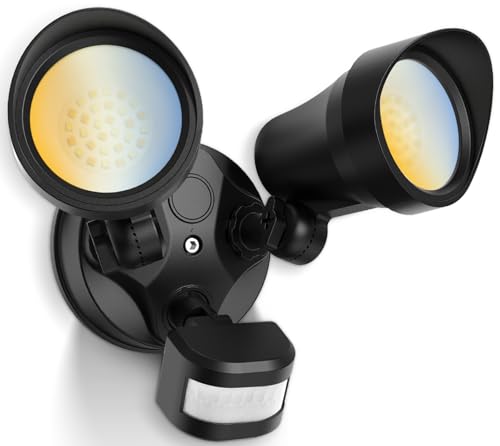
【Hardwire Connection】Motion sensor outdoor lights AC 120V (108V-132V). No Solar Powered/No Battery/No Plug/No Camera. 5 Years Coverage.

High-Efficiency Lighting: Onforu hardwired dual-head motion sensor outdoor lights deliver 3200LM brightness with 32W power and a 6500K cool white light, ensuring optimal illumination for your outdoor spaces.(No Solar, No Plug, No Camera)
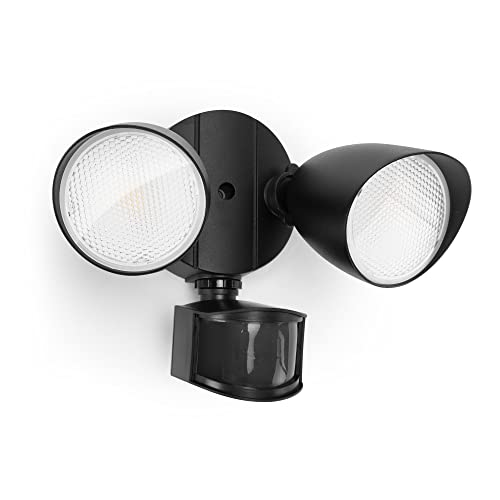
ENERGY SAVING: LED units output 32 W, 3500 Lumen, 5000 K brightness (day light white), equivalent to 150 W halogen light. Also save your electricity bill by up to 88%
Integrating Motion Lights With Smart Home and Security Systems
1. Integration overview: Motion lights integrate with smart home systems to enable control remotely via apps, improving security monitoring and user response times; typical PIR sensors detect 6–15 m, 120° arc, and output 800–2000 lumens when activated. 2. System design: Choose programmable units supporting protocols like Wi‑Fi, Zigbee, or Z‑Wave, and verify compatibility with voice-activated platforms such as Alexa or Google Home; pair cameras and alarms to create thorough home security scenes. 3. Operation and scheduling: Use scheduling features to restrict activation windows, comply with local light ordinances, and reduce false triggers. 4. Notifications and response: Configure real-time notifications, automated recording, and remote actuation, enabling timely assessment and measured escalation through monitoring services. Install units at 2–3 meters height for ideal detection and coverage. Solar-powered models like Aootek utilize sunlight for operation, enhancing energy efficiency and reducing electricity costs.
Recommended Products

Smart App & Voice Control for Everyday Convenience Connect. This outdoor smart flood light to 2.4GHz WiFi and control it from anywhere with the Onforu App. Use Alexa or Google Assistant for hands-free voice control. Easily adjust brightness, color temperature, motion settings, delay time, dim light mode, and group control to fit your home security and outdoor lighting needs. Note: 5GHz WiFi not supported. No solar, no plug, no camera.

Smart App & Voice Control for Everyday Convenience Connect. This outdoor smart flood light to 2.4GHz WiFi and control it from anywhere with the Onforu App. Use Alexa or Google Assistant for hands-free voice control. Easily adjust brightness, color temperature, motion settings, delay time, dim light mode, and group control to fit your home security and outdoor lighting needs. Note: 5GHz WiFi not supported. No solar, no plug, no camera.

Smart WiFi APP Control: Connect this outdoor motion sensor light to 2.4GHz WiFi and manage settings easily through the Onforu app. Adjust color temperature, brightness, motion sensor range, off-delay time, standby brightness, and sensor linkage for a smarter outdoor lighting experience.
Addressing Neighbor Concerns and Minimizing Light Trespass
Consideration of light trespass and neighbor concerns should direct the planning process, dictating fixture selection, spectral choices, aiming, and operational controls to minimize glare and spill while maintaining required security illumination. 1) Fixture selection: specify fully shielded downward luminaires, 2700K maximum color temperature, and fixture mounts at 2.5–3.5 to limit spill, include louvers and cutoff angles below 90°, guaranteeing compliance with outdoor lighting ordinances. 2) Controls and sensors: configure motion sensors to cover private property only, set timers and dimming to reduce brightness levels to the minimum effective lux, test detection arcs, document settings. Low voltage lights generally require minimal maintenance, focusing on regular checks of connections to enhance longevity. 3) Community engagement and upkeep: hold neighbor meetings, record agreements, perform regular maintenance to prevent light trespass and demonstrate community cooperation. Ascertain records show compliance and facilitate dispute resolution promptly.
Common Misconceptions, Maintenance, and Troubleshooting Tips
- common misconceptions: Many assume motion lights always cause false triggers, but modern PIR sensors mounted six to ten feet high with 90 to 120 degree coverage and adjustable sensitivity settings of 10 to 90 percent greatly reduce false alarms when aimed away from vegetation and heat sources.
- Maintenance: Clean lenses and outdoor lighting, check for obstructions within three meters, replace LEDs near 25,000 operational hours, tighten mounts to manufacturer torque, and document service dates to maintain compliance with local light ordinances and reduce light pollution affecting neighborhood aesthetics.
- Troubleshooting tips: Adjust sensitivity and time-delay, confirm sensor alignment, test illumination with a lux meter at one meter, and add shielding to control spill light.
Reassurance: Proper installation preserves safety and neighbor relations.
Frequently Asked Questions
What Is the Rule of Thumb for Outdoor Lighting?
Rule: mount outdoor lighting 6–10 ft high for motion detection; installation tips: aim down, select fixture options maximizing energy efficiency, minimizing light pollution, obey local regulations, address safety concerns, design aesthetics, landscaping integration, maintenance guidelines.
What if My Neighbor’s Outdoor Lights Are Too Bright?
They should, with faux gravitas, talk, document light pollution, light trespass, brightness standards violations, propose fixture adjustments and effective shielding, reference community guidelines and consultation resources, pursue legal recourse to resolve neighbor disputes—harmony solutions instead.
Do You Need Planning Permission for Security Lights?
No; homeowner responsibilities check municipal codes and security light regulations, as outdoor light permits may be required, follow installation guidelines, lighting safety measures, energy efficiency, landscape integration, address light pollution concerns and neighborhood lighting standards.
What Is Section 714 Outdoor Lighting Installations?
Section 714 is a guardrail of dusk, defining outdoor lighting installation guidelines in residential zones to reduce light pollution; it prescribes approved fixture types, energy efficiency, safety standards, dimming features, neighborhood compatibility and aesthetic considerations.


