As an Amazon Associate, we earn from qualifying purchases. Some links on this site are affiliate links at no extra cost to you. Our recommendations are based on thorough research and editorial judgment.

Using Motion Lights to Make a Vacant Home Look Occupied

1. Purpose: Motion lights deter intruders by creating intermittent illumination, reducing shadowed approaches and simulating occupancy with dusk-to-23:00 schedules. 2. Placement: Mount fixtures 8–10 ft high, spaced 20–30 ft, aim at doors and ground-level windows, use 180° PIR sensors with 10–15 m range. 3. Configuration: Set sensitivity to exclude pets, enable randomized on/off intervals, integrate timers or smart hubs for remote control. Maintenance and legal checks are required. Continue for detailed implementation guidance and compliance.
Key Takeaways
- Install motion-activated lights at 8–10 feet above doors and every 20–30 feet to eliminate shadows and simulate occupancy.
- Combine motion sensors with timers and randomized schedules from dusk to 11 PM to mimic typical household activity.
- Use smart-home integration to trigger interior lights or notifications when outdoor motion is detected for added realism.
- Adjust sensitivity and detection range to avoid false triggers from vegetation, animals, and passing cars.
- Notify neighbors and check local lighting codes for lumen limits, mounting heights, and permit requirements before installation.
Why Motion Lights Deter Intruders
You may be interested

1. Purpose and effect: Motion lights illuminate perimeters of an empty home, reducing shadowed approaches and making intrusion more visible, thereby deterring opportunistic offenders. 2. Placement guidelines: Install fixtures 6–10 feet high above doors and windows, angled 30–45 degrees to cover 120–180-degree zones, spacing units every 20–30 feet along facades to avoid dark gaps. 3. Sensor and lumen specifications: Use passive infrared sensors with 30–45 second hold times, 800–1600 lumen outputs for primary entry points, and adjustable sensitivity to prevent nuisance activations. 4. Operational considerations: Combine with timer cycles or remote monitoring, test coverage at night, and document settings, to maintain consistent occupancy illusion and contribute to neighborhood safety. Reassuringly, properly configured systems reduce burglary risk and encourage community vigilance. Regular maintenance is essential. Additionally, ensure the motion sensor lights have an IP65 weatherproof rating to withstand harsh outdoor conditions and maintain functionality.
Types of Motion-Activated Lighting

For practical implementation, 1. 1) LED flood and spot units: these provide broad coverage up to 50 feet, deliver high lumen output, use long-life diodes and low wattage, are suitable for mounting at 8–12 feet, sensitivity adjustable to 20–50 feet, timers set from 10 seconds to several minutes. 2) Smart-integrated motion-activated lighting system: models offer Wi‑Fi control, scheduling, remote monitoring via apps, allow scene programming to create the illusion of occupancy through randomized activation patterns. 3) Solar and battery-powered fixtures: permit installation without wiring, typically cover 15–30 feet, require periodic battery maintenance, are effective for detached structures and secondary approaches. 4) Hybrid units combine PIR and microwave sensors to improve accuracy, reduce false triggers, and allow precise timer and sensitivity calibration for varied conditions. Solar motion security lights are an excellent choice, especially those with IP65 weatherproofing, providing durability in various outdoor conditions.
Recommended Products

【Super Bright Solar Flood Lights for Outside】This solar light is made up of LED beads, PCB board, housing, connecting cable, and solar panel. The solar powered flood lights outdoor with 202 high quality LED, provide about 2800LM superior brightness and 6500K white daylight. Ra 80+, allowing things in the illuminated environment to appear in their true, natural colors. The solar flood light with curved design for a wide 180° lighting angle.

☀𝐔𝐥𝐭𝐫𝐚 𝐁𝐫𝐢𝐠𝐡𝐭 𝐋𝐈𝐆𝐇𝐓 & 𝐀𝐜𝐜𝐮𝐫𝐚𝐭𝐞 𝐏𝐢𝐫 𝐒𝐞𝐧𝐬𝐨𝐫: This solar security light is equipped with 126 upgraded high-power SMD2835 LEDs beads, which can produce high-brightness output of up to 800 lumens and 6500K. It has a built-in 1200mAh rechargeable battery and a high-efficiency solar panel, ensuring charging even on days with insufficient sunlight. Built-in sensitive light sensor and PIR inductor, the motion detector light can easily capture the movement of small dogs. After detection, the solar fence light will cover a large space with gradient lighting, without scaring your pets. It is very suitable for taking care of your dog while walking in the garden at night

210 High-Power LEDs & Focused Optical Lens Technology: Upgrade your security with KOOPER motion sensor outdoor lights, featuring 210 high-brightness LED beads and honeycomb lens technology. Unlike basic 100-LED solar flood lights, this solar motion light delivers a concentrated beam to significantly reduce dark areas in your driveway or backyard. The 3-head solar powered outdoor lights design provides 300° ultra-wide coverage for real-world visibility and safe
Optimal Placement Around the Property

When planning ideal placement around a vacant property, site planners should prioritize coverage of primary access points, circulation routes, and vulnerable glazing, using measured distances, mounting heights, and sensor settings to maximize deterrence and visibility.
- Entry coverage: Mount fixtures above the front door and rear access at 8 to 10 feet, angled to illuminate thresholds and approach zones, using fixtures rated at least 700 lumens to guarantee clear photographic quality.
- Perimeter lighting: Space pathway and driveway luminaires every 20 to 30 feet, positioned to eliminate shadows and reveal silhouettes, creating consistent sightlines for neighbors and cameras.
- Vulnerable glazing: Place fixtures near ground-level doors and windows to light panes and sills, reducing concealment options and signaling active surveillance.
Additionally, using motion detection lights with an IP65+ rating ensures weather resistance and reliable performance, enhancing security even in harsh conditions. Reassuringly, placement improves occupancy.
Adjusting Sensitivity and Range

Sensitivity adjustment controls detection thresholds, false-trigger rates, and response latency, and should be calibrated to specific site conditions through measured testing. 1. Scope: Define target zones, set range to 5 to 15 meters for pathways, 2 to 6 meters for doorways, and select detection angles between 90° and 180° to cover blind spots. 2. Calibration: Incrementally decrease sensitivity when wildlife or foliage cause false triggers, increase sensitivity for low-contrast human targets, and document settings after each test. Prioritize PIR sensors with a 20-40 ft detection range to minimize false triggers and ensure effective coverage. 3. Testing: Conduct night and daytime trials, simulate pedestrian and vehicle movement at 1 to 2 m/s, record activation distance and latency. 4. Maintenance: Reassess quarterly, adjust for seasonal foliage, and verify consistent deterrent coverage. Keep a configuration log, include date, sensor model, and measured parameters regularly.
Combining Motion Lights With Timers and Smart Schedules
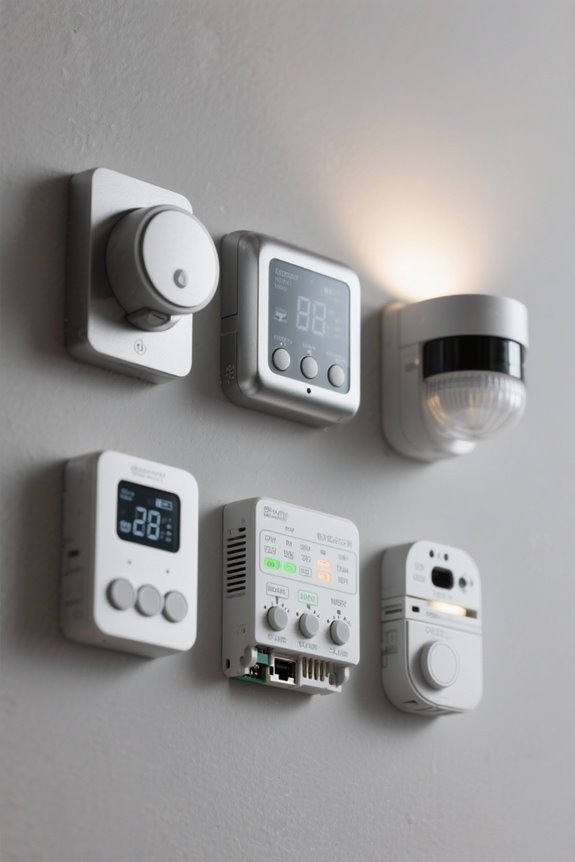
- Combining timers and schedules: Motion lights can be scheduled to illuminate exterior zones during peak activity hours, configured to make your home look occupied when automated patterns mimic typical use.
- Timing parameters and examples: Set dusk-to-11:00 PM activation for porch lights, 20–60 second illumination intervals, and randomized on/off blocks within 5–15 minute windows to simulate variability.
- Sensitivity and synchronization: Configure PIR sensitivity to detect pedestrians at 10–15 meters and vehicles at 20–30 meters, sync indoor fixtures with motion events to simulate movement between rooms.
- Smart integration: Link motion sensors to smart home devices for remote adjustments, real-time alerts, and manual override via app, ensuring reliable, monitored simulation. Test and log events, adjust thresholds based on false triggers and seasonal daylight variations.
- For optimal efficiency, choose solar-powered options that minimize energy costs and increase sustainability, ensuring the motion lights operate effectively even in cloudy conditions.
Recommended Products

【270° Wide-Angle Solar Motion Flood Lights】Our solar lights outdoor waterproof are equipped with 3 adjustable lamp heads and an upgraded motion detection chip, delivering 270° wide-angle illumination for all-around coverage. The built-in PIR sensor detects movement within a 180° range up to 30 feet, instantly activating bright light to enhance outdoor security. Perfect as solar motion lights outdoor and motion flood lights for outside, these solar powered outdoor lights provide reliable protection for your yard, patio, and house.

🔋 【INNOVATIVE BATTERY & MODE INDICATOR with STEALTH OPTION】 Unlike traditional solar lights, our upgraded motion sensor outdoor lights eliminate guesswork. The Left Indicator displays real-time battery levels (25%-50%-75%-100%), while the Right Indicator shows the active mode via distinct colors (Red/Green/Blue). 💡Upgraded Feature: Simply press and hold for 3s to turn off the indicator lights for a completely dark, stealth look at night. Setup and monitoring are now entirely intuitive and frustration-free!

🏃♂️【Advanced PIR Motion Sensor】 Our motion lights outdoor detect movement within 13-20 feet at a 120° angle—sensing people, animals, or vehicles. Lights up automatically to welcome guests, guide your way, or alert you to unexpected activity around your property
Integrating Lights With Doorbell and Security Cameras
Section 1 — Integration overview: Building on scheduled motion-light patterns and randomized on/off blocks, integrating lights with doorbell and security cameras greatly improves visibility, automated response, and the perception of occupancy around entry points. 1.1 System requirements and protocols: Confirm compatibility among motion lights, doorbell cameras, and the hub or NVR, use Wi‑Fi (2.4/5 GHz), Zigbee, Z‑Wave or ONVIF/RTSP, verify power (12–24 V DC cameras, 120 V AC fixtures). 1.2 Triggering parameters and thresholds: Set motion zones and PIR sensitivity, activate lights below 10–30 lux, specify 300–800 lumens for porches and 800–1,500 lumens for driveways, with 20–60 second activations and a 5–15 second buffer. It’s important to ensure weatherproofing & durability for outdoor fixtures to withstand various weather conditions and extend the lifespan of the system. 1.3 Data handling: Record 5–10 second pre‑buffers, 10–30 second post‑buffers, link clips to lights on timers, home security system active.
Recommended Products
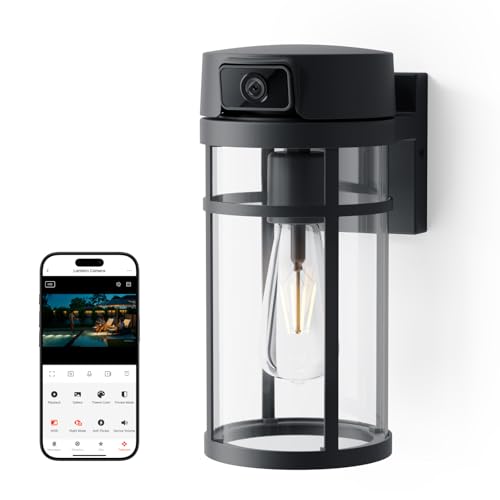
【Work with Alexa or Google】:As a free value-added service, we can activate the Alexa feature for your devices. Just contact us with the Virtual ID(s) of the device(s) you wish to enable. For your security, each device has its own unique ID, so please provide the ID for every unit you want connected.

Simple Setup: Screw GE LED+ Motion Sensor light bulb into a fixture that fits an E26 medium base and turn on the power; light will turn on automatically when motion is detected at night - no app, hub or Wi-Fi needed!

【Time to Upgraded Your Floodlights】ieGeek floodlight camera realizes two-in-one light monitoring and its functions far beyond traditional flood light. Enhance your security by adding surveillance, motion detection, smart alerts, real-time communication via 2-way audio or works with Alexa, and more. For those of you juggling family and work, you won't miss out on time with your family while ensuring their safety and privacy. Tip: Installing a floodlight cam requires a junction box and existing wiring.
Power Options: Wired, Solar, and Battery Models
1) Wired systems: For permanent installation use wired motion lights connected to 120V or 240V circuits, providing continuous power and reliable operation, ideal for mounting at 2.5–3.5 m elevation to maximize detection and coverage. They require conduit, junction boxes, and qualified electrician installation. 2) solar options: solar-powered fixtures employ photovoltaic panels rated 5–20 W and 12–24 Wh batteries, offering eco-friendly, off-grid operation with tool-free mounting, minimal wiring, and orientation toward true south for best charging. Solar-powered designs minimize operational costs and are environmentally friendly, making them an excellent choice for energy-conscious consumers. 3) Battery models: Battery units use AA, C, D cells, or sealed lead-acid packs, afford flexible placement without power access, but require scheduled replacement or recharge. 4) Integration: Select systems supporting smart-home protocols for remote monitoring and configurable sensitivity. Professional installation minimizes faults and guarantees consistent security deterrence.
Recommended Products

【PIR Motion Sensor】Our sensor lights outdoor work only in motion-activated full brightness (Mode 1) and dim light with motion boost (Mode 3); constant medium light (Mode 2) does not activate the sensor. For best sensor activation, fully charge before use, install in an open area away from other lights, and test in the dark.

Three Optional Modes 1.Motion Sensor Light Mode (The lights will go off at night when no motion is detected; when it detecteds motion the step lights stay on at high brightness for 15 seconds and then go off) 2. Permanent On Mode (the lights turn on automatically night and stay on at 10% brightness for 8 hours). 3. Smart Brightness Control Mode (when no motion is detected, the light stays slightly bright all night; when motion is detected, the motion sensor adjusts the light to stay on high for 15 seconds, then back to stay slightly bright)

Solar Powered & Energy Saving: Solar spot lights use solar energy to charge, which can automatically sense light, automatically turn on at night, and automatically charge during the day, saving electricity and reducing energy consumption. No wires are required, which not only saves energy, but also saves you a lot of money on your electricity bill
Nighttime Visibility and Light Temperature
3. Section 3: Nighttime Visibility and Light Temperature. 1) Technical overview: Motion lights configured to 2700–3000K mimic warm indoor lighting, improving nighttime visibility for cameras and passersby, and producing an illusion of activity that suggests occupancy. 2) Illumination levels: Recommended output is 200–800 lumens for walkways, 800–1600 lumens for entrances, sensors set to trigger within three to five meters, with 10–30 second dwell time to simulate transient use. 3) Placement and patterning: Install units at 1.8–2.4 meters height, aim beams to avoid glare, stagger timing via smart controls to create randomized cycles resembling human behavior. 4) Outcome: These measures increase perceived monitoring and reduce dark concealment. Practical, measurable, and remotely controllable. They also allow scheduled variations to avoid predictable patterns during long vacancies nightly.
Preventing False Alarms From Wildlife and Vehicles
- Section 1: Sensor placement and distance guide instructs placing motion sensors 10–15 feet from vegetation, mounting at 8–10 feet height, aiming sensors downward to minimize triggers from swaying plants and small animals.
- Sensitivity and detection zoning recommends configuring sensitivity settings to ignore pets and small wildlife, utilizing adjustable detection zones to exclude shrub and pathway areas, and programming shorter range toward roads to avoid vehicle activation.
- Pet immunity and vehicle mitigation explains selecting units with pet immunity features and narrow beam patterns, orienting sensors parallel to likely human approach, not perpendicular to traffic, to protect your home while keeping your home appearing occupied. These measures reduce nuisance activations, increase reliability, and provide reasonable deterrence for vacant properties. Implement them consistently. Motion sensors with adjustable range settings can help tailor detection zones to specific areas, reducing false alarms from wildlife and vehicles.
Maintenance Tips for Reliable Performance
Section 1: Routine inspections and adjustments, performed every 3–6 months, verify sensor alignment, sensitivity, and lens cleanliness to reduce false triggers. 1. Positioning and sensitivity: Inspect mounting height (2–3 meters), adjust detection angle to 90–120 degrees, and set sensitivity to avoid wildlife activation, maintenance tips include documenting settings. 2. Bulb and energy management: Replace failed bulbs promptly, choose LED lamps rated for outdoor use, 10–15,000 lumens not usually required. 3. Sensor and lens care: Clean lenses with a lint-free cloth and isopropyl alcohol, remove debris, test range to 10–12 meters. 4. Electrical inspection: Examine wiring for frays, corrosion, secure connectors, make sure grounding is intact. 5. Operational testing: Verify time-delay and coverage weekly after adjustments. Document all actions in a maintenance log for accountability. Additionally, IP65-rated lights ensure durability and can withstand various weather conditions, making them ideal for outdoor use.
Legal and Neighborhood Considerations
When moving from maintenance procedures to legal and neighborhood considerations, homeowners should evaluate local codes, HOA rules, and nuisance lighting standards in detail, verifying that security lighting enhances visibility without creating light trespass or legal exposure. 1. Regulatory compliance: review municipal ordinances for lumen limits (commonly 300–800 lm per fixture), mounting heights (2.5–3.5 m), and sensor cut-off times, document permits required, consult the HOA for design approvals. 2. Neighbor coordination: notify adjacent residents, share placement diagrams, and adjust beam angles to avoid window intrusion, use shielding and back shields to reduce spillover. 3. Liability mitigation: maintain logs, test photocells regularly, and guarantee fixtures meet IP65 and UL listings to reassure neighbors and reduce legal risk. Periodic audits every six months guarantee compliance and relations. Additionally, consider using energy-efficient designs that save over 80% compared to traditional bulbs to reduce long-term costs and environmental impact.
Cost-Effective Upgrades for Long-Term Security
One thorough upgrade strategy combines efficient LED fixtures, smart control systems, and strategic placement to maximize deterrence while minimizing energy consumption, maintenance, and false-activation events. 1. Lighting selection: Specify 15–20W LED motion lights or flood fixtures, 120–277V input, 3000–4000K color temperature, 1,500–2,500 lumens, to replace incandescent units around a vacant home, providing consistent brightness and long service life. 2. Control systems: Integrate programmable timers, remote app control, and geofencing, set activation windows and randomized schedules, enabling realistic occupancy patterns. 3. Sensor configuration: Use passive infrared sensors with adjustable sensitivity and 10–15 meter detection range, mount at 2.5–3 meter height, angle downward 30–45 degrees to reduce false triggers. High-quality units reduce maintenance and operating cost. They reduce cost through reduced replacement frequency and utility bills.
Recommended Products

【9000LM SUPER BRIGHT 4 HEAD FlOOD LIGHT】With an output of 80W, this floodlight emits a powerful 9000 lumens of 5000K light. The four adjustable heads and unique four beam design provide uniform and extensive illumination, ensuring coverage of up to 2,370 sq. ft. Additionally, it offers over 88% energy savings compared to traditional halogen bulbs.

ENERGY SAVING: LED units output 72W, 7500 Lumens, 5000K brightness(daylight white), equivalent to 720W incandescent bulb. Also save your electricity bill by up to 88%.

ENERGY SAVING: LED units output 72W, 7500 Lumens, 5000K brightness(daylight white), equivalent to 720W incandescent bulb. Also save your electricity bill by up to 88%.
Frequently Asked Questions
How to Make an Empty House Look Occupied?
They simulate occupancy by employing staging techniques: scheduled indoor and outdoor lighting, varied light placement, motion-activated fixtures, smart controls, randomized timers, and occasional ambient sound, creating believable activity patterns that deter would-be intruders nearby observers.
How to Make Your House Unattractive to Burglars?
While some claim upgrades are costly, they make the house unattractive to burglars by prioritizing home security: installing locks, reinforcing doors, adopting a lighting strategy with timers and motion lights, trimming shrubs, and using cameras.
How to Make It Look Like Your Home When on Vacation?
The homeowner simulates occupancy while away by following vacation tips: program indoor timers, schedule varied lighting patterns, and install motion sensors; lighting strategies include motion-activated exterior lights at entries and pathways to suggest regular activity.
Do Burglars Avoid Houses With Lights On?
Yes; burglars avoid houses with lights on. Research supports using light strategies and motion sensors as effective burglary prevention, since illumination increases detection risk and discourages opportunistic offenders, especially when combined with timed indoor lighting.


