As an Amazon Associate, we earn from qualifying purchases. Some links on this site are affiliate links at no extra cost to you. Our recommendations are based on thorough research and editorial judgment.


Seasonal Tweaks: Adjusting Motion Sensors for Winter and Summer

1) Seasonal effects: PIR sensitivity drops as ambient nears body temperature, adjust gain by −30–50% in summer and +20–40% in winter, set ranges to 5–10 m summer, 10–15 m winter. 2) Timing: use hold times 30–180 s summer, 60–120 s winter, shorter resets for high-traffic walkways. 3) Placement: mount 6–8 ft high, 10–20° downward tilt, avoid sun and snow reflections. 4) Maintenance: monthly lens cleaning, quarterly calibration. More guidance follows below.
Key Takeaways
- Reduce summer sensitivity 30–50%, limit detection range to 5–10 m, and lower PIR gain to avoid foliage and small-animal triggers.
- Increase winter sensitivity 20–40%, extend detection range to 10–15 m, and raise PIR gain to penetrate light snow and clothing insulation.
- Shorten winter time delays (30s–3min) and dwell (1–3 min); lengthen summer dwell to 3–10 minutes for extended activity.
- Mount sensors 6–8 ft high with a 10–20° downward tilt, reorient seasonally to avoid sun glare or snow reflections.
- Use smart profiles tied to calendars/astronomical events, integrate ambient light sensors, and log settings for seasonal automatic adjustments.
How Seasonal Changes Affect Motion Sensor Performance
1. Seasonal impacts on motion sensors are measurable and require documentation, describing how temperature changes and environmental factors alter detection performance. 2. Thermal detection: Passive Infrared (PIR) sensors rely on differential temperature, typical detection ranges of 5–12 meters decrease by up to 30% when ambient temperature approaches body temperature, and heavy clothing can reduce apparent signature by 40%. 3. Optical and physical obstructions: snow accumulation exceeding 2–5 cm can block line-of-sight lenses, sunlight angles produce false differentials by altering infrared baselines, and vegetation movement in summer creates spurious triggers. 4. Operational guidance: perform quarterly recalibration, record ambient temperatures, and document activation latency in milliseconds to support energy savings and reliable automation. Maintain logs for at least 12 months, include timestamped readings and error rates. Additionally, low voltage pathway lights can be an energy-efficient option for outdoor lighting solutions, providing reliable illumination regardless of seasonal changes.
Adjusting Sensitivity for Summer and Winter

How should sensitivity be adjusted between summer and winter to balance false alarms from environmental motion and reliable detection through snow or ice, preserving efficiency? 1. Summer adjustments: reduce sensitivity by 30–50%, set detection range to 5–10 meters, lower PIR gain to prevent triggers from foliage and small animals, preserve energy and minimize false alarms. 2. Winter adjustments: increase sensitivity by 20–40%, extend detection range to 10–15 meters, raise PIR gain to penetrate light snow and ice accumulation, guarantee reliable activation for safety. 3. Implementation and maintenance: recalibrate sensor thresholds each season, document settings, use hands-on tests with a 1.5–2 m human silhouette, employ remote control or software tuning for fine adjustments. Technicians should schedule quarterly inspections and log energy usage for control review. For outdoor lighting, consider using IP65-rated fixtures for reliable performance in varying weather conditions.
Recommended Products

Pair Outdoor 4 with Mini for coverage inside and out.
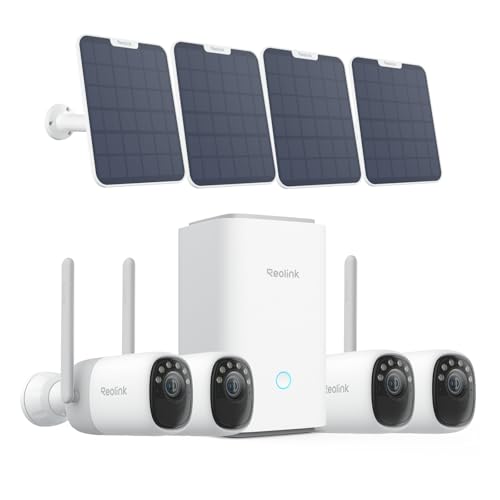

Home Security Camera System, with a built-in 1TB HDD encrypted local storage base station and upgraded HDMI output. Recording, storing, and viewing security footage locally without cloud subscriptions or internet dependency. Up to 6-12 months of smooth recording, offline local monitoring via HDMI, expandable to 10 cameras, and storage upgrades to 8TB HDD. Your footage stays private, accessible, and secure at all times, even if the internet is down or your home needs expand later.
Time Delay and Dwell Settings for Seasonal Stability

Although ambient activity levels and daylight duration change between seasons, precise adjustment of time delay and dwell parameters reduces spurious activations, optimizes energy consumption, and preserves operational safety. 1. Objective: Define target performance for winter and summer, establishing time delay between 30 seconds and three minutes to filter transient motion, and set dwell settings to match occupancy duration. 2. Winter configuration: Use shorter time delay for quick detection, reduce dwell settings to one to three minutes to avoid prolonged illumination during low occupancy. 3. Summer configuration: Increase dwell settings to three to ten minutes to accommodate extended evening activity, and extend time delay where high transient movement occurs. 4. Maintenance: Recalibrate quarterly to reflect seasonal changes and maximize efficiency. Document adjustments and monitor results. Additionally, consider using energy-efficient LED bulbs to further reduce electricity costs and maintain brightness while adjusting your motion sensors for seasonal stability.
Recommended Products

Neutral Wire Required: This motion sensor light switch requires connecting all 4 wires including the NEUTRAL, wire in order to function properly. Lights will flash if not correctly connected. Please review your wiring setup prior to purchase

Dual technology motion light switch combines passive infrared (PIR) and ultrasonic sensors in one sensor switch for enhanced accuracy and to detect fine motion, such as typing, reading, etc
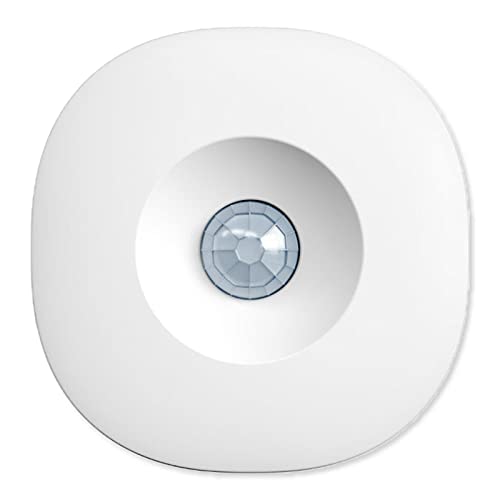
24/7 Monitoring: Receive alerts when there’s unexpected movement in your home
Sensor Placement and Orientation Across Seasons

When positioning motion sensors for seasonal operation, technicians should mount units 6–8 feet high, face open areas, and apply a 10–20° downward tilt. 1. Height and sensor placement: Mounting at 6 to 8 feet optimizes coverage, minimizes animal-triggered false alarms, and preserves detection geometry, verifying unobstructed views after foliage growth or snow accumulation. 2. Winter orientation adjustments: Reorient sensors to face open areas rather than reflective surfaces or snow-covered ground to reduce misreadings caused by reflections, confirm tilt and sensitivity. 3. Summer placement precautions: Avoid direct sunlight and heating vents to reduce thermal false activations, maintain ventilation clearance, and prevent sensor overheating. 4. Seasonal changes protocol: Conduct inspections each season, adjust angle, sensitivity, and clear obstructions as needed. Document adjustments and record performance metrics. For optimal performance in outdoor spaces, consider integrating solar-powered pathway lights which offer energy efficiency and durability across seasons.
Recommended Products

What’s Included - 16 Channel 4K IP NVR with built-in 16 RJ45 PoE Ports, 4MP Indoor/Outdoor IP Bullet Cameras (8 Pcs.) Pre-installed 4TB Video Surveillance Grade HDD, 100’ Cat 5e Cable (8 Pcs.)

Stunning True 4K Ultra HD Clarity - Capture every detail with 8MP (3840×2160) resolution—four times the clarity of 1080p. Ensure smooth, vivid footage with adjustable high bitrate and Clear Stream mode. Even when zooming in, you’ll enjoy crisp, distortion-free images.(Tip: For best results, use a 4K display and enable "Clear" stream in settings.)

What’s included - 8 Channel 4K IP NVR with built-in 8 RJ45 PoE ports, 4MP indoor/outdoor Bullet cameras (8 pcs. ), pre-installed 2TB video surveillance Grade HDD, 100’ Cat 5E cable (8 pcs. )
Dusk-to-Dawn Calibration and Lux Thresholds

1. Section 1: Purpose — Dusk-to-dawn calibration aligns motion sensor operation with seasonal daylight patterns, ensuring lighting systems activate only when natural light falls below setpoints, improving safety and reducing waste. 2. Measurement and settings — Technicians should set lux thresholds between 10–50 lux for exterior security, and 100–300 lux for pathway illumination, adjusting values monthly as daylight changes, and documenting each change. 3. Photocell testing — Verify photocell response using a calibrated light meter at sensor level, simulate dusk conditions, confirm trigger at chosen lux threshold, recalibrate if deviation exceeds 10%. 4. Energy impact — Proper calibration reduces unnecessary run time, extends lamp life, and maintains consistent visibility during shorter winter evenings. Technicians should schedule checks quarterly and record lux baseline values for trend analysis immediately thereafter. For optimal efficiency, select fixtures with clear instructions to allow for quick setup and troubleshooting during seasonal adjustments.
Recommended Products
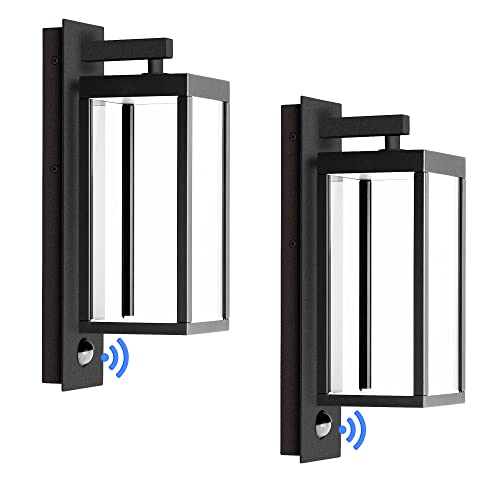
High quality PIR sensor :the porch lights photocell sensor & motion sensor. Only work at night and when the sensor detects a person passing by, the light will light up. Light is closed during the day. PIR sensor sensitivity adjustment range is (lux: 10 to 2000, lighting time: 5 sec to 8 min. )

Built-In GFCI Outlet: The outdoor light with 2 GFCI outlets (ground fault interrupter), is suitable for two-pronged and three-pronged plugs, easy access to power outdoors with added protection from power surges, short circuits, and other electrical faults. Patio lights can protect your circuit from damage. Unlike other outdoor lights on the market, exterior lighting fixtures has the downward GFCI outlets designed to protect the outlets from rain. (Max power 14.5AWG and Max Load 1080W)

By Inbar Hardware – Built to Last – Designed and manufactured by Inbar Hardware, trusted for premium quality and durable door solutions made in the USA. Heavy Duty Aluminum & Hardwood Construction – Engineered with solid oak wood and commercial-grade aluminum for maximum strength and long-term durability. Weather Barrier – Creates a tight seal that helps block water, dirt, drafts, from entering underneath your door. Smooth Transition for Wheelchairs & Carts – The low-profile adjustable height offers a smooth passage for mobility devices, strollers, and carts — perfect for ADA-friendly setups.
Maintenance and Cleaning Schedule for Year-Round Accuracy
Establish a formal maintenance schedule that defines cleaning, inspection, calibration, testing, and documentation intervals, with specific methods and measurable acceptance criteria. 1. Maintenance checks: clean sensor lenses monthly using lint-free cloths and 70% isopropyl, remove debris within 1 mm of optical surface, verify that IP ratings are intact, guarantee lighting remains unobstructed. 2. Calibration and testing: perform seasonal calibrations at season start, record sensitivity adjustments in percentage points, test sensors monthly, log false alarm rates and detection distance in meters. 3. Inspections: conduct biannual wiring and connection inspections for wear, document torque values for terminals, include control devices checks. 4. Documentation: maintain records in digital logs, analyze trends quarterly to guide corrective actions. Provide training for technicians, and schedule reviews with stakeholders. Weather resistance of lights is crucial to ensure durability and performance, especially during adverse conditions. Annually documented.
Wiring Integrity and Hardware Inspection Tips
Section 1: Wiring Integrity and Hardware Inspection Overview — follow the established maintenance schedule to extend into detailed wiring and hardware checks, ensuring electrical continuity, mechanical stability, and environmental protection are verified at each seasonal inspection, and document findings for trend analysis. 1. Check wiring integrity: inspect for fraying, corrosion, loose terminals, and measure continuity with a multimeter, acceptable resistance under 5 ohms for short runs, record readings. 2. Examine hardware components: verify mounting brackets, supports, and enclosure seals are secure, torque fasteners to specs, replace degraded gaskets. 3. Environmental checks: assess junction boxes for water intrusion, remove obstructions from motion sensor systems, confirm line of sight. 4. Schedule: perform these inspections each season, document actions. Retain records for warranty and predictive maintenance programs. Consider models with IP65 weatherproof rating to ensure enhanced resilience against environmental factors such as rain and dust.
Smart Automation and Seasonal Programming Strategies
Because smart controllers can correlate ambient inputs and historical activity, they dynamically adjust motion sensor parameters to maintain reliable performance across seasonal variations, optimizing activation thresholds, timing, and sensitivity according to measured lux and temperature profiles. Configuration: Specify sensor sensitivity in percentage or lux, set daytime cutoff at 500 lux for summer, and 50–100 lux for winter dusk, adjust hold time to 10–300 seconds, test with 1-meter and 5-meter target distances. Seasonal programming: Create profiles tied to calendar dates or astronomical events, implement temperature-based offsets of 2–5°C to modify PIR sensitivity, use sunrise/sunset offsets of ±30 minutes. Adaptive learning: Enable algorithms to log motion events over 14–90 days, permit automatic threshold shifts of up to 20%, review weekly summaries for calibration. If you’re exploring outdoor lighting solutions, consider the durability and weather resistance of LED lights, which ensures they function efficiently across different climates.
Recommended Products

【Transform Your Space In Seconds】Unexpected overnight guests or living in a cozy apartment?Easily pull out the hidden mattress by the thick handles to seamlessly convert this 102" L-shaped couch into a spacious sleeper bed.The 4 independent modular sections can be freely rearranged to fit any room layout, providing an instant, highly comfortable guest room and a robust 2100 LBS seating support for family gatherings.

Comprehensive Full-Body Workout: Engages multiple muscle groups including arms, legs, core, and back, providing a well-rounded fitness routine
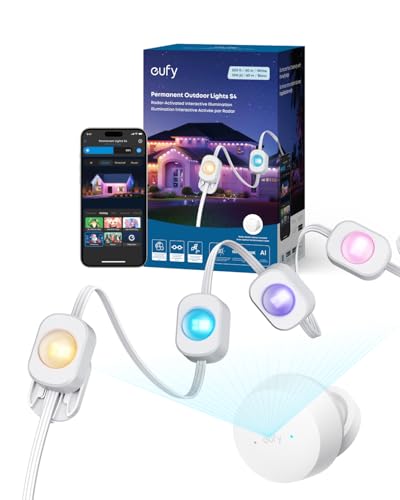
3-in-1 Lighting for Daily, Holiday, and Security: With 120°, 12 m radar coverage, this smart light strip offers precise motion detection for automatic lighting effects that follow your movement. Set customizable security alerts with flashing warnings to deter intruders.
Safety, Energy Efficiency, and Equipment Longevity Benefits
1. Safety: Seasonal calibration guarantees lights activate within 0.5–2 seconds during dusk, reducing trip and fall incidents on stairs and walkways by improving contrast and shadow definition, this is achieved by lowering PIR sensitivity thresholds and extending detection zones to 10–15 meters in critical corridors. 2. Energy efficiency: Summer profiles increase lux thresholds to 400–600 lx, disable night-time timers, and employ integrated ambient light sensors to prevent false triggers from reflections, resulting in 20–40% reduced run-time and measurable cost savings. 3. Equipment longevity: Regular quarterly inspections and recalibration alleviate thermal cycling and moisture ingress, reducing failure rates, prolonging operational life by years, and maintaining consistent performance. Solar-powered motion sensor lights are also designed to work efficiently in various weather conditions, further enhancing their durability and performance. 4. Implementation: Document settings, log changes, validate with light meters. Schedule firmware updates and sensor cleaning cycles annually.
Frequently Asked Questions
Can Motion Sensors Be Adjusted?
Yes, precise personalization proves practical. They respond to sensor calibration techniques and seasonal sensor adjustments; technicians adjust sensitivity, reorient lenses, and tweak range, thereby optimizing motion detection for reliable, reduced false-trigger performance across changing seasons.
How Do I Adjust the Sensitivity of a Sensor?
One adjusts sensitivity by turning the sensor’s dial or screw to low, medium, or high for sensor sensitivity adjustment. Test detection, reposition for ideal sensor placement, and account for environmental factors influence; retest and fine-tune.
Can You Adjust the Sensitivity of a Motion Sensor Light?
Yes, like a finely tuned instrument, the sensor can be adjusted; the owner should follow sensor placement tips, apply seasonal adjustments to avoid false triggers, and troubleshoot common issues such as pets, wind, or debris.
What Are the Three Settings on a Motion Sensor Light Indoor?
They are On, Off, and Auto. As part of Indoor Lighting Options, Motion Detection Technology enables adjustable sensitivity and timers; Energy Efficiency Tips include using Auto for reduced power, following manufacturer instructions for peak performance.


