As an Amazon Associate, we earn from qualifying purchases. Some links on this site are affiliate links at no extra cost to you. Our recommendations are based on thorough research and editorial judgment.

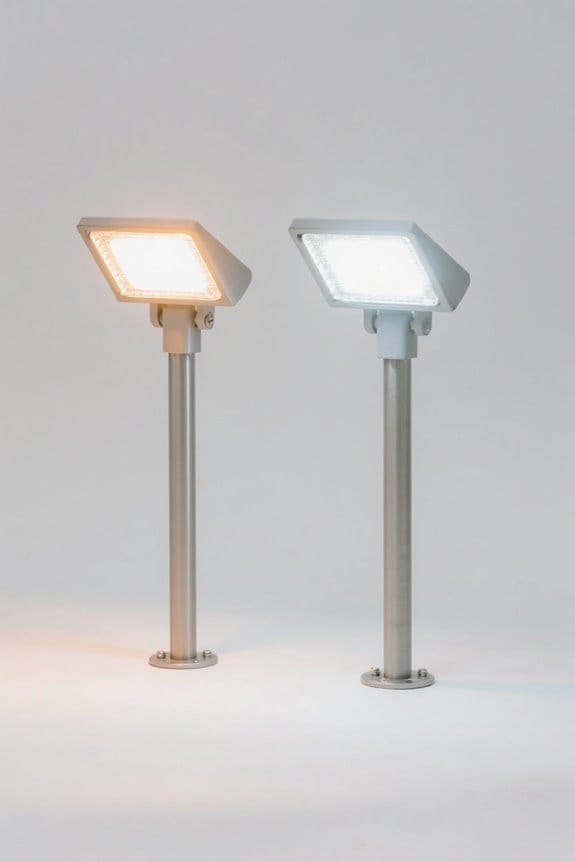
Warm White Vs Cool White for Path Lighting at Night

1. Color temperature: specifies spectral appearance in Kelvin, 2700–3000K yields warm white for ambiance and material enhancement, 4000–5000K yields cool white for contrast and visibility. 2. Application: use 2700–3000K for residential paths with wood or brick, bollard spacing 2–4 m, lumen targets 200–800; use 4000–5000K for concrete or high-traffic routes to achieve 10–30 lux. 3. Controls: select CRI>80, IP65 fixtures, include dimming for flexibility, continue for implementation guidance. Further technical examples and testing recommendations follow.
Key Takeaways
- Warm white (2700–3000K) creates a cozy, low-glare atmosphere suited for residential gardens and natural materials like wood and brick.
- Cool white (4000–5000K) increases contrast and edge visibility, improving safety and reducing trip hazards on concrete or high-traffic paths.
- For balanced safety and ambiance, specify 2700–3000K along routes and test in situ to confirm perceived brightness and color.
- Use fixtures with CRI >80, appropriate lumens (200–800 per bollard), and IP65 ratings for accurate color rendering and outdoor durability.
- Maintain consistent color temperature along a route and add dimming controls to adapt illumination levels for different nighttime activities.
What Is Color Temperature and Why It Matters for Paths
- Color temperature defined: Color temperature, measured in Kelvin, quantifies the spectral appearance of light sources and guides selection for pathways, affecting perceived contrast and material rendering.
- Practical effects: Warm white (2700K–3000K) produces an inviting glow that complements natural materials, encouraging comfortable navigation while balancing visibility and ambiance; cool white (4000K and above) increases luminance and task contrast, improving detection of obstacles for safety.
- Application guidance: For residential paths specify fixtures rated 2700K–3000K to achieve an inviting glow and adequate illumination, mount at 0.6–1.0 meters height for uniform coverage, space fixtures 2–3 meters apart, and aim to maintain 10–20 lux on walking surfaces to optimize safety. Designers should consider glare control, color consistency, and local codes when specifying luminaires for resident safety. Solar-powered lights have become increasingly popular for cost-effective outdoor lighting, as they reduce electricity bills significantly while providing convenience and safety through automatic operation.
The Kelvin Scale: Warm Vs Cool Explained
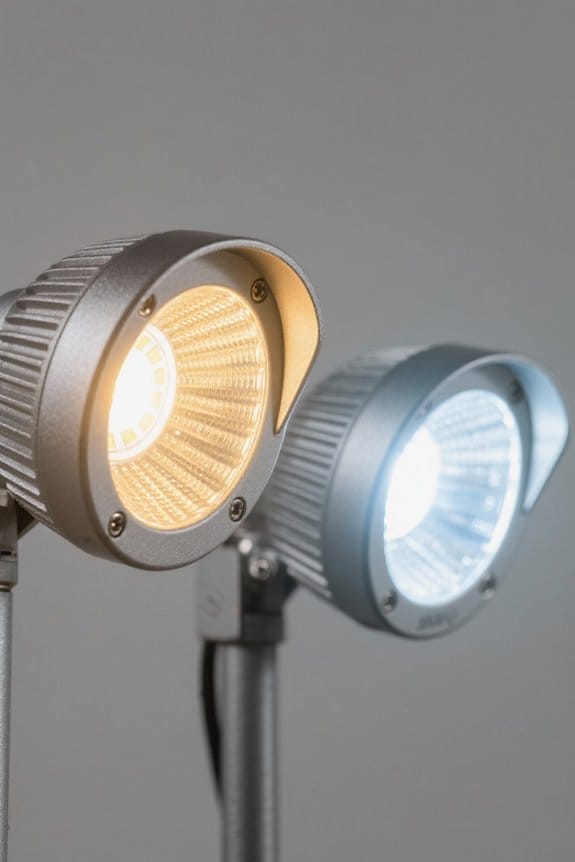
Clarify the Kelvin scale as a quantitative measure of correlated color temperature, expressed in kelvins (K), which defines the spectral appearance of a light source and directly informs fixture selection and placement for path lighting. 1. Definition and range: The Kelvin Scale quantifies color temperature, lower values (2200K–2700K) denote warm white light, higher values (4000K+) denote cool white light, and mid-range values (2700K–3000K) are commonly specified for path lighting. 2. Technical implications: Color temperature affects spectral power distribution, perception of contrast, warm tones, and lumen efficacy, designers select 2700K–3000K for balance between comfort and task visibility. 3. Implementation guidance: Specify fixtures with correlated color temperature ratings, use consistent Kelvin values along a path, and document values in lighting plans. This guarantees predictable outdoor lighting. Consideration of energy efficiency is also crucial when selecting lighting options, as LED units can save significantly on electricity costs over time.
Warm White Path Lighting: Ambiance and Best Uses
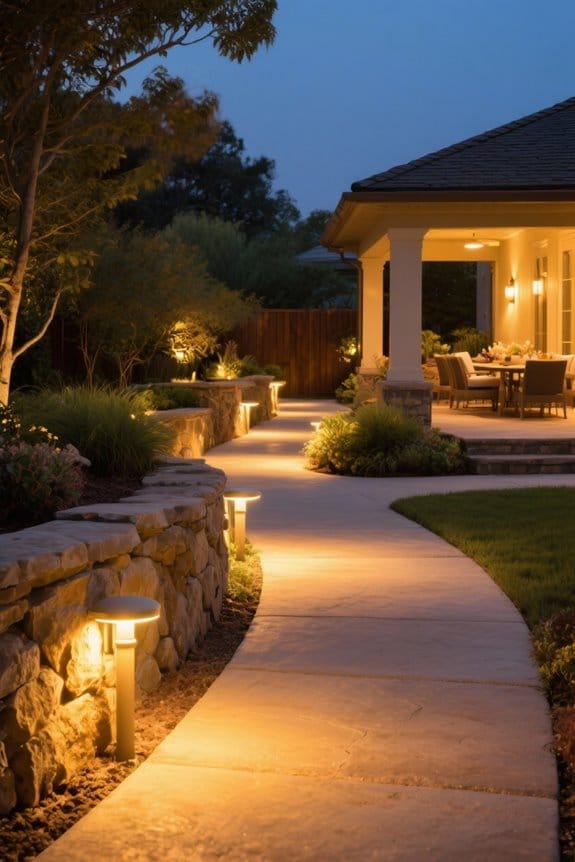
An overview of warm white path lighting explains that 2700K–3000K fixtures produce low-glare, high-CRI illumination that complements natural materials and supports pedestrian wayfinding in residential and garden settings. 1. Ambiance, color temperature, and ambient lighting: warm white path lighting at 2700K–3000K creates a cozy atmosphere, reduces glare, and preserves color, useful for seating in outdoor spaces and entryways. 2. Material integration: specify 3000K for brick and wood, aim 0.8 CRI minimum, mount fixtures 0.2–0.5 m above grade to highlight textures. 3. Layout and spacing: use 2–4 m spacing for bollards, 1–2 m for low-level in beds, provide 5–10 lux along walkways. 4. Plant and maintenance: select 15°–45° beam angles to enhance appeal while minimizing light spill. Replace bulbs periodically. Solar pathway lights, like the Bright Solar Pathway Lights, are equipped with large monocrystalline silicon solar panels for enhanced energy conversion, making them an eco-friendly choice for outdoor lighting solutions.
Recommended Products

3 Wattage Selectable & 3 Color Adjustable - Our outdoor post lights are available in 3 wattages, 100W (14000LM), 80W (11200LM) and 60W (8400LM). Just slide the switch to choose your appropriate wattage before installation. The color temperature of each LED industrial light is adjustable: 3000K Warm White (WW), 4000K Neutral White (NW), 5000K Daylight (CW) to meet your different needs in yard, street, garden, park, pathway and other industrial and commercial places

✅ DESIGN - ASD commercial LED down lights for ceiling with emergency battery backup 15W come with a durable aluminum housing resistant to rust and impact, anti-glare PC lens, spring-loaded clips and 2.3 ft cord in metal hose. They are designed to operate on 120-277V circuits with a 0-10V dimmable driver. CRI90+ rating provides rich and natural colors and keeps your space looking and feeling vibrant

𝐒𝐨𝐥𝐢𝐝 𝐁𝐫𝐚𝐬𝐬 𝐓𝐨𝐩: Crafted with solid brass top and nylon bottom construction, this brass well lights landscape ensures long-lasting durability and a sophisticated look. Its corrosion-resistant properties make it perfect for illuminating inground lights outdoor waterproof, floors, decks and exteriors.
Cool White Path Lighting: Visibility and Safety Benefits
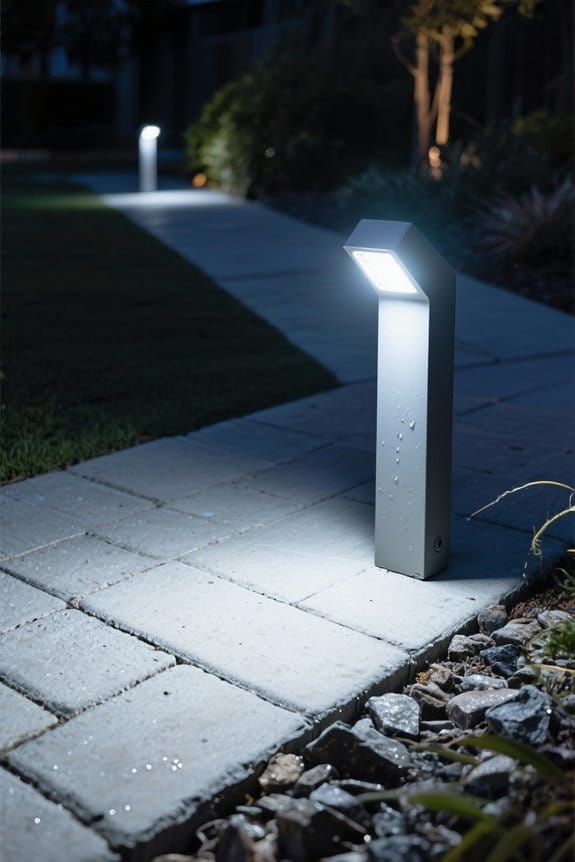
1. Cool white lighting, rated typically 4000K–5000K, provides bright illumination and safety that improves visibility on walkways and stairs, reducing trip risk by revealing edges and surface texture, studies show enhanced alertness and cognitive performance under such spectra which supports safer navigation. 2. Implementation guidance: specify fixtures delivering 200–800 lumens per bollard or 10–30 lux at walking surface, orient shields to limit glare, use 3000–4500K correlated color rendering indices above 80 where color discrimination is needed, and place fixtures at 1.5–3 meter intervals for uniform coverage. 3. Security and ambiance: increased brightness can enhance security by deterring intruders, while maintaining outdoor ambiance appropriate for pedestrian areas, providing practical reassurance. 4. Opt for fixtures with IP65 or higher ratings for water and dust resistance to ensure durability in various weather conditions. 5. Maintenance intervals: inspect LEDs annually, clean lenses quarterly, replace failing drivers within 24 months.
How to Choose the Right Temperature for Your Walkways
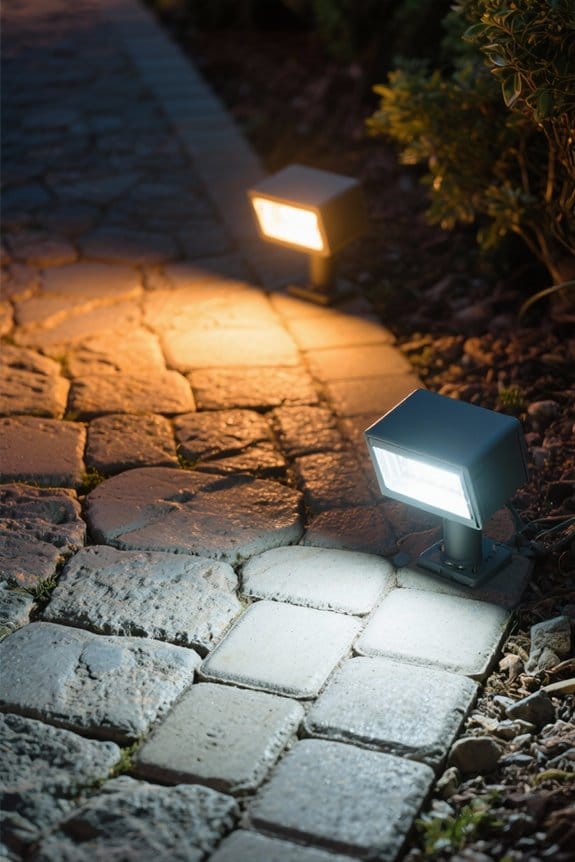
How should a site planner select color temperature for walkways, balancing safety, material rendering, and user experience across varied traffic conditions and landscape contexts? 1. Recommended range: specify 2700K to 3000K for walkways and steps, this range balances safety and ambiance, warm light enhances brick and wood while 4000K and above suits high-traffic commercial zones where visibility is paramount. 2. Material assessment and pathway designs: measure outdoor lighting and texture, select warmer tones for natural materials, choose cool lighting for concrete and asphalt to increase alertness. 3. Consistency and testing: maintain a consistent color palette along routes, test multiple temperatures in situ and record user feedback. 4. Implementation: require CRI greater than 80 fixtures and dimming controls, document for maintenance and verify performance annually. For outdoor lighting, IP Ratings are crucial to consider to ensure durability and weather resistance.
Recommended Products

15-PACK OF SOLID BRASS PATH LIGHTS - The popular Conehead Path Light is constructed of solid brass for durability and beauty. It projects a 12-foot diameter region of illumination. Featuring pro-grade internal components with a high-temperature Beryllium copper socket. Silicone plug where the 4-foot lead wire exits the fixture, preventing moisture intrusion through the stem. Measures 25 inches tall, with a 7-inch diameter hat.

15-PACK OF SOLID BRASS PATH LIGHTS - The popular Flat Hat Path Light is constructed of solid cast brass for durability and beauty. It projects a 12-foot diameter region of illumination. Featuring pro-grade internal components with a high-temperature Beryllium copper socket. Silicone plug where the 4-foot lead wire exits the fixture, preventing moisture intrusion through the stem. Measures 24 inches tall with the 7-inch diameter hat attached.

𝐒𝐨𝐥𝐢𝐝 𝐁𝐫𝐚𝐬𝐬 𝐂𝐨𝐧𝐬𝐭𝐫𝐮𝐜𝐭𝐢𝐨𝐧: Made from sturdy brass, well constructed mushroom-top low voltage pathway lights. Resistant to rust and corrosion. The premium brass landscape lighting blends into your landscape. Once you install, lifelong you use, and saves on repair
Design Tips for Consistent, Wildlife-Friendly Path Lighting
When selecting color temperature and intensity for path lighting, designers should prioritize warm white sources in the 2700–3000K range, paired with low correlated color temperature controllers and dimming capable drivers to reduce skyglow and nocturnal disruption while preserving material rendering and visual performance. Specify consistent warm white sources, 2700–3000K, across all outdoor lighting fixtures to maintain color temperature consistency, reduce spectral blue content. Use dimming capable drivers and low correlated color temperature controllers, program 10–30% nighttime levels, and employ motion-triggered scenes for boost. Place fixtures at 0.6–1.2 m mounting height, space 1.5–3.0 m on center for layered illumination, aim downward with 15–25° cutoff optics to limit glare and skyglow, and select full-cutoff housings for wildlife-friendly outcomes. These measures balance safety, aesthetics, and responsibility. For outdoor lighting, IP65 weatherproofing ensures that fixtures remain functional in various weather conditions, providing protection from dust and water jets.
Frequently Asked Questions
Should Pathway Lights Be Warm or Cool?
Warm or neutral tones are preferred for pathway lighting, balancing pathway ambiance, light color and design aesthetics. One should consider lighting temperature for safety considerations, fixture compatibility and energy efficiency to guarantee cohesive outdoor illumination.
Which Is Better for Outdoor Lighting, Warm White or Cool White?
As two gardeners tending dusk, warm white suits lighting ambiance and design aesthetics, while cool white prioritizes outdoor safety; balancing color temperature, energy efficiency, psychological effects and light pollution to serve landscape’s mood and function.
What Is the Best White Light for Outdoor Lights?
The best white light balances color temperature and brightness levels to suit function; one should consider bulb types, energy efficiency, outdoor aesthetics, seasonal lighting, and follow installation tips for safe, cohesive illumination and maintenance routines.
What Is Better for Night Time, Warm Light or White?
Warm light is generally better at night, offering favorable light color and ambiance effects; it aids mood setting and design aesthetics while balancing visibility enhancement, energy efficiency and safety considerations for comfortable, attractive nighttime paths.


