As an Amazon Associate, we earn from qualifying purchases. Some links on this site are affiliate links at no extra cost to you. Our recommendations are based on thorough research and editorial judgment.
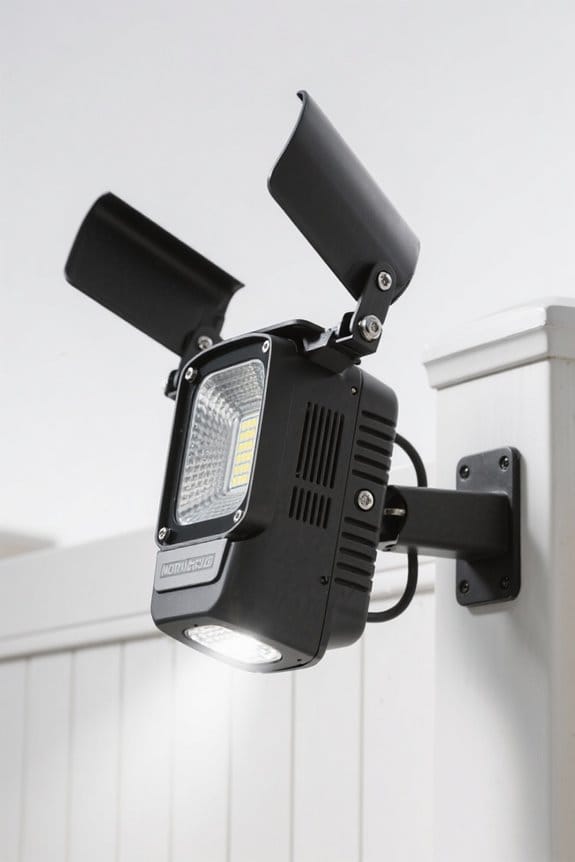
Shielding Techniques for Motion Floodlights Near Property Lines

1. Understanding light trespass: install fully shielded, downward-firing fixtures mounted 6–10 feet high, tilted about 22 degrees to confine beams, use 400–800 lumen units at 3000K to limit spill to ≤0.5 foot-candles at property lines. 2. Placement: aim toward walkways and entries, avoid cross-property aiming, space fixtures 50–60 feet. 3. Sensors: set 10–40 foot range, adjust sensitivity, test at night. 4. Maintenance: clean lenses quarterly, verify illuminance at 1.2 m, record adjustments. Further guidance available.
Key Takeaways
- Use fully shielded, downward‑directed fixtures (IP65+) to prevent upward and lateral light spill across property lines.
- Mount lights 6–10 feet high with a 22° downward tilt to confine illumination to your yard and pathways.
- Limit lumen output to 400–800 and choose 3000–4000K LEDs to reduce blue light and ecological impact.
- Aim and test sensors for 10–40 foot detection ranges, mapping zones to avoid triggering lights across neighbors’ properties.
- Measure horizontal illuminance at the property line (1.2 m height) and adjust shielding until readings stay ≤0.5 foot‑candles.
Understanding Light Trespass and Its Impacts
1. Understanding light trespass and its impacts.
1.1 Definition and causes: Light trespass occurs when outdoor lighting from one property spills into neighboring areas, often caused by improperly aimed security lighting or unshielded fixtures, producing glare and unwanted brightness that reduces nighttime comfort.
1.2 Measurement and limits: Measure at property lines with a meter, maintain maximum 0.5 foot-candles to comply with local regulations, record horizontal illuminance and vertical values for windows.
1.3 Mitigation techniques: Use shielded fixtures and downward light orientation, mount fixtures at specified angles, install shields and timers, select amber spectrum bulbs to reduce light pollution and ecological effects. Solar-powered security lights are an eco-friendly alternative that can reduce reliance on the electrical grid while providing effective illumination.
1.4 Enforcement and practice: Document settings, demonstrate compliance with photographs and readings, adjust aiming to reassure neighbors. Provide maintenance schedules and periodic verification.
Recommended Products

Industrial-Grade Reliability: This flood light features a professional 10KV surge protection system and supports an ultra-wide voltage range (85V-305V). It ensures internal drivers remain shielded from severe voltage fluctuations or lightning strikes. Specifically engineered for generator-powered environments such as fishing boats, farms, or industrial construction sites

Finish: Bronze - Glass: Clear

Wattage settings include: 3W (260 Lumens), 5W (350 Lumens), 8W (475 Lumens), 12W (750 Lumens)
Choosing Fully Shielded Fixtures and Appropriate Color Temperature
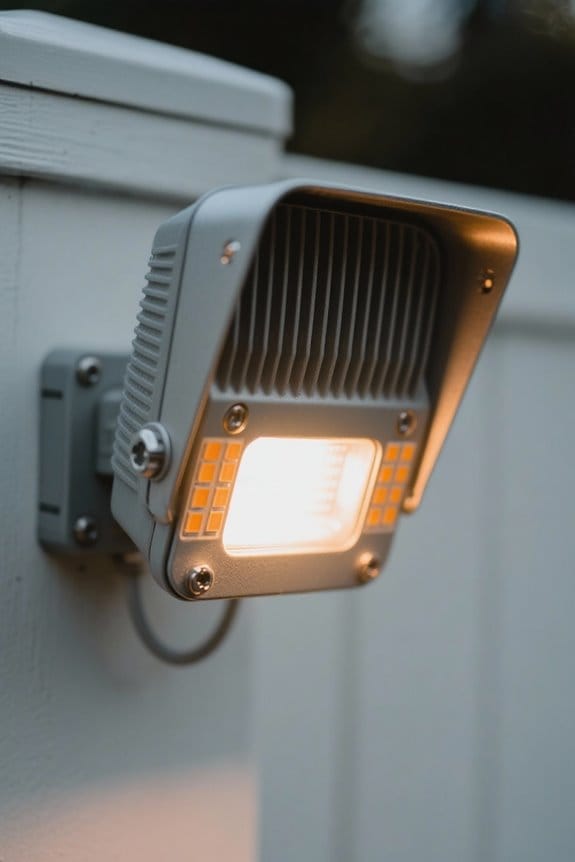
Selection criteria and specifications for fully shielded fixtures and appropriate color temperature are presented below, providing measurable standards, installation examples, and verification steps that align optical control with environmental and neighbor-sensitive performance. 1. Fixture selection: Specify fully shielded fixtures that direct light downward, rated IP65 or higher, and designed for outdoor lighting, which minimize light pollution and reduce glare while preserving visibility; select 400–800 lumen outputs for motion sensors to limit spill. 2. Color temperature: Use warm light at 3000K–4000K or amber spectrum sources to reduce blue wavelengths, mitigate ecological impacts, and improve performance in fog. 3. Energy and verification: Prefer energy efficiency LED drivers, document lumen output and perform post-install photometric checks, and confirm IP65 sealing. Maintain records for maintenance and neighbor communication. Additionally, ensure motion sensors with a detection angle of 120-270° are used to minimize blind spots and maximize coverage efficiency.
Recommended Products

Adjustable commercial flood lights outdoor Without worrying about light pollution or annoy the neighbors,60W led wall pack is Rotatable Design,wall pack light provide a maximum beam Angle of 360° degreen
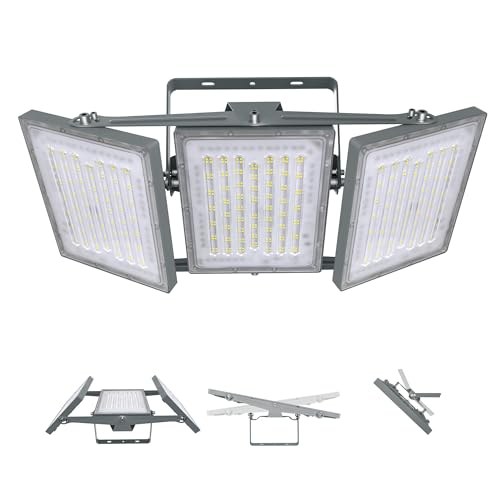
Ultra-Bright Illumination: STASUN 600w LED outdoor flood light delivers an impressive 60000LM of brightness, equivalent to 4000w traditional lights. Enjoy powerful and energy-efficient lighting, reducing your electricity bills by 88%

【150W Super Bright Motion Sensor Lights】 The 150W motion lights for outside are powered by ultra-bright 154 LED beads, producing up to 15,000 lumens of high brightness, equivalent to 500W incandescent bulbs, saving 85% of your electricity bill. With 6500K daylight white light, they make your driveway, garage door, and entryway instantly visible, providing safer walking and clearer awareness at night.
Optimal Mounting Height, Angle, and Placement for Minimal Spill
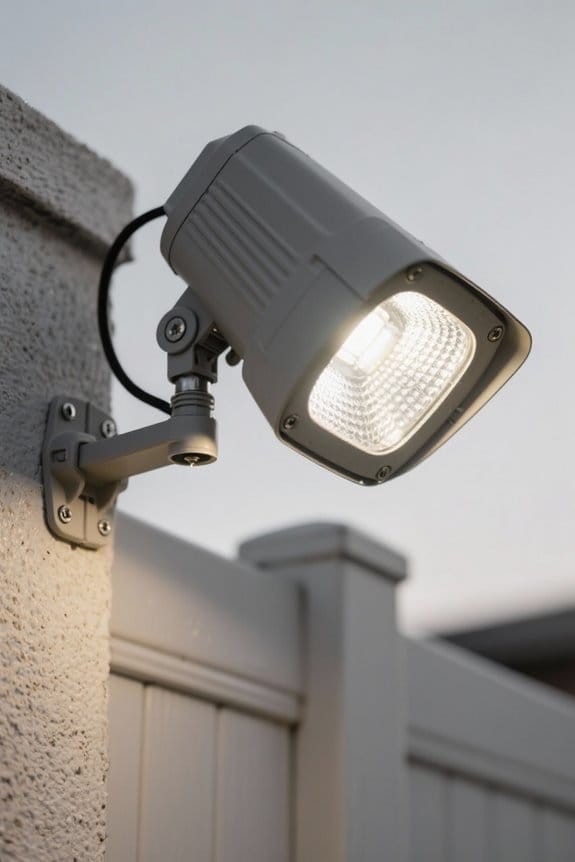
Mounting height and angle are critical considerations, recommending placement 6–10 feet above grade with a downward tilt near 22 degrees to maximize motion sensor coverage while minimizing lateral spill onto adjacent properties. Height and spacing: For ideal mounting height, position fixtures between 6 and 10 feet, space units 50–60 feet apart for uniform illumination, this prevents overlapping beams and reduces glare toward property lines. Angle and shielding: Set angle at approximately 22 degrees, use fully shielded fixtures to confine light to outdoor areas, thereby limiting light pollution and protecting neighbors. Placement and adjustment: Locate units to target pathways and entries, avoid pointing across property lines, regularly reassess after landscaping changes to maintain minimal spill. Document settings and record final installation angles. To enhance energy efficiency, consider solar-powered designs which offer extended illumination and maximize savings with automatic on/off functions.
Sensor Settings and Range-Restriction Strategies for Motion Floodlights
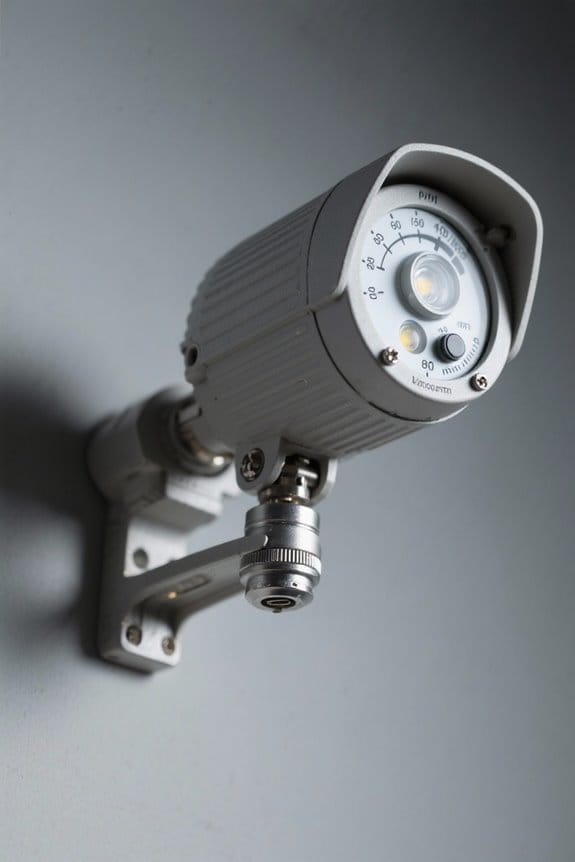
1. Sensor settings and range-restriction techniques should be set to detect motion only within perimeters, typically 10 to 40 feet, to reduce false triggers and preserve light output. 2. Sensitivity levels for motion floodlights must be chosen to balance detection and nuisance activations, using low, medium, or high according to local activity and security needs. 3. Angle and zone tuning: tilt sensors at a downward angle near 22 degrees to concentrate detection zones on approach paths and entry points, avoiding street traffic. 4. Implementation: map detection zones, set minimum triggers to avoid small animals, test at night, and adjust until ideal security is achieved without disturbing neighbors. Regular verification guarantees consistent performance and compliance with property line lighting expectations. Some motion sensors can be adjusted to ignore smaller pets, ensuring that the floodlights are not unnecessarily triggered. Documented records aid future adjustments.
Recommended Products

【Say goodbye to darkness and high electricity bills】Tired of dark driveways or expensive electric bills? This solar street light provides a powerful 25000W equivalent brightness using 0 electricity. Simply mount it outdoors, and it charges automatically during the day. You get a reliably lit property at night without increasing your monthly expenses or needing complex wiring, giving you peace of mind and instant savings.
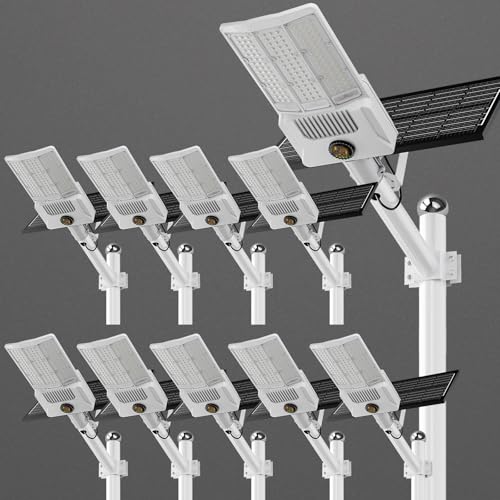
【End Power Outage Worries & Enjoy Continuous Illumination】: Featuring a powerful 55000mAh battery and 30% high-efficiency solar panel, this solar light outdoor stores ample energy during the day, ensuring reliable dusk-to-dawn lighting even on cloudy days. You gain consistent, worry-free outdoor security without rising electricity costs or wiring hassles.

Powerful Illumination: 10000W solar street light with an impressive output of 300,000 lumens, covering up to 3300 sq.ft for extensive outdoor areas.
Shielding Accessories, Baffles, and Targeted Beam Control
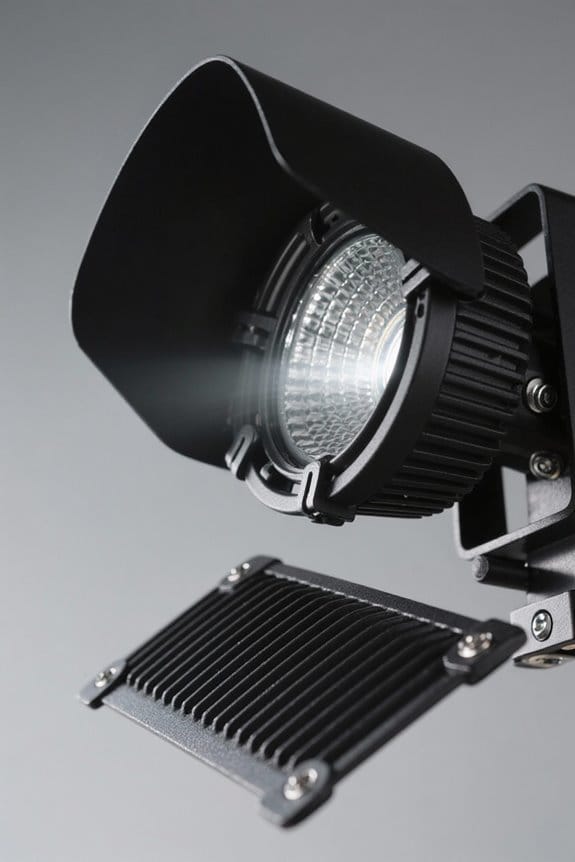
Shielding Accessories provide directional hoods and shields that focus motion floodlights downward, reducing glare and light spillover toward property lines, typical hood depth 6–12 in, cutoff angle 70° for downward control. Baffles block unwanted rays, installed 2–4 in from fixture face and extending 3–6 in laterally, they narrow beam spread, limit light trespass, and permit targeted beam control through slotted or adjustable vanes. Targeted Beam Control uses adjustable mounts and internal louvers to set aim within ±10°, and lumen output can be reduced to 200–800 lm during standby, ensuring compliance with local lighting ordinances and minimizing complaints. Many modern fixtures incorporate internal shields and cutoff optics, which maintain high lumen output while constraining stray emission, recommended for near property lines. Additionally, incorporating energy efficiency insights from LED lighting can help to further reduce costs and environmental impact, contributing to a more sustainable lighting solution.
Recommended Products

6500K Daylight & 18000LM Ultra-Bright: Say goodbye to dim yellow lights. Our 180W outdoor flood lights delivers 18,000 lumens of crisp 6500K daylight – perfect for illuminating a tennis court or your entire backyard. Make intruders think it’s daytime.

18,000 Lumens Ultra-Bright Lighting, Securing Your Nighttime Safety. Equipped with ultra-bright, high-lumen lighting, Olafus outdoor motion sensor light offers a maximum coverage of 1,977 sq. ft., making it an ideal choice for homeowners looking to light up large outdoor spaces effectively.

OUTDOOR LIGHTING: The OFTH Twin PAR Holder provides focused illumination for outside lights in residential and light commercial areas; These flood lights can be used as driveway lights, patio lights, and more
Compliance, Neighbor Considerations, and Ongoing Maintenance
1. Compliance: Municipal codes typically mandate fully shielded fixtures to prevent light trespass; as a result, installers should verify local lumen caps, and maintain a maximum of 0.5 foot-candles at the property line, measured with a handheld meter at 1.2 m height. 2. Neighbor considerations: Evaluate brightness levels and the angle of motion floodlights to avoid glare into adjacent windows, use shielding and downward aiming to limit spill, and communicate planned settings with neighbors. 3. Ongoing maintenance: Schedule quarterly inspections to clean lenses, replace bulbs before lumen depreciation creates dark spots, test motion sensors for sensitivity and timing, and recalibrate mounting angle of motion floodlights, consequently preserving compliance and operational reliability. Document actions, retain measurements, and provide neighbors copies of records to foster trust and transparency. Furthermore, consider using IP65 weatherproof rated models to ensure resilience against rain and dust, enhancing the durability and functionality of your outdoor lighting system.
Frequently Asked Questions
How to Block Out Neighbours Security Light?
They block the neighbor’s security light using privacy screens, light barriers and decorative fences, adding fencing solutions and landscape planting, installing window films, outdoor shades, blackout curtains, using light deflectors and smart lighting where appropriate.
How to Deal With Neighbors Flood Light?
They resolve a neighbor’s flood light via neighbor communication, proposing effective shielding and light redirection to reduce light pollution, legal regulations and property rights, mitigating residential disputes, privacy concerns, preserving outdoor aesthetics and landscaping solutions.
How Do You Shield an Outdoor Light?
Like a curtain, one effectively employs light shielding options: adjustable light fixtures, motion light covers, outdoor light barriers, directed lighting strategies, light diffusion techniques, reflective-materials usage, privacy-landscaping solutions, and plant-based shields per neighborhood light guidelines.
What Are Two Drawbacks of Using Motion Sensors?
Two drawbacks are sensor sensitivity issues causing false alarms and range limitations creating blind spots; additionally, installation challenges, wiring complications or battery life concerns plus weather interference, adjustment difficulties and maintenance requirements degrade user experience.


